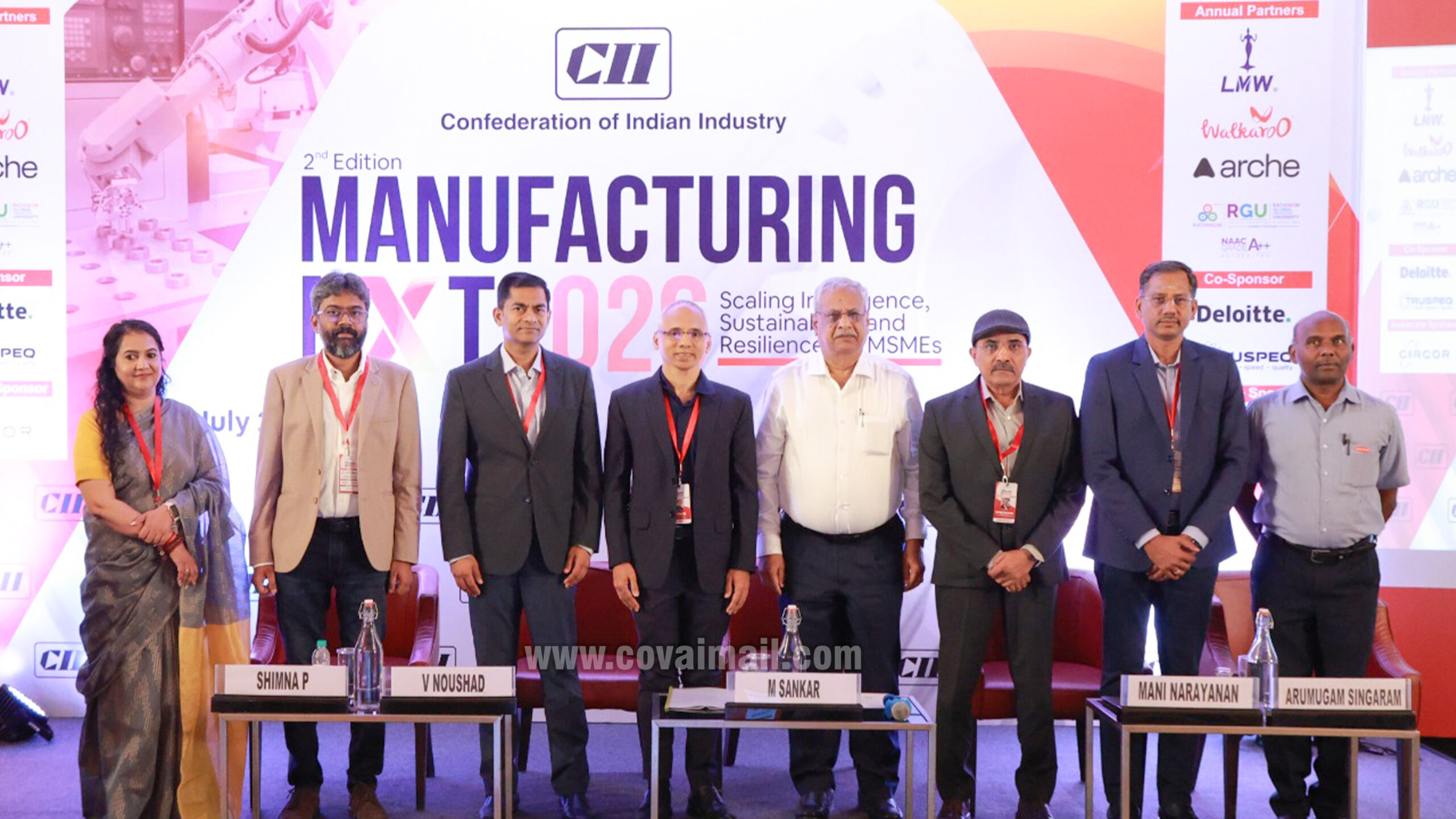

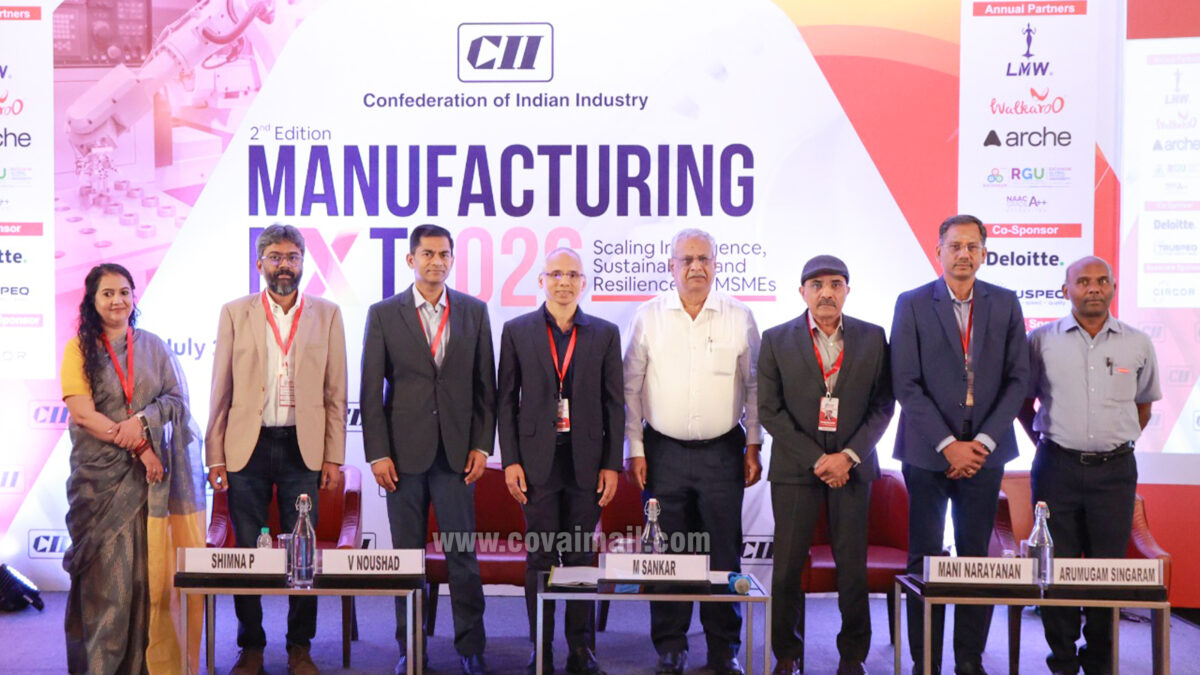
CII Coimbatore Zone organised the 2nd Edition of Manufacturing NXT 2026 on Wednesday at Hotel Residency Towers under the theme “Scaling Intelligence, Sustainability and Resilience for MSMEs.”
The conclave brought together over 85+ industry leaders, manufacturing professionals, technology experts, and entrepreneurs to explore emerging trends that are shaping the future of manufacturing.
Delivering the Welcome Address, Noushad, Chairman, CII Coimbatore Zone and Managing Director, Walkaroo International, emphasised that manufacturing is undergoing a transformational shift driven by digital technologies, sustainability imperatives and changing customer expectations. He highlighted the need for MSMEs to embrace innovation and strengthen their competitiveness in the global marketplace.
Setting the context for the conclave, Mani Narayanan, Convenor, CII Coimbatore Zone Manufacturing Panel and Managing Director, Messer Cutting Systems India said that manufacturing enterprises must adopt intelligent technologies and sustainable practices to build resilient operations capable of addressing future business challenges.
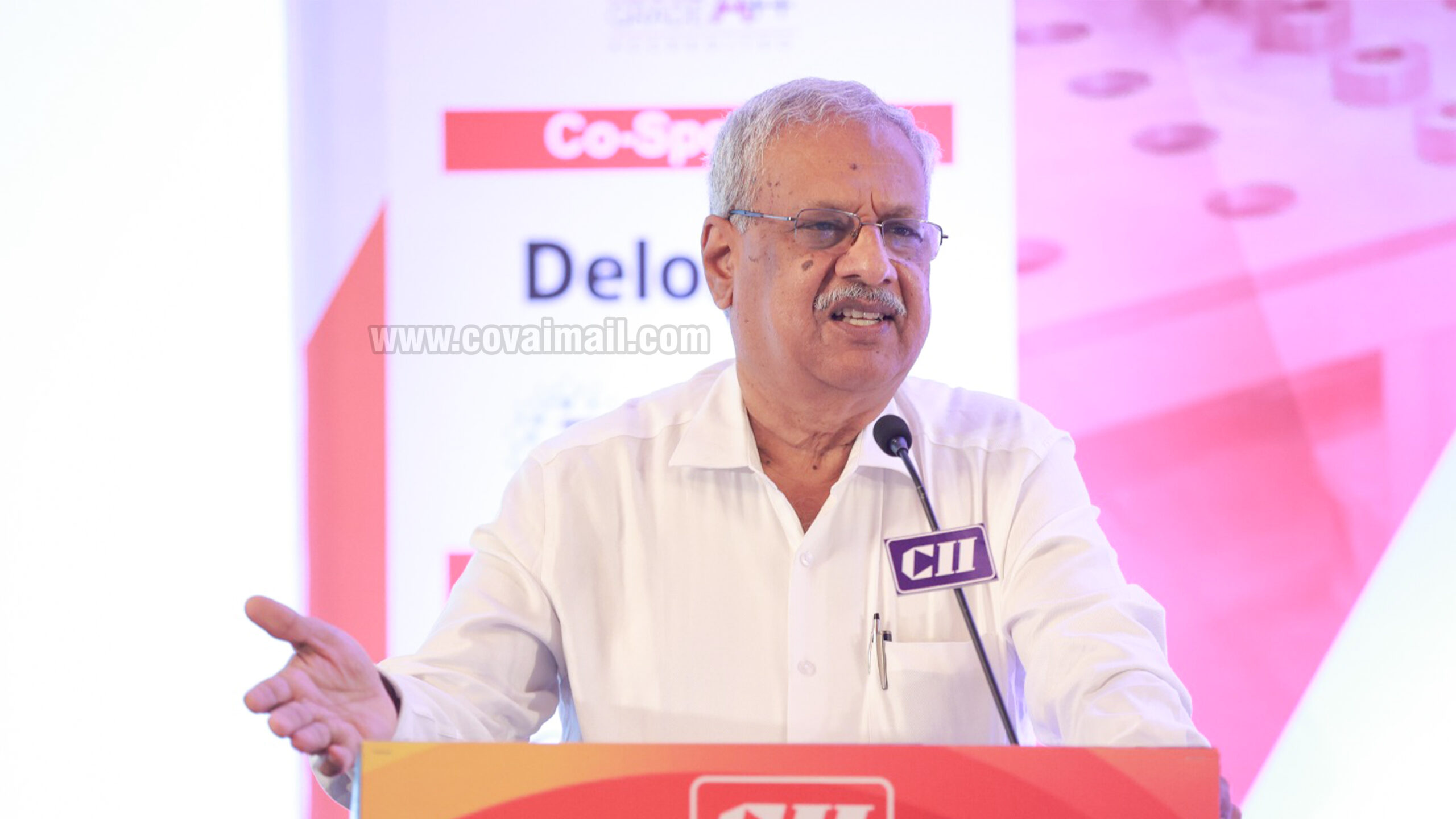
The keynote address was delivered by Sankar, Director – Operations, LMW – Machine Tool Division, who shared valuable insights on the evolving manufacturing ecosystem and the immense opportunities for Indian MSMEs to leverage advanced technologies, improve operational efficiency, and build globally competitive enterprises.
He highlighted the growing importance of Smart Factories, emphasising digital connectivity across machines, processes, equipment, and systems to enable machine utilization, condition monitoring, digital quality inspection, track and trace, product genealogy, and energy monitoring.
He outlined a five-step transformation journey for MSMEs—digitising operations, connecting machines to collect data, implementing low-cost automation, improving energy efficiency, and adopting AI-driven smart manufacturing.
Sankar also underscored the significant opportunities available for MSMEs across high-growth sectors such as electric vehicles, aerospace and defence, semiconductor equipment, medical devices, railways and metro, renewable energy, industrial automation, electronics and telecom, and precision engineering, while stressing the need for zero-defect quality, precision manufacturing, flexibility, and continuous innovation to become preferred partners in global supply chains.
The conclave featured four knowledge-rich technical sessions addressing some of the most critical areas influencing the future of manufacturing.
The first session on “Smart Manufacturing, AI & Edge Computing” was moderated by Jayaprashanth, Chief Operating Officer & Director, Angler Technologies.
The session explored how manufacturers can move beyond traditional monitoring systems towards predictive analytics and intelligent decision-making.
Vivekanand Chikale, National Head – Application Engineering and Digital Solutions, Fanuc India, spoke on Digital Twins and Artificial Intelligence in manufacturing, while Sundaresan, Mentor, Aqua Group, discussed predictive maintenance strategies for improving equipment reliability and productivity.
Sayantan Roy, Executive Director, Deloitte Touche Tohmatsu India LLP, presented emerging trends that are redefining the manufacturing landscape through digital transformation.
Following the session, Sridhar, Managing Director, Innovatec Systems, addressed the delegates on industrial digitalisation solutions and the growing role of Industrial IoT in improving manufacturing performance.
The second session focused on “Sustainable Practices in Energy for MSMEs” and was moderated by Vivekanandan, Managing Director, Faraday Ozone Products, Sanjay Kondaas, Managing Director, Kondaas Automation, highlighted the opportunities available for MSMEs in adopting solar energy solutions, while Shanmugaperumal, Managing Director, Shri Pariyur Amman Kraft Papers, shared practical insights into sustainable packaging practices and circular economy initiatives.
The third session on “Automation Trends & Workforce Reskilling” was moderated by Praveenkumar, Co-Convenor, CII Coimbatore Zone Manufacturing Panel and Chief Executive Officer, Balaji Diamond Tools.
Sudharsan, Head – R&D, Robotics and Automation, Effica Automation, spoke on adaptive and flexible automation technologies that are transforming factory operations.
Joe Xavier, Chief Revenue Officer, Sify Technologies Limited, explained the benefits of hybrid cloud infrastructure in enabling digital manufacturing, while Balasubramaniam, Director – IT, Roots Group of Companies, emphasised the importance of workforce reskilling and developing future-ready talent to complement technological advancements.
A special plenary session on “Government Schemes & Raw Material Security” concluded the conclave.
Karthik, Manager, SIDBI, addressed the delegates on “Creating Champion MSMEs through Equity Capital – ₹10,000 Crore SME Growth Fund,” highlighting the role of equity financing in enabling MSMEs to scale, innovate and become globally competitive. He elaborated on the opportunities available through SIDBI’s initiatives to strengthen the growth trajectory of small and medium enterprises.
Shanmuga Siva, General Manager, District Industries Centre (DIC), delivered an insightful session on MSME Policy & Facilitation, providing participants with an overview of the various policy initiatives, government support mechanisms and facilitation services available to help MSMEs improve competitiveness, enhance ease of doing business and accelerate industrial growth.
Arun, Regional Lead – South, L&T SuFin, concluded the session by sharing strategies for Strategic Raw Material Security, highlighting digital procurement solutions and supply chain resilience to help manufacturers navigate market uncertainties.
The conclave provided an excellent platform for manufacturers, technology providers and policymakers to exchange ideas, learn from industry experts and explore collaborative opportunities that will accelerate digital transformation, sustainability and resilience across the MSME sector.