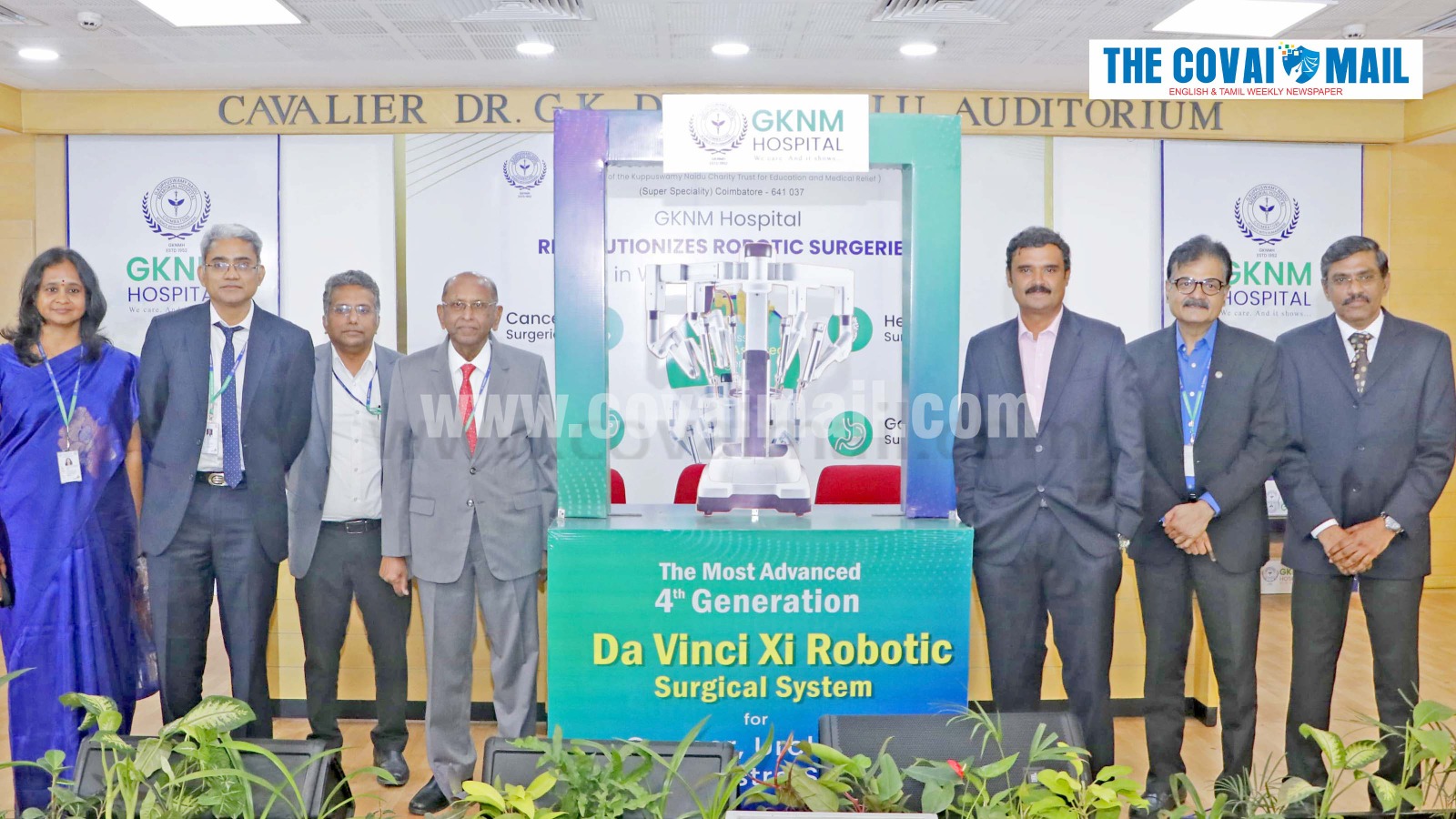

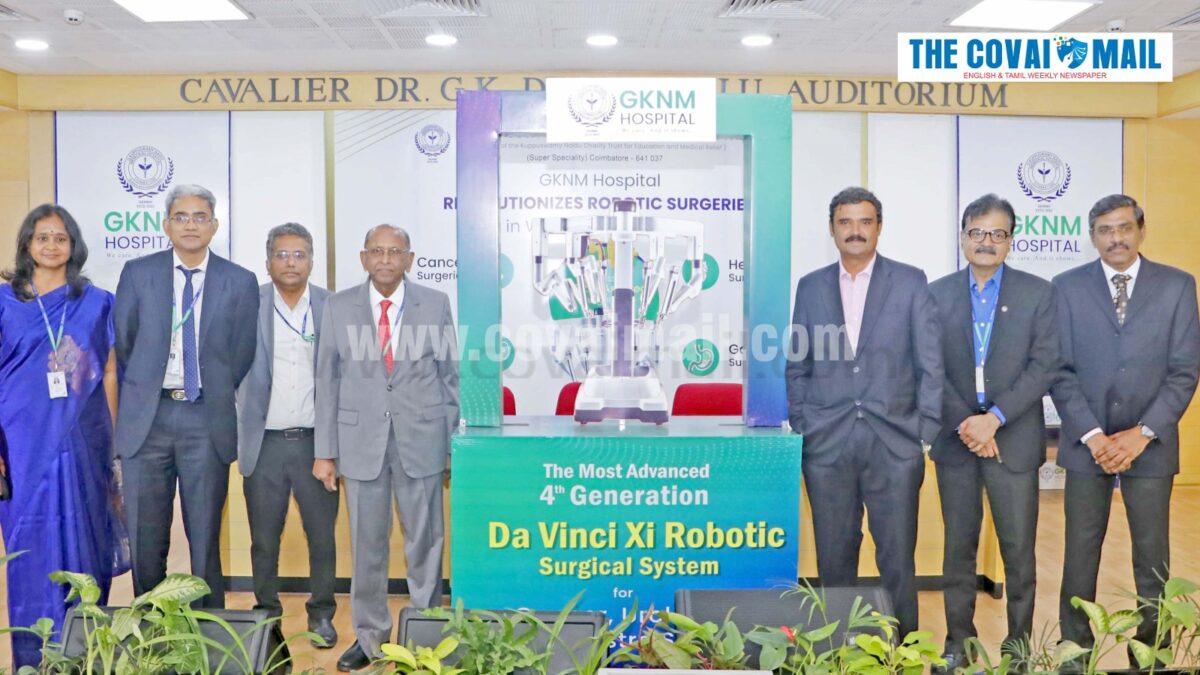
G. Kuppuswamy Naidu Memorial Hospital (GKNMH) has completed one year of its Robotic Surgical Program, having performed over 150 robot-assisted surgeries. With this achievement, the hospital has emerged as a leading center for robotic surgery in Western Tamil Nadu.
To mark this milestone, a press meet was held at the hospital on 29th July 2025. The guest of honour, Dr. Ragupathy Veluswamy, Chief Executive Officer of the hospital, felicitated the robotic surgical team.
The team included Dr. Praveen Ravishankaran, Consultant in Surgical Oncology and In-charge of the Robotic Surgery Program; Dr. Chandrasekar, Chairman of the Department of Cardiothoracic Surgery and Director of Cardiac Transplant Services; Dr. Latha Balasubramani, Consultant in Gynaec Oncology; Dr. Arulraj, Chief Consultant in Surgical Oncology; Dr. Vengetesh, Consultant in Robotic Urologic Surgery; and Dr. Kamalesh, Chief of Gastrointestinal, HPB, and Bariatric Surgery. They provided a detailed overview of the robotic surgery program to the gathering
These surgeries have covered a wide spectrum of specialities and have involved almost all organs currently amenable to robotic intervention, including the oesophagus, lungs, thyroid, stomach, liver, pancreas, colon, rectum, kidneys, bladder, prostate and heart.
The expert surgical team has performed many first-of-its-kind complex procedures with robot-assisted like scarless thyroidectomy, gastrectomy, and thymectomy.
Da Vinci Xi Surgical Robot
It is one of the most advanced robotic platforms in the world. GKNM Hospital is the first to introduce the 4th-generation Da Vinci Xi Robotic Surgical system in Western Tamil Nadu.
The robot offers unmatched capabilities in minimally invasive surgery. Features such as 3D high-definition vision, tremor filtration, and wristed instruments with seven degrees of freedom enable surgeons to perform highly complex procedures with exceptional precision, even in the most delicate and narrow anatomical areas
Benefits of Robotic Surgery
- Minimally invasive procedures
- Greater surgical precision and control
- Reduced risk of surgical complications
- Smaller incisions and less scarring
- Reduced blood loss during surgery
- Shorter hospital stays
- Faster recovery time
- Improved postoperative comfort
- Higher patient satisfaction rates
- Better overall clinical outcomes