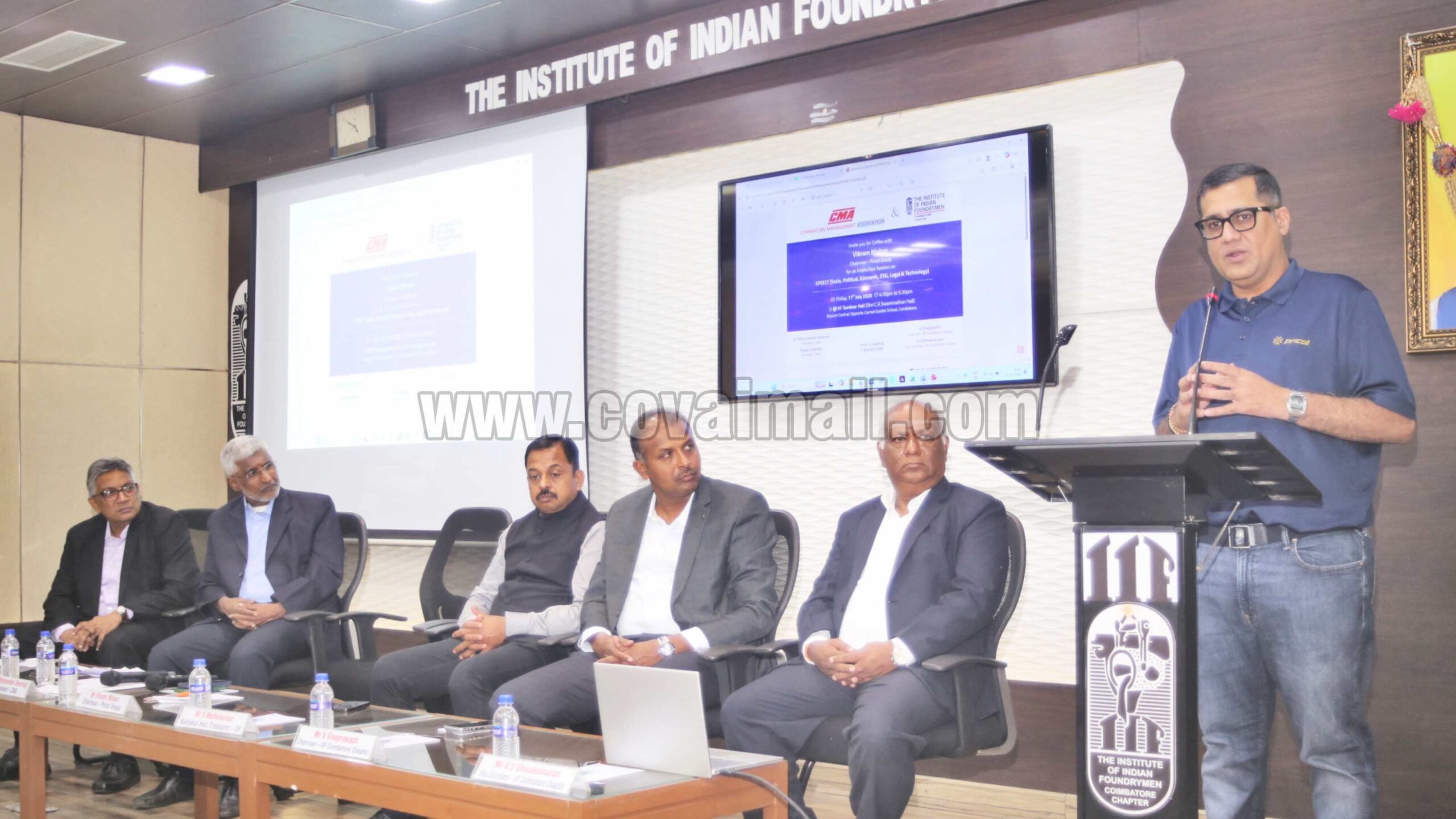

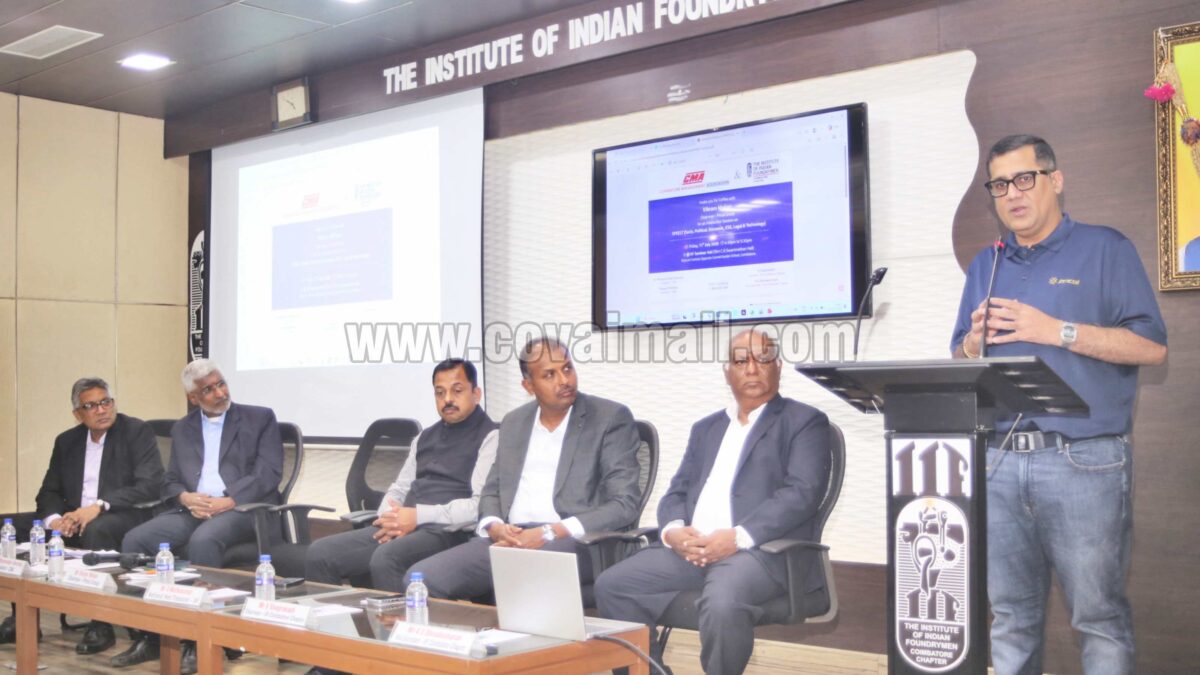
Coimbatore Management Association and the Institute of Indian Foundrymen jointly organised a special interactive session with VIkram Mohan, Chairman & Managing Director of Pricol Ltd.
Reflecting on the invaluable insights gained over his three decade long journey, Vikram Mohan highlighted the profound impact of entrepreneurship on the individual and on society.
Fail, Learn, Plan & Succeed
“I’m a serial entrepreneur. I’ve had about 10 startups. And I’m very proud to say that two of them have failed. And I think those two failures taught me more lessons than any Harvard or Stanford or Oxford MBA can ever teach,” Vikram said.
Addressing the rigid societal taboos around failure in India, he urged organizations to actively celebrate and condone mistakes, particularly when mentoring young professionals entering the workforce around the ages of 24 or 25.
By encouraging early mistakes rather than late ones, and prompting individuals to constructively analyze those errors, companies can fundamentally transform a young person’s outlook on life.
Rule of Three
Vikram also detailed a strict growth and exit framework known as the “Rule of Three” strategy, which dictates the lifespan of any new venture.
According to this rule that is followed by Pricol, the scale, scope, and geographic territory of a business; determined by economic appetite, must be defined within the first three years of starting. If the business fails to place among the top three players in its chosen landscape within that period, the management grants it an additional two years to climb the ranks. If it still falls short after five total years, Pricol summarily exits or shuts down the business at whatever value it can fetch.
Vikram stated that persisting beyond this timeline without achieving a top-three status fails to create sustainable, long-term value, reducing the company to an “also-ran”.
Challenge the Norm
He shared how this Rule of Three strategy was applied to his own restaurant venture.
“When we started the restaurant business (which is a passion Vikram) exactly 10 years ago, I set up a 3,000 sq.ft test kitchen with about 10 employees. We put together an operating manual and then started the restaurant.”
“Then, I found out which city is the most difficult to start a restaurant or where restaurants fail the most. I was given an answer ‘Pune’. The restaurant failure rate in Pune is the highest in the country because Pune has the most critical foodies. So, I told my team that the first restaurant will have to be in Pune. They said, this is suicide.”
“But I said the proof of the pudding will be if we have got everything right. Let’s go and start it in the toughest city, and if we succeed there, then we have got it.”
“We went and started in Pune. We struggled, we got it right, and that 1 restaurant is today 16 restaurants and many cloud kitchens. So, sometimes, go and challenge the norm. Don’t take the easiest route. Prepare well, take the toughest route, and ensure you succeed.”
“The year we opened, we were the number one South Indian restaurant in the whole of Pune. Within the third year, we made the Condé Nast list of top 50 restaurants in India. Within six or seven years, I was awarded the Restropreneur of the Year, and I’m now making a promise that within the next three years, we will have a Michelin star to our name.”
Invest in R&D
“Since 2015 onwards, I started investing about 4.5% of our revenue in R&D. I said, “We need to develop our own products. There’s no point going to multiple collaborators at multiple points of the world. We have our brains; we just need time and money to invest in technology.”
“My board at that time said, “Vikram, that’s a lot of money. When you work it out, that’s a huge amount of money from the earnings per share. Are we not reducing our dividends for our shareholders?”. I said, “We may give that money now as a dividend, but long-term, we will not have our own products that we own.”
“So, from 2015 till today, we invest anywhere between 4% and 4.8% of our sales in R&D (including our culinary business) which is keeping us ahead of our competition and multinationals, and that has paid rich dividends.”