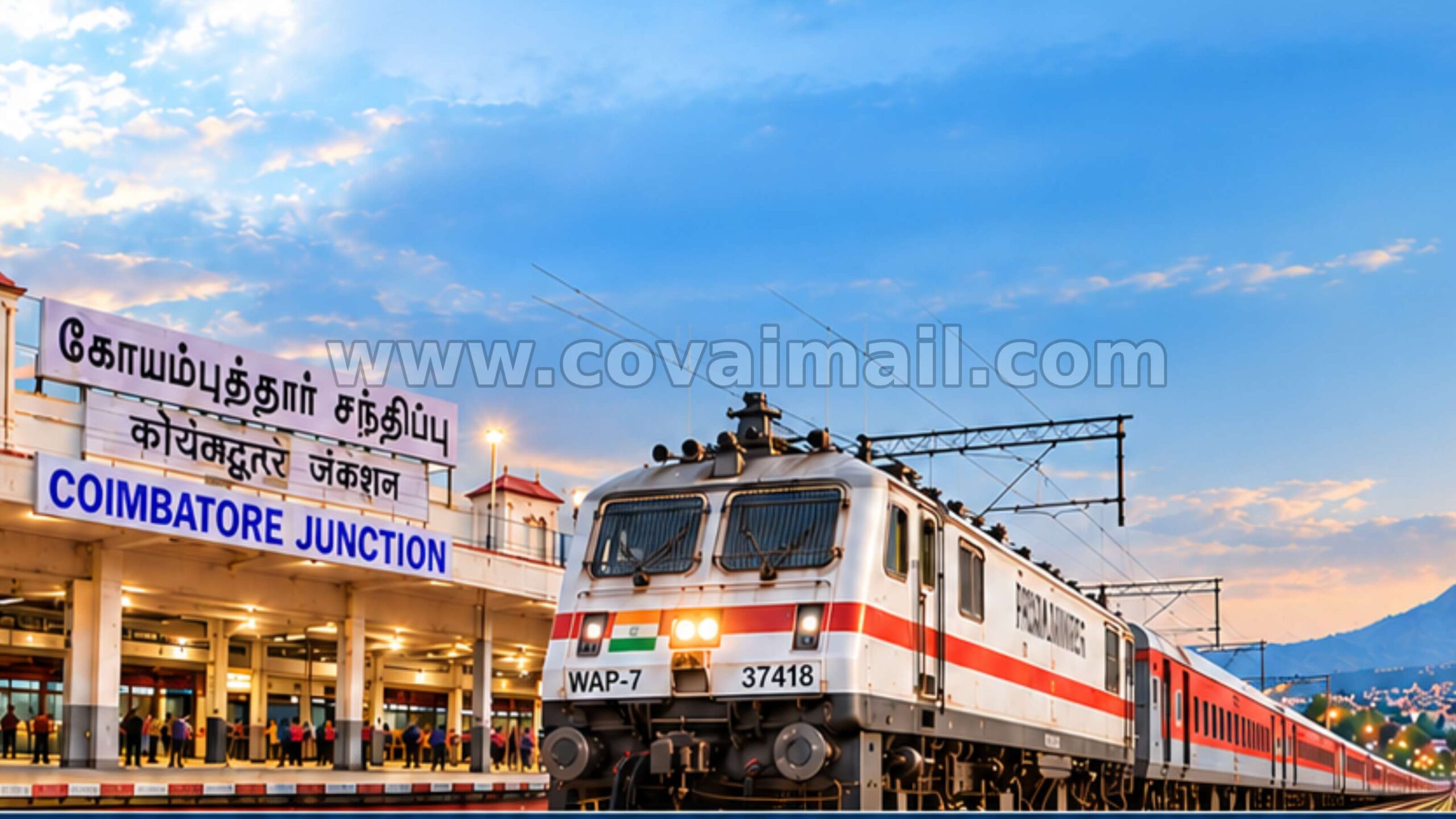

Industry bodies and passengers have welcomed the newly launched weekly train service from Coimbatore to Jabalpur, at the same time appealed to the authorities to increase frequency of trains that receive higher demand from passengers.
Coimbatore is one of India’s well-industrialized cities offering job opportunities to people from various parts of India in its industrial, commercial, educational and healthcare establishments.
More than a lakh guest workers have registered in Tamil Nadu Government’s Labour Department portal, and actual figures could exceed the mark. For most guest labours, railway is the affordable choice to travel home.
Coimbatore offers weekly train services to Rajkot, Jaipur, Dhanbad, Barauni, Sambalpur, Hisar, Delhi, Silchar besides Rameswaram and Chennai. Dhanbad and Jaipur have received bi-weekly services. So that is 12 weekly trains from Coimbatore to different parts of India. These long-distance train services help guest workers to visit their hometown often, promotes tourism and encourages business activities.
Coimbatore added a new weekly train that connects this part of Tamil Nadu with Madhya Pradesh. Coimbatore – Jabalpur Weekly Express Service (Train No. 20159) was inaugurated on Monday. The weekly express leaves Coimbatore Junction on Mondays at 5.05 p.m. and reaches Jabalpur on Wednesdays at 8.45 a.m.
The return train, Jabalpur – Coimbatore Weekly Express leaves Jabalpur at 11.50 p.m. on Fridays and arrives at Coimbatore Junction on Sundays at 5.10 p.m.
With this addition, 13 weekly express trains connect Coimbatore with destinations across India, facilitating travel for tourists, businesspersons, students, families and guest workers.
While welcoming these services and appreciating the efforts of Indian Railways and Southern Railway, Coimbatore NXT Railway Task Force urged the Railway Board to progressively increase the frequency of high-demand weekly express trains.
“Services with sustained passenger demand should be considered for conversion from weekly to bi-weekly, tri-weekly and eventually daily operations, subject to operational feasibility and infrastructure availability,” it emphasized.