
The Southern India Mills’ Association (SIMA) welcomed and thanked the Union Government for removing the 11% import duty on cotton for five months, effective from June 1, 2026, to October 31, 2026.
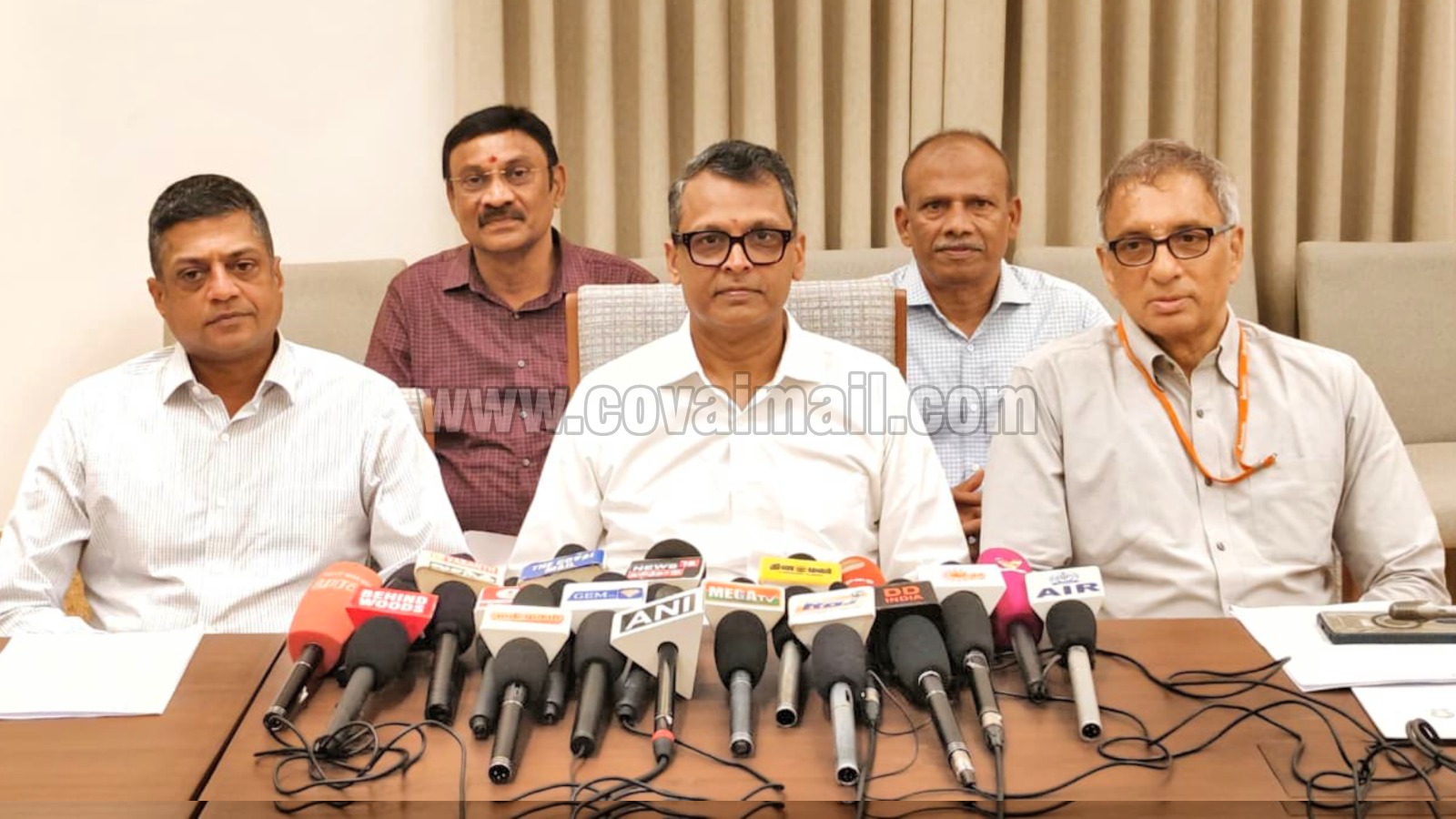
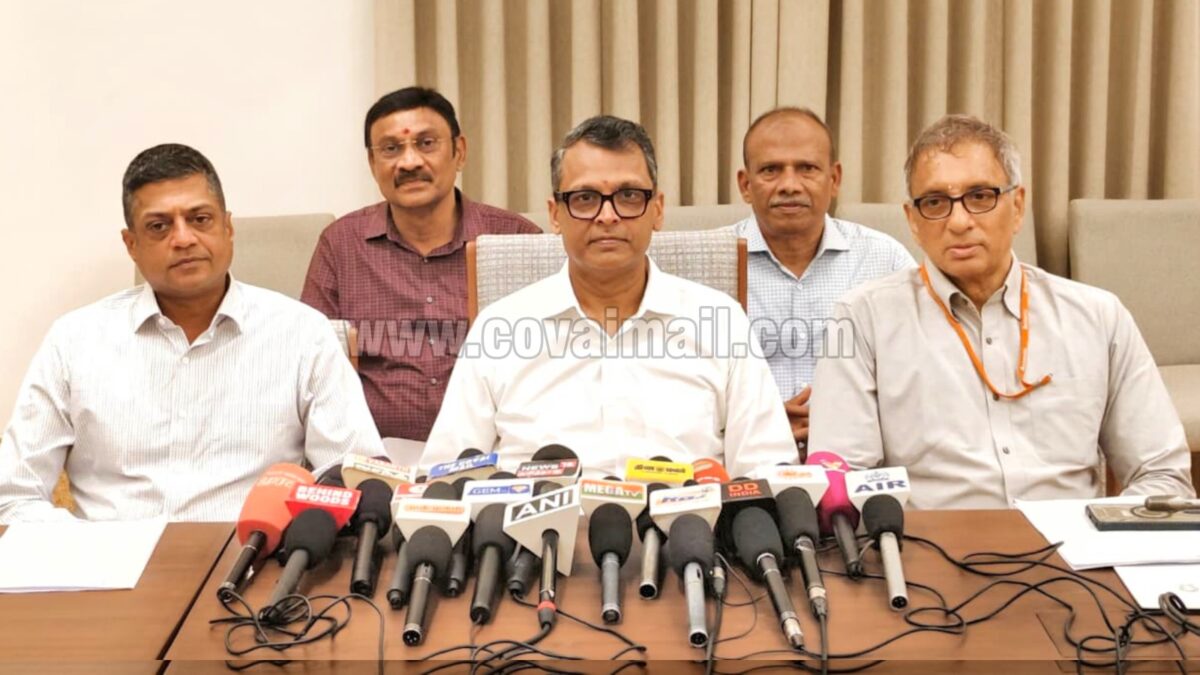
The association expressed its gratitude during a press meeting held today at the SIMA Conference Hall.
Durai Palanisamy, Chairman, SIMA; Ravi Sam, Vice Chairman, The Cotton Textiles Export Promotion Council (TEXPROCIL); Ashwin Chandran, Chairman, Confederation of Indian Textile Industry (CITI); Krishnakumar, Deputy Chairman, SIMA; and Selvaraju, General Secretary, SIMA, addressed the gathering.
The entire textile value chain thanked Prime Minister Narendra Modi; Nirmala Sitharaman, Minister for Finance; Shivraj Singh Chouhan, Minister for Agriculture and Farmers’ Welfare; Piyush Goyal, Minister for Commerce & Industry; and Giriraj Singh, Minister for Textiles, Government of India, for the exemption of the 11% import duty and cess on raw cotton imports from June 1 to October 31, 2026.
“The import duty had only a negligible impact on farmers, who are protected through the Minimum Support Price (MSP) mechanism,” stated in a press release from SIMA.
The industry representatives urged the Government to continue granting the duty exemption every year from April 1 to November 1, which is considered the off-season for cotton.
Thanking Tamil Nadu Chief Minister Joseph Vijay, they said they expect more support from the present Government. They expressed hope that power tariffs would not be increased in the coming days, citing the Chief Minister’s assurance that the issue would be addressed.
They also said that cotton prices are expected to decline in the coming years as a result of this duty exemption.
The Ministry of Finance issued a notification on May 30, 2026, exempting the 5% Basic Customs Duty (BCD), 5% Agriculture Infrastructure and Development Cess (AIDC), and the 10% Social Welfare Surcharge (SWS) levied on the customs duty, resulting in an effective duty relief of around 11%. The move is intended to help manufacturers cope with severe supply concerns and rising input costs.
At the press meet, the industry representatives also thanked Tamil Nadu Chief Minister Joseph Vijay, who reportedly wrote the first D.O. letter to the Prime Minister soon after assuming office, proactively and strongly recommending the immediate removal of the 11% import duty on cotton for the sustenance of the industry.
The office-bearers of the industry associations stated that an uninterrupted supply of quality cotton and customer-specified varieties is a prerequisite for the predominantly cotton-based textile industry, which provides employment to nearly 8 crore rural people, particularly women.
They further noted that major competing textile-exporting countries, including Bangladesh, Vietnam, Pakistan, Indonesia and Turkey, permit duty-free imports of cotton, enabling their textile sectors to procure raw materials at globally competitive prices. They said the present decision would help create a level playing field for Indian manufacturers.
The office-bearers also appreciated the Government’s long-term initiatives aimed at enhancing domestic cotton productivity through the Mission for Cotton Productivity (MCP) and other technological interventions.
While these measures are expected to significantly improve cotton production in the coming years, the import duty exemption provides immediate relief to the industry during the transition period.
They also expressed gratitude to the Government for its responsive and growth-oriented approach and reiterated that the textile industry and all stakeholders look forward to continued collaboration with the Government in transforming India into a globally competitive textile hub.
India’s textile industry is currently witnessing significant export opportunities arising from the global shift in sourcing patterns and the successful conclusion of major free trade agreements (FTAs). However, the industry has been facing challenges due to the shortage of quality cotton and the persistent disparity between domestic and international cotton prices.
The temporary duty exemption allows the textile and apparel industry to access high-quality raw materials from the global market at competitive rates during the off-season.
SIMA, TEXPROCIL and CITI have urged spinning mills to pass on these benefits by rationalising yarn prices. This stabilisation is expected to help Indian exporters capitalise on emerging FTAs.
Cotton accounts for nearly 65% of yarn manufacturing costs and 25-30% of garment and home textile manufacturing costs, making its availability and price critical determinants of competitiveness.
Stable and affordable cotton supplies are particularly important for exporters operating under long-term contracts and supply-nominated business arrangements, where fluctuations in raw material prices can significantly affect profitability and delivery commitments.
The industry is currently facing a cotton shortage of 40-50 lakh bales. Cotton production has remained around 290 lakh bales during the last two cotton seasons, against an industry requirement of 330-350 lakh bales of 170 kg each. Although India accounts for around 38% of the global cotton cultivation area, its share of production is only about 19%, primarily due to low productivity of 430 kg per hectare compared to the global average of around 1,000 kg per hectare.
Industry representatives stated that it may take 7-10 years for India to become self-sufficient in cotton through the implementation of the Mission for Cotton Productivity, for which Rs. 5,659 crore has been allocated. They cited challenges such as acquiring advanced technologies, obtaining approvals from the Genetic Engineering Appraisal Committee (GEAC), conducting trials, and implementing the latest seed technologies, defoliants, mechanisation, modern sowing and harvesting methods, and contamination-free cotton production practices.