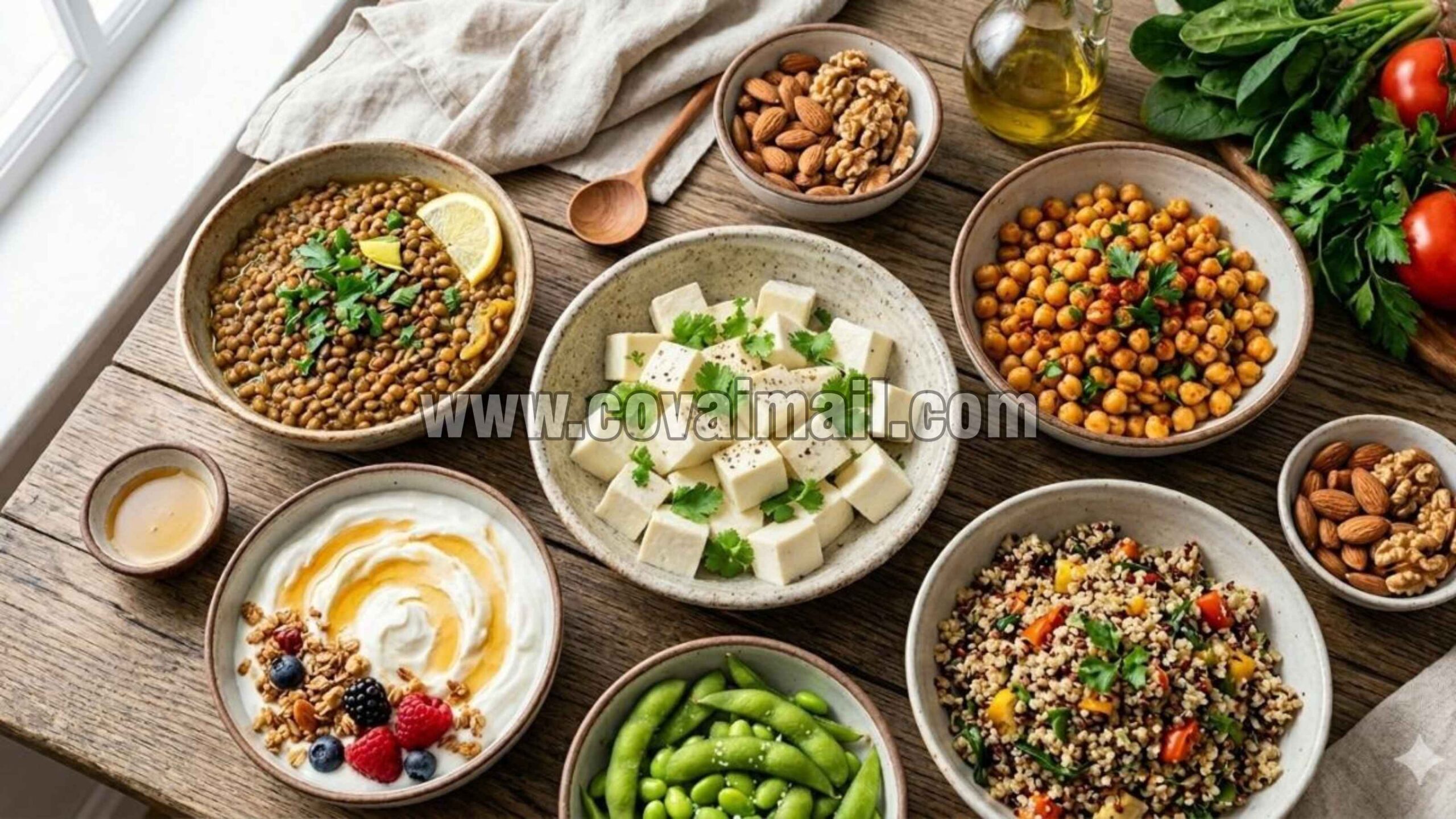

India’s protein conversation has become fixated on the wrong metric, grams on a label, at the cost of the questions that actually decide whether what someone is eating truly works for them: is it varied, is it calorie-adequate, and does it fit the person eating it, says a new white paper, ‘Rethinking Protein in Plant-Based Diets’, released by the Physicians Association for Nutrition, India (PAN India).
The white paper comes as India marks National Nutrition Week between September 1 and 7.
The white paper argues that protein has become “one of the most talked-about and most misunderstood topics in nutrition,” with conversations dominated by grams, “complete vs incomplete” labels, and product marketing, measures that, on their own, do not indicate whether what someone eats is actually healthy or adequate.
The Core Finding: Protein Adequacy is a Property of Eating Patterns as a Whole
The white paper’s central argument is that protein adequacy cannot be judged food-by-food or gram-by-gram. It has to be evaluated across five interconnected levels: the protein itself, the food it comes in, the meal it’s a part of, the overall eating pattern, and the health outcomes and life-stage needs of the person eating it.
“People often ask whether a food is a complete protein or whether it provides enough grams,” said Dr Rajeena Shahin, Medical Director, PAN India.
“Protein should be viewed as part of a wider nutritional package. What matters is whether the overall dietary pattern provides adequate usable protein—together with fibre, micronutrients and other beneficial food components—in a form suited to the person’s life stage, health status and needs.
Key Findings
- The “complete vs incomplete protein” framing is outdated. Almost all plant foods, including pulses, grains, nuts, and seeds, contain all nine essential amino acids the body needs; what varies is the relative amounts, digestibility, and protein density of each, not whether it is present. Within a varied, calorie-adequate eating pattern, deliberately combining specific foods at every single meal is generally unnecessary.
- Lab protein-quality scores don’t capture the complete nutritional value of a food or dietary pattern. Widely cited scores such as PDCAAS and DIAAS are useful for comparing amino acids in isolated foods, but they say nothing about portion size, food processing, affordability, or how a food fits into an actual meal and overall eating pattern, which is what ultimately determines health outcomes.
- A “high-protein” label is not a guarantee of nutritional quality; diversity of the overall plate is what matters. The paper cautions that many processed, protein-marketed products are simultaneously high in sodium, saturated fat or added sugar, and low in fibre — and that adding a concentrated protein food to a meal is not, by itself, evidence of a healthier plate.Two foods with identical protein content can have very different effects on health depending on the whole nutritional package they bring — and what they replace in the meal — not on whether a high-protein item has simply been added to it.
- Real protein risk is concentrated, not universal.For a healthy adult with a varied, adequately fed eating pattern, ICMR-NIN’s reference intake of roughly 0.83g/kg/day (about 50g/day for a 60kg adult) can generally be met through a varied, energy-adequate diet containing sufficient protein-rich foods.
The paper identifies the genuine risk groups as growing children, pregnant and breastfeeding women, older adults, people who are unwell or losing weight rapidly, and those with restricted intake, illness, malabsorption, rapid weight loss or clinical recovery. These groups of people need individual attention, not blanket high-protein messaging aimed at the general population.
- What a food replaces matters more than what it adds.Citing a study following over 715,000 people, the paper notes that higher plant protein intake was linked to lower risk of death from any cause and from heart disease. A separate study found that replacing just 3% of daily calories of animal protein, in particular, away from processed meat, was associated with a lower risk of death. The evidence is observational.
“As a clinician, I see this every day: no single ingredient makes a meal healthy, and none makes it unhealthy either,” said Dr Rajendiran Gopalan, Professor and Head, Preventive Cardiology, PSG Institute of Medical Sciences and Research (PSGIMSR), Coimbatore.
“What determines outcomes is the diversity and balance of the whole plate, meal after meal, day after day. This white paper puts the evidence for that plainly: protein adequacy is a property of the overall eating pattern, not any one food added to it. That’s a principle worth holding onto whenever nutrition decisions are being made at scale — for a family, a hospital, or a public meal programme.”
The white paper is explicit that getting protein right doesn’t rest on individuals alone: it calls on healthcare professionals to assess the real eating pattern rather than assume a plant-based label means protein-adequate or inadequate; on food companies to stop treating a protein claim as proof of nutritional quality; and on policymakers to support affordable pulses and legumes, crop diversity, clear food labelling, and quality standards for supplements.
The paper frames protein guidance as inseparable from affordability, environmental sustainability, and the resilience of the wider food system — arguing that crop diversity and accessible staples matter as much to long-term nutrition security as any single nutrient target.
“Protein anxiety is being manufactured faster than protein literacy,” Dr Shahin added. “Our goal with this paper is not to tell people to eat more or less protein. It’s to shift the conversation from counting grams to looking at overall patterns of eating and whether that meets the needs of the person. That question should guide decisions by families, but also by institutions and policymakers shaping nutrition at scale.”
Rethinking Protein in Plant-Based Diets sets out a food-first framework for protein adequacy, built around seven practical steps: defining an individual’s protein-need context, assessing their existing eating pattern, setting an appropriate target, building meals around diverse protein-rich foods, improving protein availability and digestibility through appropriate preparation and processing, pairing nutrition with resistance activity, and using supplements selectively — only where food alone cannot meet a genuine, defined gap. The full white paper is available on request.