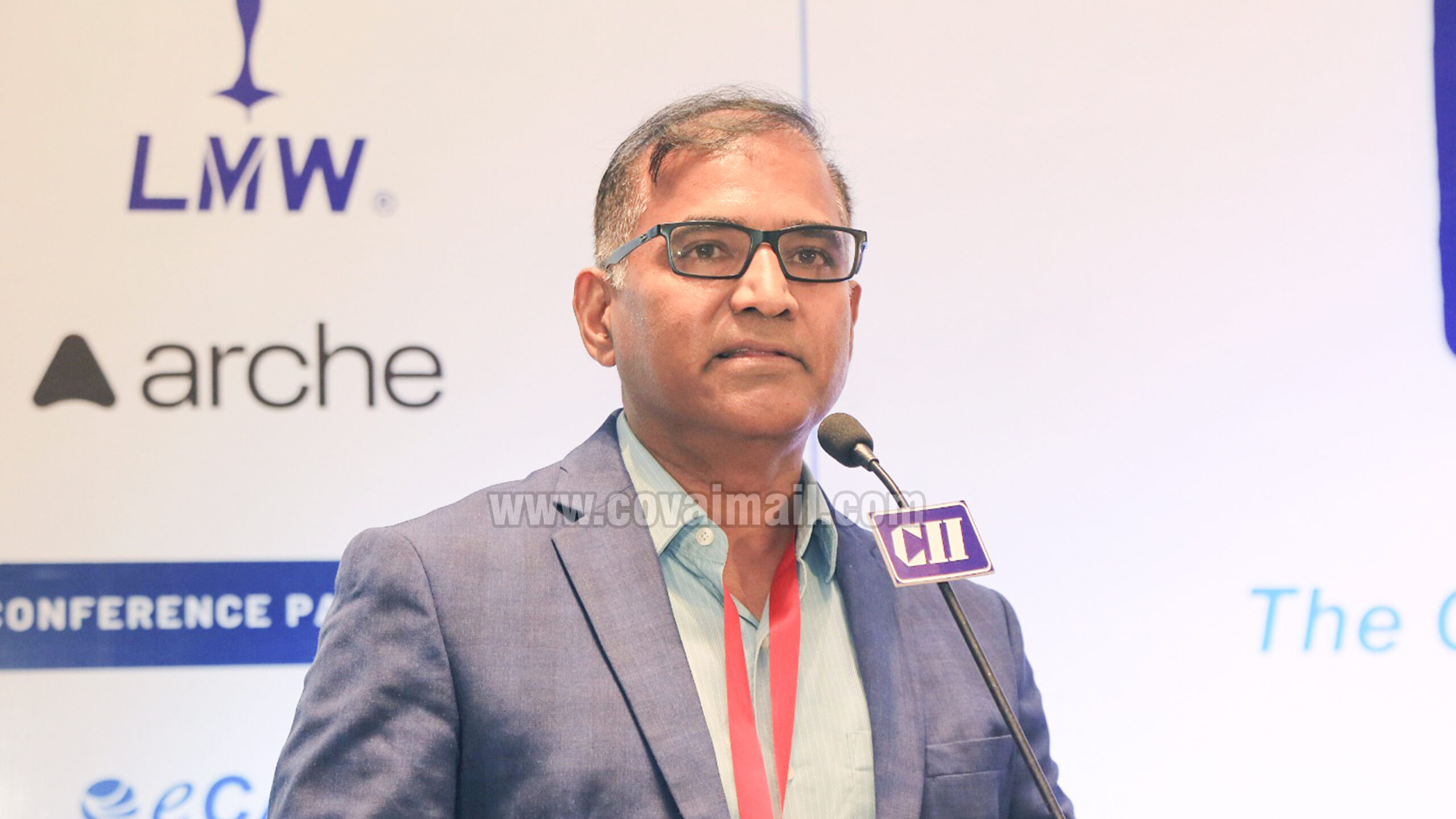

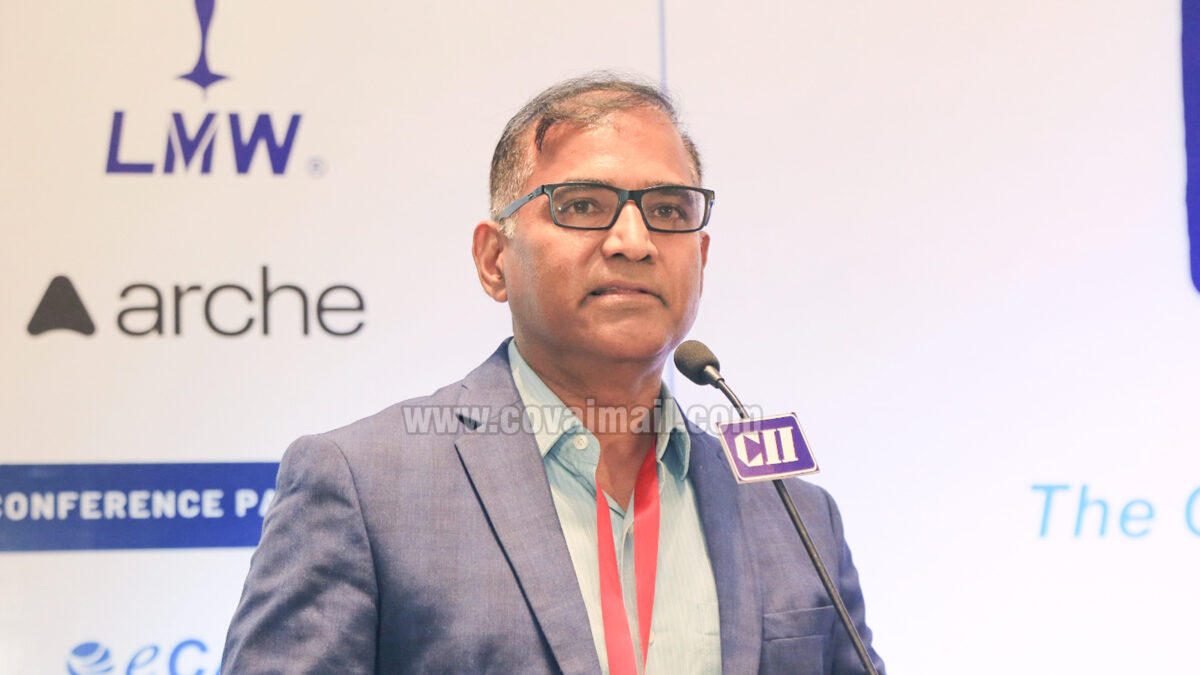
To support industry, startups and academic institutions in advancing cyber security capabilities, innovation and capacity building in the region, establish the Indian Computer Emergency Response Team’s (CERT-In) Centre of Excellence in Coimbatore, appealed Mahalingam Ramasamy, Vice Chairman, CII Coimbatore Zone to Sanjay Bahl, Director General, CERT-In, Ministry of Electronics and Information Technology, Government of India at the third edition of “Check Post ’26”.
Check Post ’26 is a one-day cyber security conference, organised by the Confederation of Indian Industry (CII), Coimbatore Zone, recently at Hotel The Residency Towers.
The conference was held under the theme, “The Cyber Dividend: Turning Digital Risk into Business Resilience.”
The conference brought together policymakers, cyber security experts, industry leaders, technology professionals and business executives to deliberate on strengthening cyber resilience as a strategic business imperative in an increasingly digital economy.
Sanjay Bahl, Director General, CERT-In, Ministry of Electronics and Information Technology, Government of India, inaugurated the conference as the chief guest. Delivering the inaugural address, Sanjay Bahl, emphasised that cyber security today is fundamentally a business risk requiring strategic management rather than merely a technology issue.
He observed that organisations operating in today’s volatile, uncertain and interconnected digital environment must strengthen resilience by integrating governance, people, processes and technology into a comprehensive cyber security framework.
Bahl explained that cyber resilience is the ability of organisations to anticipate, withstand, recover from, and continuously evolve in the wake of cyber incidents.
Highlighting the increasing sophistication of cyber threats accelerated by Artificial Intelligence, interconnected digital ecosystems and growing geopolitical risks, he stressed the importance of adopting security by design, Zero Trust architecture, proactive threat detection, cyber hygiene and continuous organisational preparedness.
Drawing parallels between pandemic preparedness and cyber resilience, he emphasised that preparedness, rapid response and continuous learning are essential for safeguarding critical digital infrastructure. He also highlighted CERT-In’s initiatives in strengthening cyber resilience across sectors through capacity building, cyber drills and collaborative preparedness.
He later interacted with the participants, responding to their questions.
Noushad, Chairman, CII Coimbatore Zone, and Managing Director, Walkaroo International, welcomed the gathering, and he said that as industries rapidly embrace digital transformation, cyber security has become fundamental to sustaining business continuity, customer trust and enterprise competitiveness.
He noted that while quality, service and relationships continue to define successful businesses, digital trust has now emerged as an equally important pillar of long-term growth. Reaffirming CII Coimbatore’s commitment towards supporting industry through knowledge sharing, collaboration and policy advocacy, he expressed confidence that the conference would provide practical insights to help organisations strengthen their cyber resilience.
Delivering the theme address, Gunasegharan, Conference Chairman and Director, eCaps Computers, reflected on the evolution of Check Post since its inception in 2023 and its emergence as one of CII’s specialised platforms focused exclusively on cyber security.
He observed that cyber security has evolved beyond being an information technology function to becoming a boardroom priority and a core element of enterprise governance. Stressing that organisations must move from passive defence to proactive cyber resilience, he remarked that businesses embedding cyber governance, secure software supply chains and digital trust into their operations would gain a lasting competitive advantage.
He also shared his vision of positioning Coimbatore as a leading cyber security hub by nurturing innovation, startups and advanced cyber security capabilities.
Delivering the closing remarks, Mahalingam Ramasamy, observed that the rapid adoption of Artificial Intelligence, cloud technologies and connected systems has significantly expanded the cyber threat landscape.
He emphasised that organisations must proactively strengthen cyber resilience through robust governance, skilled talent and secure digital practices.
Shimna, Deputy Director, CII Coimbatore, was also present. Industry leaders and heads of organisations participated in the conference.
The day-long conference features seven technical sessions, with cyber security experts from across India and abroad sharing insights on emerging threats, digital resilience, and best practices in cyber security.
Immediately following the inaugural session, the first technical session featured a special address by Durga Prasad Dube, Executive Vice President & Group Chief Information Security Officer, Reliance Industries Limited, on “Cyber Security Perspective for Industries.”
He traced the evolution of industry from Industry 1.0 to Industry 5.0, highlighting how cyber security has evolved from protecting physical assets to becoming a strategic enabler of digital trust and business resilience.
He observed that while digital transformation through AI, cloud, OT and IoT is creating unprecedented business opportunities, it is also expanding the cyber threat landscape, requiring organisations to move beyond traditional security approaches.
Stressing that resilience is more important than merely preventing attacks, he called upon industries to adopt risk-based cyber governance, strengthen supply chain security, build resilience against ransomware and AI-powered threats and position cyber security as a strategic business capability that drives trust, innovation and long-term competitiveness.
The conference witnessed over 150 active participation from CEOs, Managing Directors, Chief Information Security Officers (CISOs), Chief Information Officers (CIOs), IT leaders, cyber security professionals, manufacturing industries, startups and academia.