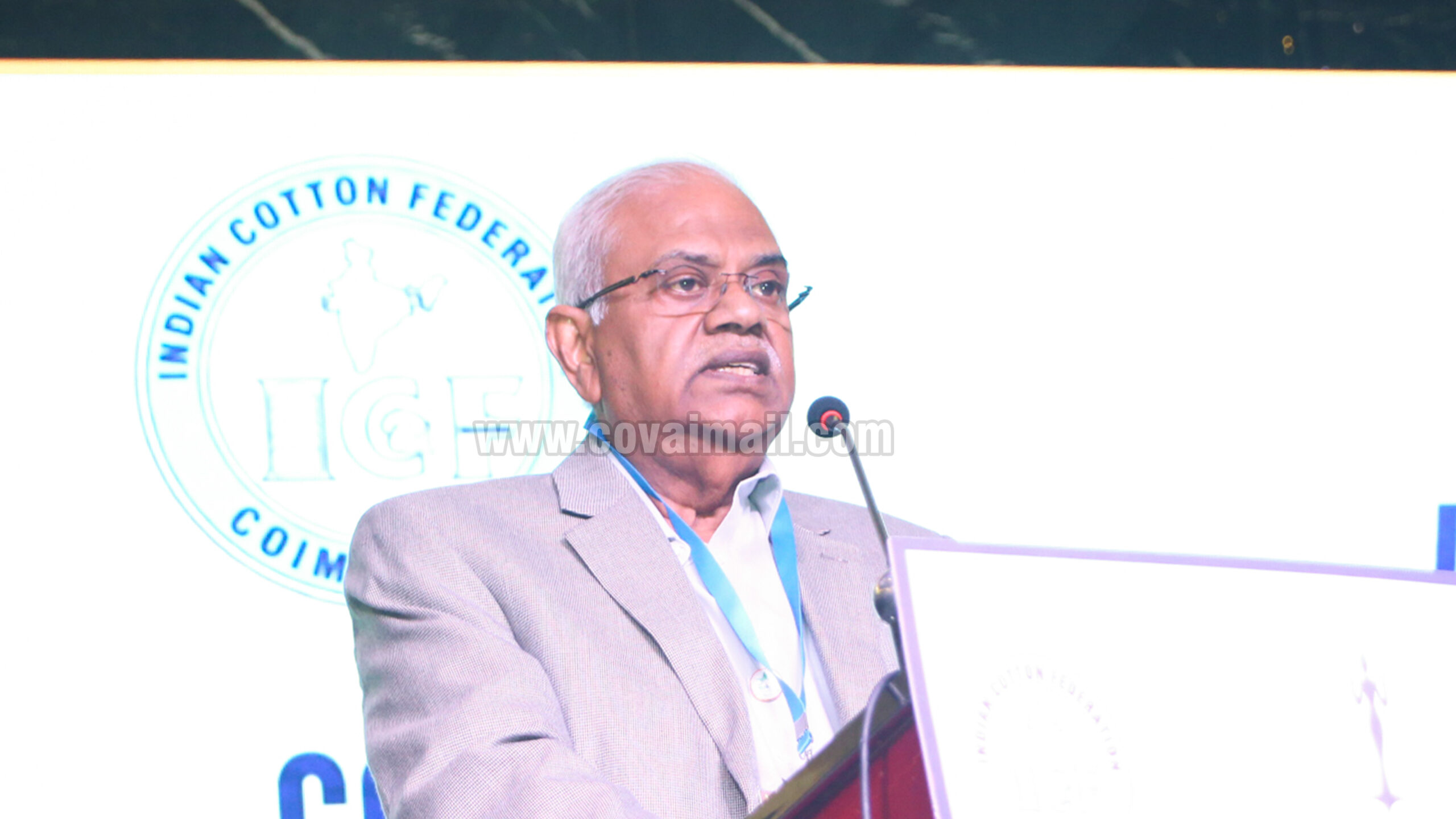

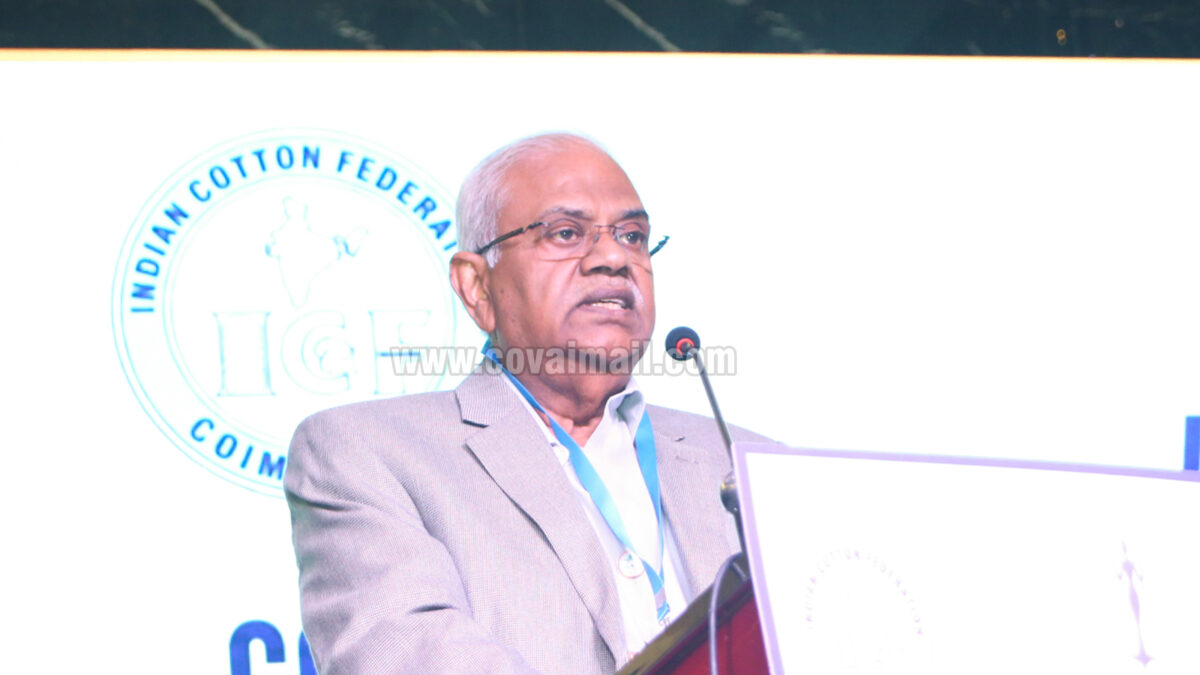
The Indian Cotton Federation (ICF) recently organised its 47th Annual General Meeting (AGM) for 2026.
During the AGM, the Federation reviewed the outlook for the 2026–27 cotton crop, market challenges, quality and sustainability concerns, and the future priorities of the Indian cotton sector.
The Federation said greater coordination among farmers, ginners, traders, spinners and textile manufacturers, along with appropriate government support, is essential to strengthen the Indian cotton value chain.
The 2025–26 Indian cotton crop was estimated at around 3.20 crore bales. For 2026–27, cotton acreage has increased, while the final crop size will depend on rainfall, weather conditions and crop development.
ICF stressed the need to improve cotton quality, market transparency, reliable testing, traceability and sustainable cultivation to enhance India’s competitiveness in global markets.
The Federation also highlighted the successful 7th Biennial All India Cotton Conference, held in Coimbatore on August 21 and 22, 2026, under the theme “Cotton – The Sustainable Fibre of the Future.”
The new office-bearers elected at the AGM are Thulasidharan as President, Nataraj and Adhitya Krishna Pathy as Vice Presidents, Nishanth Asher as Honorary Secretary, and Chetan Joshi as Honorary Joint Secretary.
ICF said it will focus on stronger industry representation, improved information sharing and coordinated efforts towards a sustainable and competitive future for Indian cotton.
In his address, ICF President Thulasidharan said the continuing 50% US tariff on Indian textile and apparel shipments has exerted sustained pressure on downstream exporters. However, he noted that this impact has been partly countered by new bilateral agreements and Free Trade Agreements with the United Kingdom and the European Union, which have opened preferential access to nearly USD 465 billion in combined overseas retail markets.
He said total cotton production for 2025–26 had stabilised at between 320 and 325 lakh bales, supported by steady arrivals from Maharashtra and South India. However, domestic cotton prices have surged by nearly 25% over the past two months, driven by rainfall deficits in Gujarat and Telangana and concerns over standing crops. At the same time, global ICE cotton benchmarks have softened from earlier averages of around 86 cents to the current range of 80–82 cents.
This widening disparity between elevated domestic prices and softer overseas futures has squeezed spinning mill margins and affected downstream export competitiveness, he said.
Thulasidharan also pointed to productivity as a key concern for the Indian cotton sector. While sown acreage has faced competition from alternative cash crops, India’s national average cotton yield has declined from 565 kg per hectare in 2013–14 to around 430 kg per hectare today. Reversing this yield stagnation, he said, is imperative for the long-term viability of the textile sector.
He said that during this challenging period, the Indian Cotton Federation remained proactive in protecting stakeholder interests, promoting modernisation and engaging with policymakers.
The Federation has expanded its central testing laboratories with advanced testing instruments and technical personnel to provide high-precision fibre evaluations. It has also conducted specialised workshops for ginners, traders and laboratory technicians.
ICF has maintained regular dialogue with the Ministry of Textiles, the Ministry of Agriculture and the Cotton Corporation of India on issues including minimum support price (MSP) mechanisms, raw cotton import-duty exemptions and the distribution of high-yield certified seeds.
Critical Policy Priorities for 2026–27
Thulasidharan said that scaling India’s textile economy to USD 350 billion, with USD 100 billion in annual exports by 2030, will require immediate policy alignment across the domestic value chain.
The Federation has called for rationalising GST rates to a uniform 5% across the entire textile value chain to address inverted duty anomalies.
It also called for the pragmatic implementation of Quality Control Order (QCO) norms across natural and man-made fibres to protect domestic quality standards without disrupting supply chains.
Other priorities include granting complete duty relief on raw cotton imports, establishing preferential low-interest credit windows for seasonal cotton procurement by ginners and spinning mills, and accelerating cotton research initiatives to promote high-density planting and yield-improving agronomic practices.
Strategic Vision: Scaling from 320 to 500 Lakh Bales
The Federation said that as global brands transition away from petroleum-based synthetics in search of verified, eco-friendly alternatives, Indian cotton has an opportunity to strengthen its position in global markets.
ICF said bridging the gap towards 500 lakh bales will require focused efforts in three key areas.
Recurrent pest infestations, including pink bollworm challenges in northern cotton-growing regions, highlight the need for direct industry-farmer field programmes. The Federation called for accelerated adoption of drip irrigation, precision agriculture and resilient cultivation techniques.
With global apparel markets increasingly demanding transparency regarding the origin, environmental footprint and ethical provenance of fibre, ICF is supporting the deployment of digital traceability, AI-driven grading and transparent logistics to help Indian cotton secure greater value in international markets.
The Federation also urged growers, ginners, merchants and spinners to move beyond short-term spot-market speculation and invest collaboratively in long-term risk management, contract farming and soil-health initiatives.
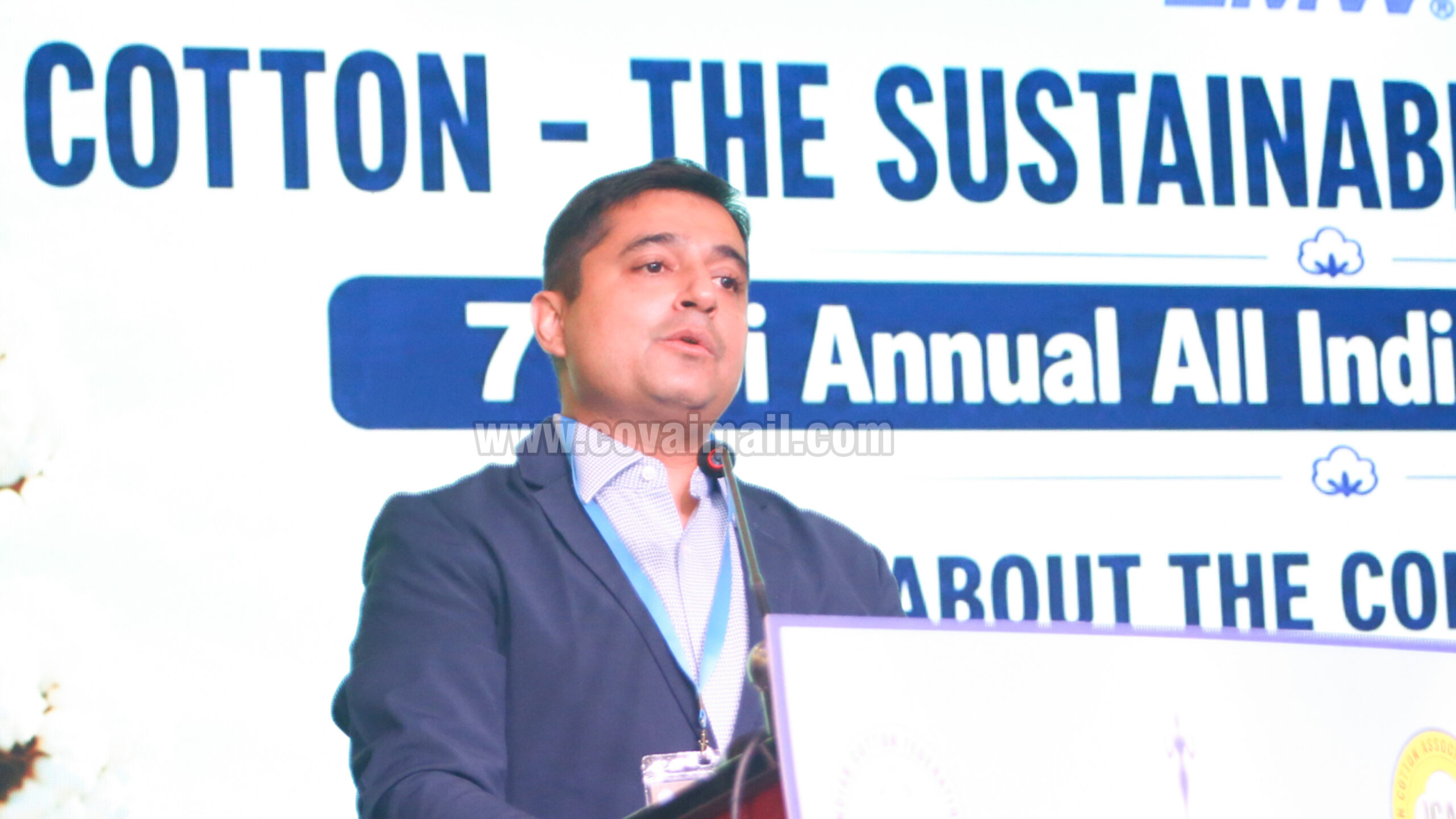
In his address, ICF Honorary Secretary Nishanth A. Asher said several issues would require continued attention during the coming year.
“We must closely monitor the development of the 2026–27 crop, engage constructively on policies affecting cotton and textile competitiveness, and encourage improvements in quality and market transparency,” he said.
He also stressed the need to strengthen communication within the industry and ensure that the Federation’s work reflects the practical concerns of its members.
“Our objective should be to make ICF a more active, representative and effective organisation—one that can bring people together, provide credible industry perspectives and contribute to the long-term development of Indian cotton,” he said.