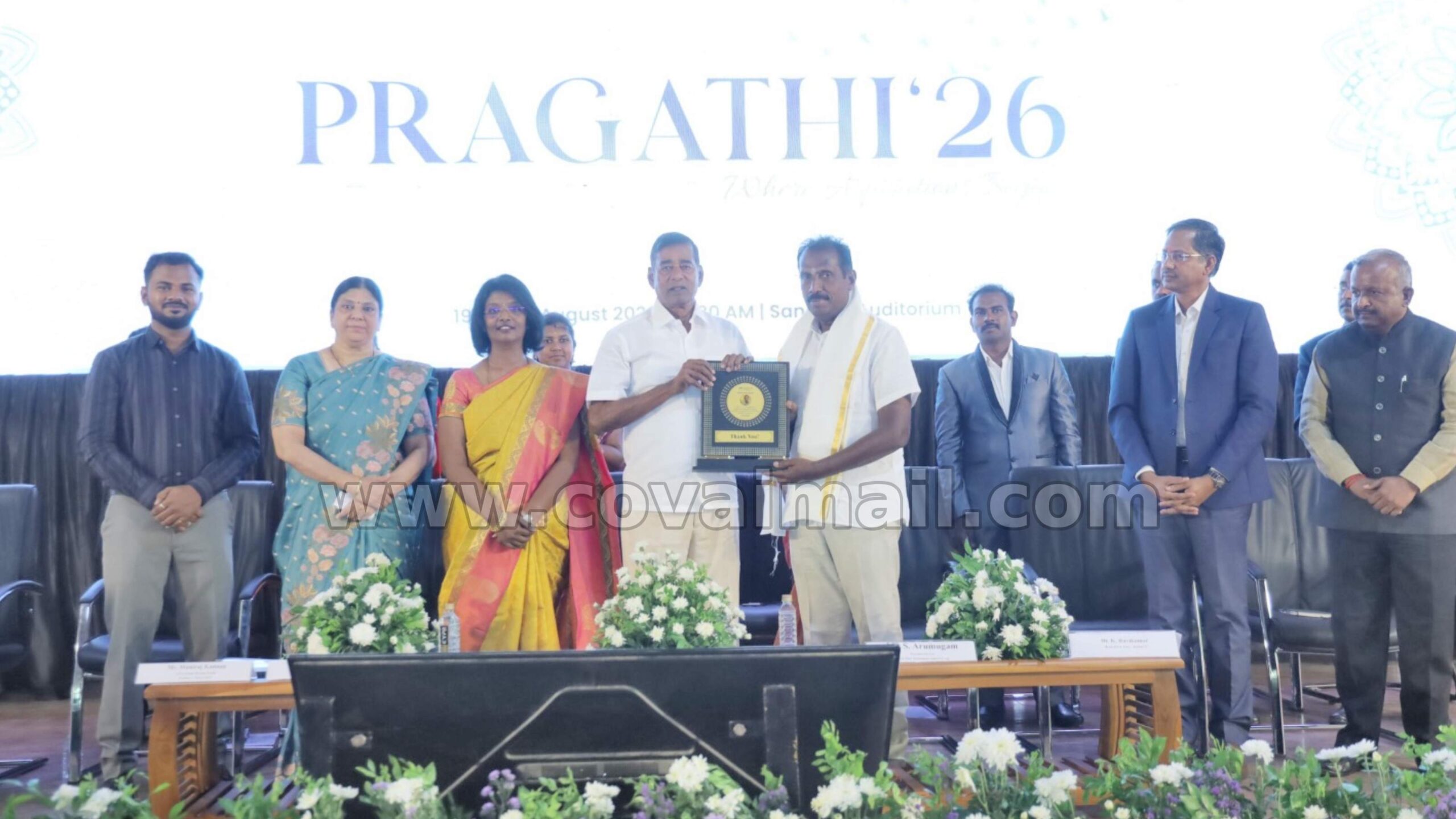

KPR Institute of Engineering & Technology (KPRIET) welcomed its first year students to the institution by organizing its Inaugural Ceremony, Pragathi 2026.
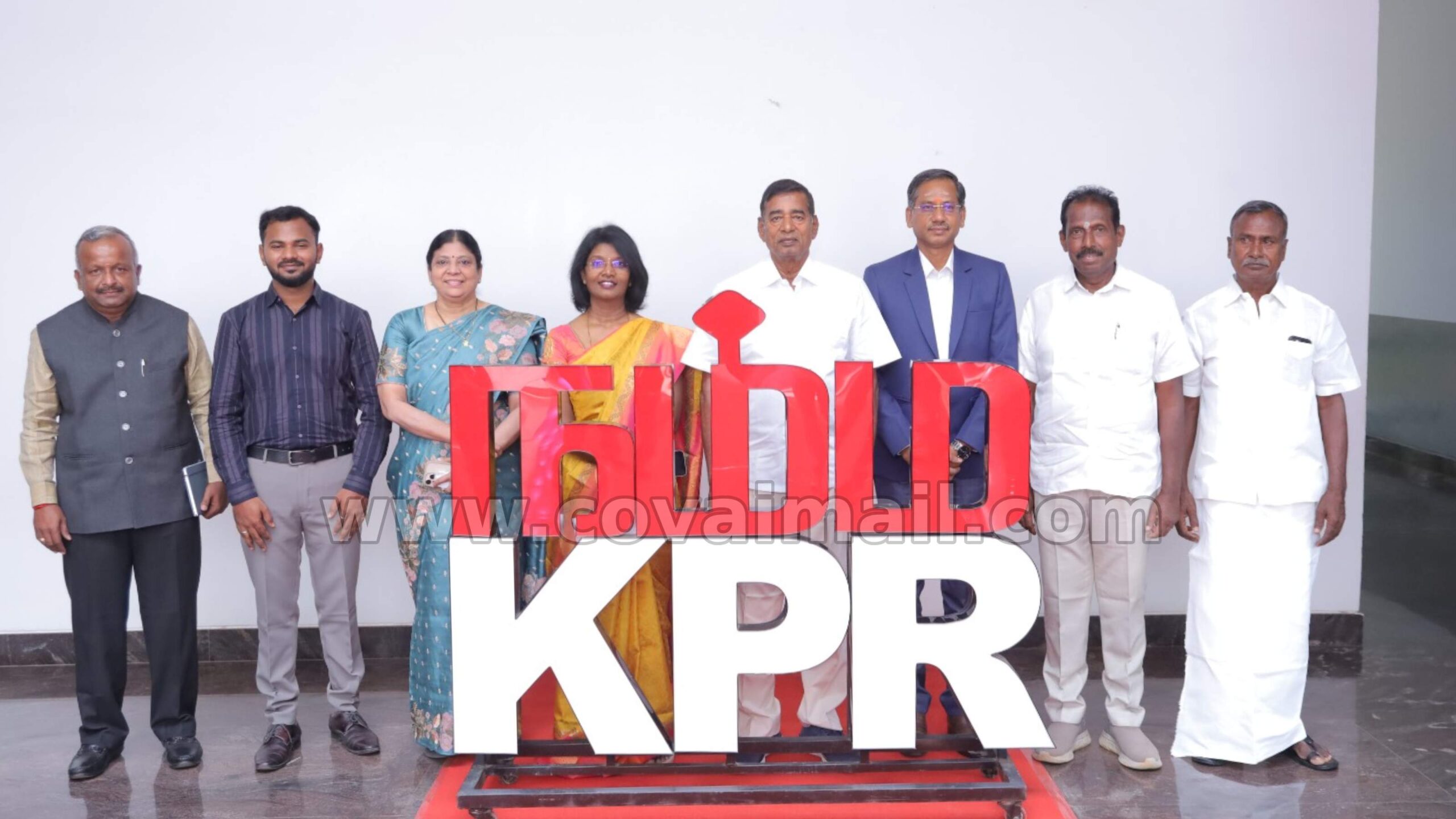
KP Ramasamy, Chairman, KPR Group presided over the event. V. T. Valluvan Natural and Regenerative Farmer UN FAO recognized Soil Farmer Hero Pollachi, Coimbatore; S. Arumugam Managing Director, Circor Flow Technologies India Pvt Ltd., K. Sumathi Lawyer Madras High Court; Muniraj Kannan, CEO – Urban Flavours Foods and an Alumnus of KPRPIET (Class of 2021) were the Special Guests.
M.Akila, the principal of the college officially welcomed the students to the college. She said the KPRIET is known for 3 things – Academics, Discipline and Safety.“You have walked into a campus with more than 100 labs including centres of excellence that are built with leading industries,” she remarked.
Speaking more about the industry-academia climate that exists in KPRIET, she said that when a student joins this college, he/she not just joins one institution but the KPR group of companies that provide a live industry experience to them. She also mentioned that KPRIET is a college where meritorious accomplishments are always rewarded.
K.P.Ramasamy in his address emphasized the importance of education. “I completed P.U.C and could not go any further. I started the industry and gave opportunity to women to work. 30 years ago, one of my mill employee met me and said that she desires to study and asked me to help her. In 1998, we formed KPR Women Employees Educational Division through which we provide education to women employees (through collaboration with Tamil Nadu Open University). Today, over 42,000 women employees have benefited, earning school-level and university degrees,” he said.
“I have instructed the head of the KPR Women Employees Educational Division to guide them to clear competitive exams also. For you, the students of KPRIET, we aim to give you much more and we are prepared to help you reach great heights. One thing you should keep in mind is to learn beyond the classrooms and books. Take 40% from the books and classrooms but let the 60% come from beyond. You should be students who seek education for life,” he added.
(More insights will be updated shortly)