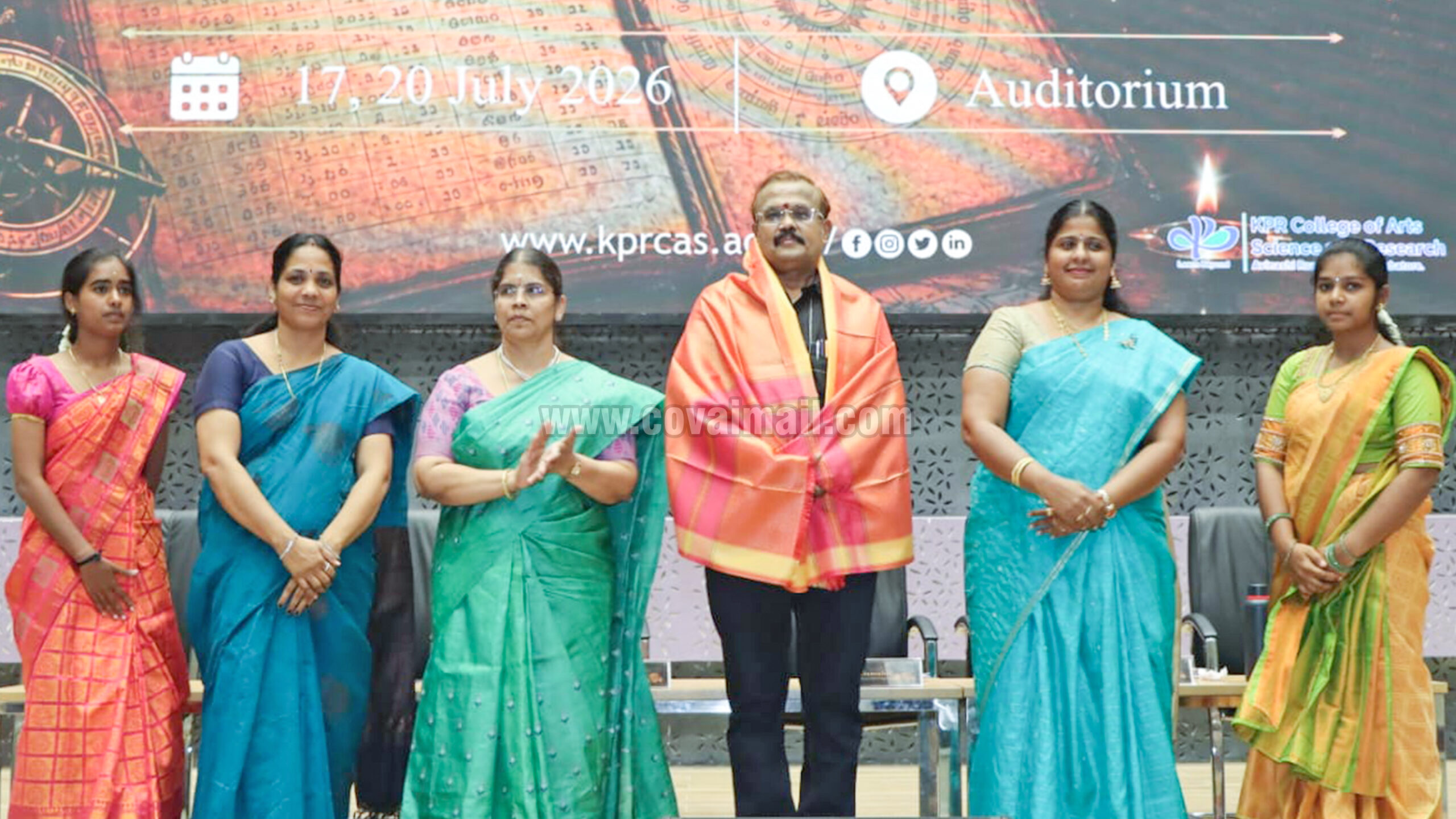

The School of Intelligent Systems and Data Science (ISDS) at KPR College of Arts, Science and Research recently organised a two-day Immersion Programme on Indian Knowledge Systems under the theme, “Ancient Astronomy: Observations and Calculations Found in Traditional Tamil Almanacs (Panchangam).”
The programme aimed to explore the scientific legacy of ancient Tamil knowledge through astronomy, mathematics, temple architecture, and heritage.
Geetha, Principal of the college, delivered the welcome address and felicitated the participants.
Pradeepa, Dean, School of Intelligent Systems and Data Science (ISDS), introduced the programme and highlighted its significance in connecting the scientific wisdom of ancient Indian knowledge with modern research. She encouraged students to pursue interdisciplinary learning and innovation.
The chief guest, Sehlvi Damother, Advocate, Astrologer, Spiritual and Political Strategist, delivered a lecture on the scientific principles underlying the traditional Tamil Panchangam. The session covered celestial observation techniques, solar and lunar cycles, traditional algorithms for astronomical calculations, and the remarkable correlation between ancient predictions and modern astronomical data.
The afternoon technical sessions were conducted by Anuradha, Loganathan, and Selvaraj from the Department of Tamil, KPR College of Arts, Science and Research. They delivered lectures on archaeology, ancient Tamil astronomy, and the scientific aspects of Tamil temple architecture, highlighting the rich intellectual and cultural heritage of Tamil civilisation.
On the second day, participants visited the Perur Patteeswarar Temple as part of a heritage immersion programme. They explored the temple’s architectural features, including the Golden Ratio, fractal patterns, symmetry, astronomical alignment with sunrise and sunset, the seasonal movement of sunlight during the equinoxes and solstices, geometric principles in pillar spacing, and the symbolic representation of the Navagraha and the Zodiac.
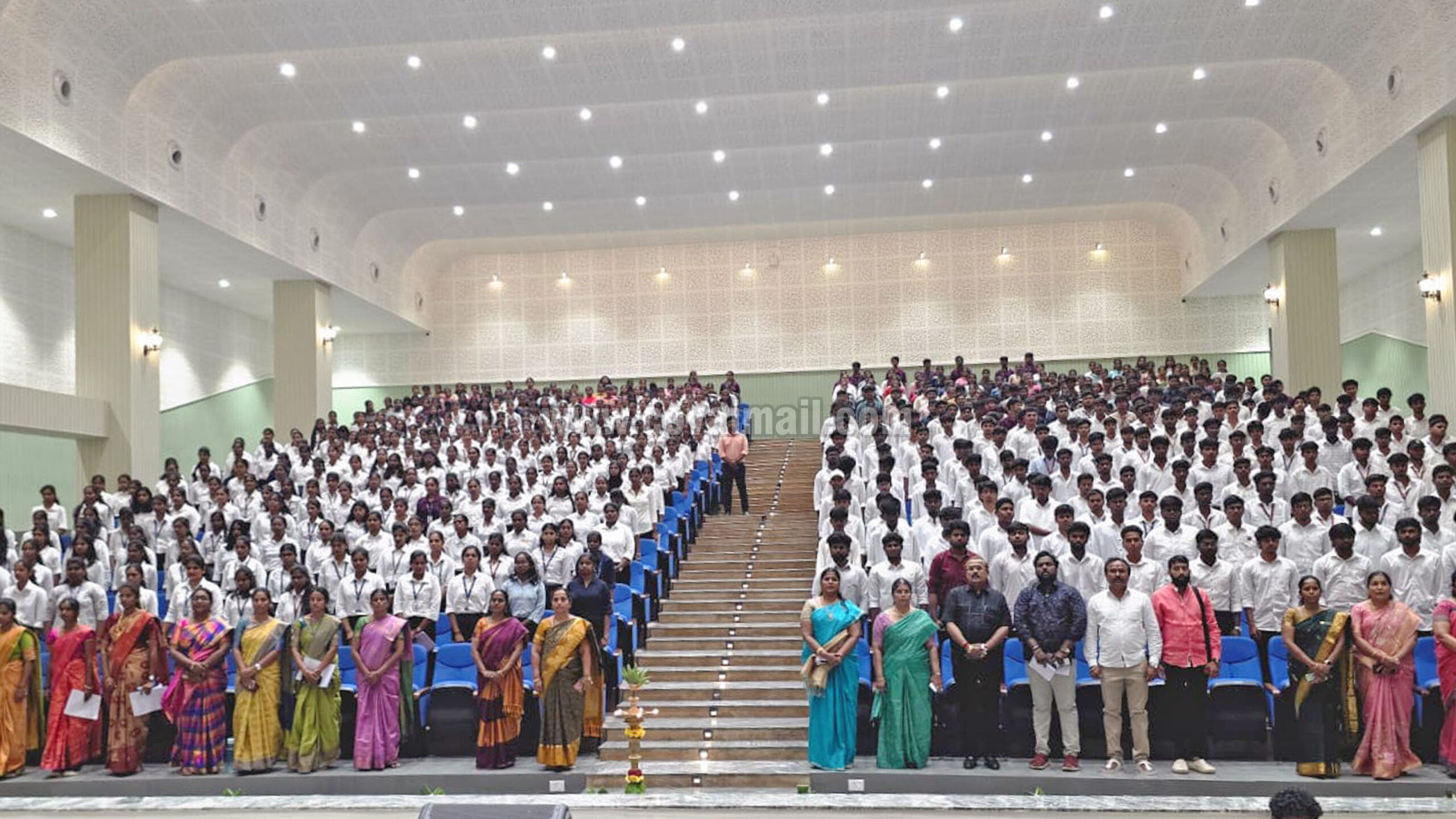
The programme provided faculty members and students with an opportunity to understand the scientific foundations of Indian Knowledge Systems and inspired them to undertake interdisciplinary research by integrating traditional knowledge with contemporary science and technology.