
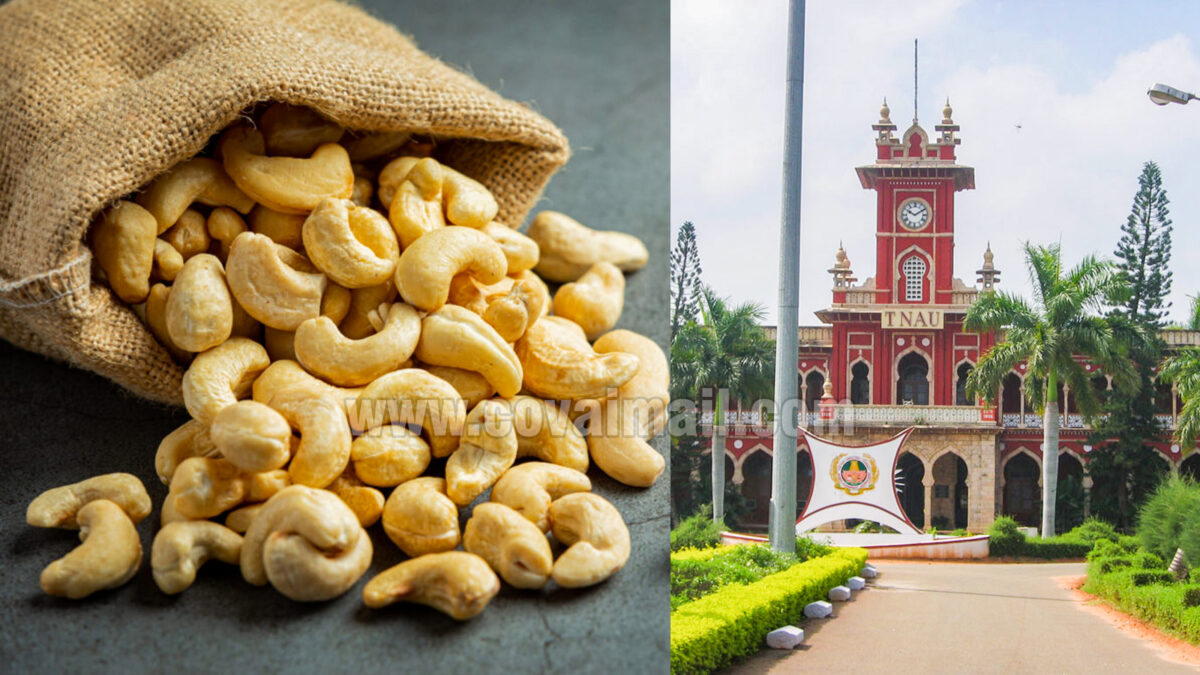
The Tamil Nadu Agricultural University (TNAU) is organising a three-day annual group meeting on the All India Coordinated Research Project on Cashew (AICRP–Cashew) from March 4 to 6, 2026.
Scientists working on cashew from 14 research centres across the country, comprising about 30 members, have gathered to discuss findings from ongoing research addressing key issues in cashew cultivation, including crop improvement, crop management and crop protection. Separate technical sessions on each of these aspects of cashew cultivation are being held during the meeting.
A special session involving farmers, scientists and stakeholders is also being organised, along with a plenary session to discuss the current status and future strategic approaches for cashew production at the national level.
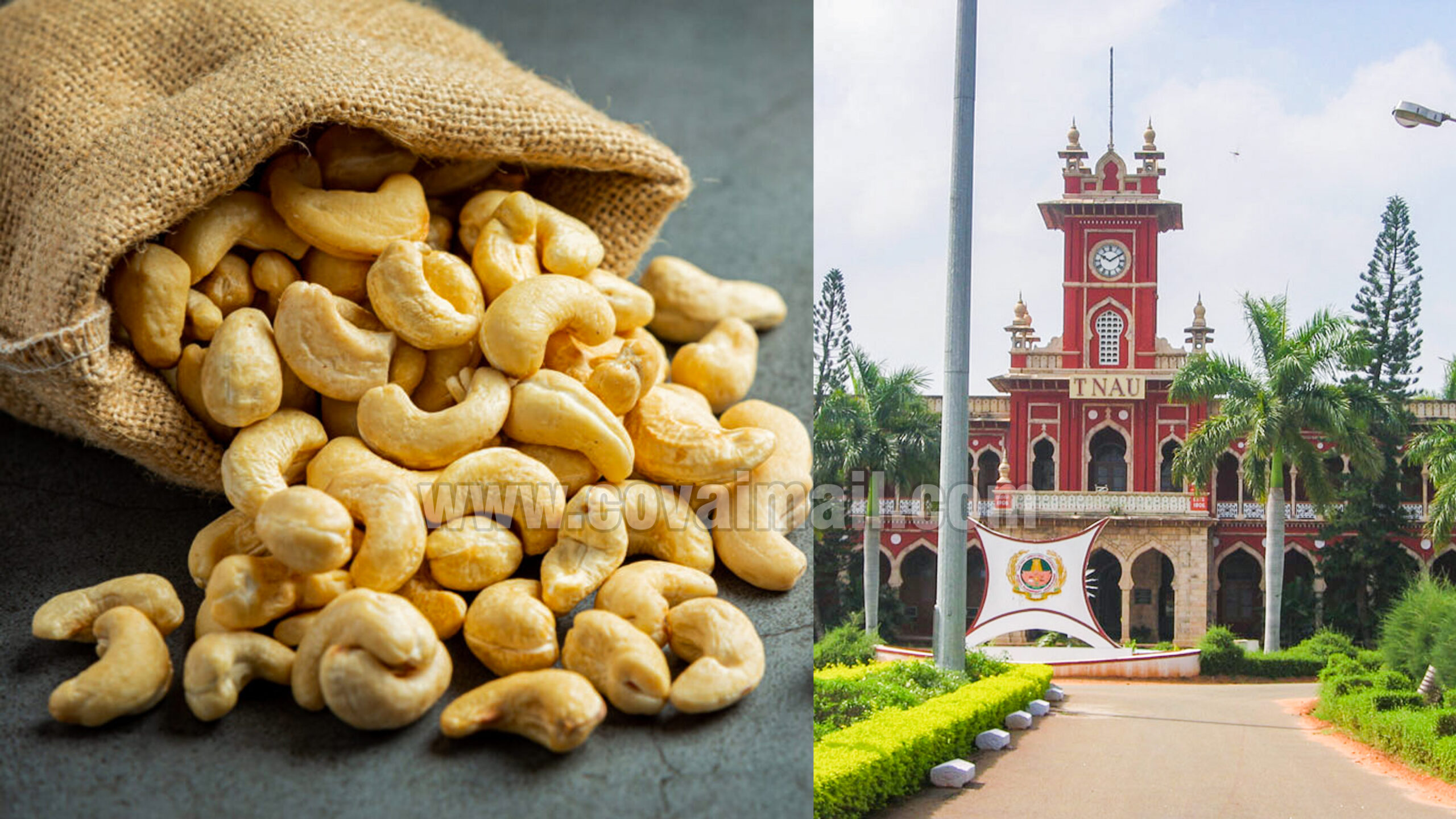
An exhibition displaying cashew grafts, different grades of cashew nuts from major cashew-growing regions of India, and various value-added products has also been arranged.
The annual group meeting was inaugurated in the presence of Subrahmaniyan, Acting Vice-Chancellor of TNAU; Dinakara Adiga, Project Coordinator (Cashew) at ICAR-Directorate of Cashew Research (DCR), Puttur; Sanjay Kumar Singh, Deputy Director General (Horticulture) of Indian Council of Agricultural Research (ICAR), New Delhi; Patel, Assistant Director General (Horticulture), ICAR; and Raviprasad, Scientist-in-Charge (PC Cell) and Principal Scientist at ICAR-DCR, Puttur. Scientists from centres including Puttur, Jhargram, Bapatla, Kochi, Bengaluru, Madakkathara, Kasaragod, New Delhi, Chhattisgarh, Vengurla, Vridhachalam and Kanabargi are participating in the meeting.
The Regional Research Station, Vridhachalam, in association with the Horticultural College and Research Institute, TNAU, coordinated the annual group meeting on cashew.
Venkatesan, Dean (Horticulture), HC and RI, TNAU, delivered the welcome address. Dinakara Adiga presented the Project Coordinator’s report highlighting significant research findings from the 14 centres on topics such as organic management trials, cashew intercropping with fruit crops, nutrient and irrigation management, high-density planting, pest and disease resistance, and climate resilience, particularly in relation to abiotic stress.
He also noted that about 4.1 lakh cashew grafts were distributed and 70 training programmes were conducted for nearly 5,000 cashew farmers across India during 2025.
In his presidential address, Subrahmaniyan emphasised the need for research on root-to-canopy ratio, mechanisation as a solution to labour shortages, and the use of artificial intelligence to identify pests such as the tea mosquito bug and cashew shoot and root borer. He also highlighted the need to increase bisexual flower production beyond 10 per cent on the southern side of the cashew tree and stressed the importance of developing dwarf varieties suitable for high-density planting. He further pointed out the potential for value addition of cashew apple, including its use in composting and biofuel production.
He observed that countries such as Vietnam and those in West Africa are emerging as strong competitors in the global cashew supply chain. At present, about 1,356 cashew germplasm accessions are maintained in India, and 63 cashew varieties have been developed through AICRP-Cashew projects.
In Tamil Nadu, about 65 AICRP-Cashew programmes are being carried out, and four varieties and one hybrid have been developed at the Regional Research Station, Vridhachalam.
Sanjay Kumar Singh spoke about the impact of untimely rains and climate change, which have led to severe infestations of tea mosquito bug and increased incidence of foliar diseases in cashew.
He emphasised the need for crop area mapping to understand long-term changes due to climate variability. He also suggested adopting semi-high-density planting with intercrops such as legumes, fruit crops like papaya, and spices, medicinal and aromatic crops.
Mechanisation, even on a small scale, should be introduced in cashew plantations, while large plantations should focus on improving nutrient efficiency through timely application of nutrients, biofertilisers and biocontrol agents.
The use of drone technology for applying bio-inputs was also suggested. He further advocated promoting organic and natural farming in cashew-growing clusters through a circular economy approach.
The inaugural session concluded with the release of 15 technical publications on cashew from research stations at Vridhachalam, Vengurla, Madakkathara, Jhargram, Jagdalpur and Bhubaneswar. These publications are intended to help transfer research findings directly to cashew-growing farming communities across the country. The vote of thanks was proposed by Raviprasad.
The meeting is focusing on research trials aimed at increasing raw cashew kernel productivity, conserving natural pollinators, reducing pest and disease incidence by identifying alternate host plants, expanding new areas for cashew cultivation to boost exports, and developing improved processing efficiency technologies.