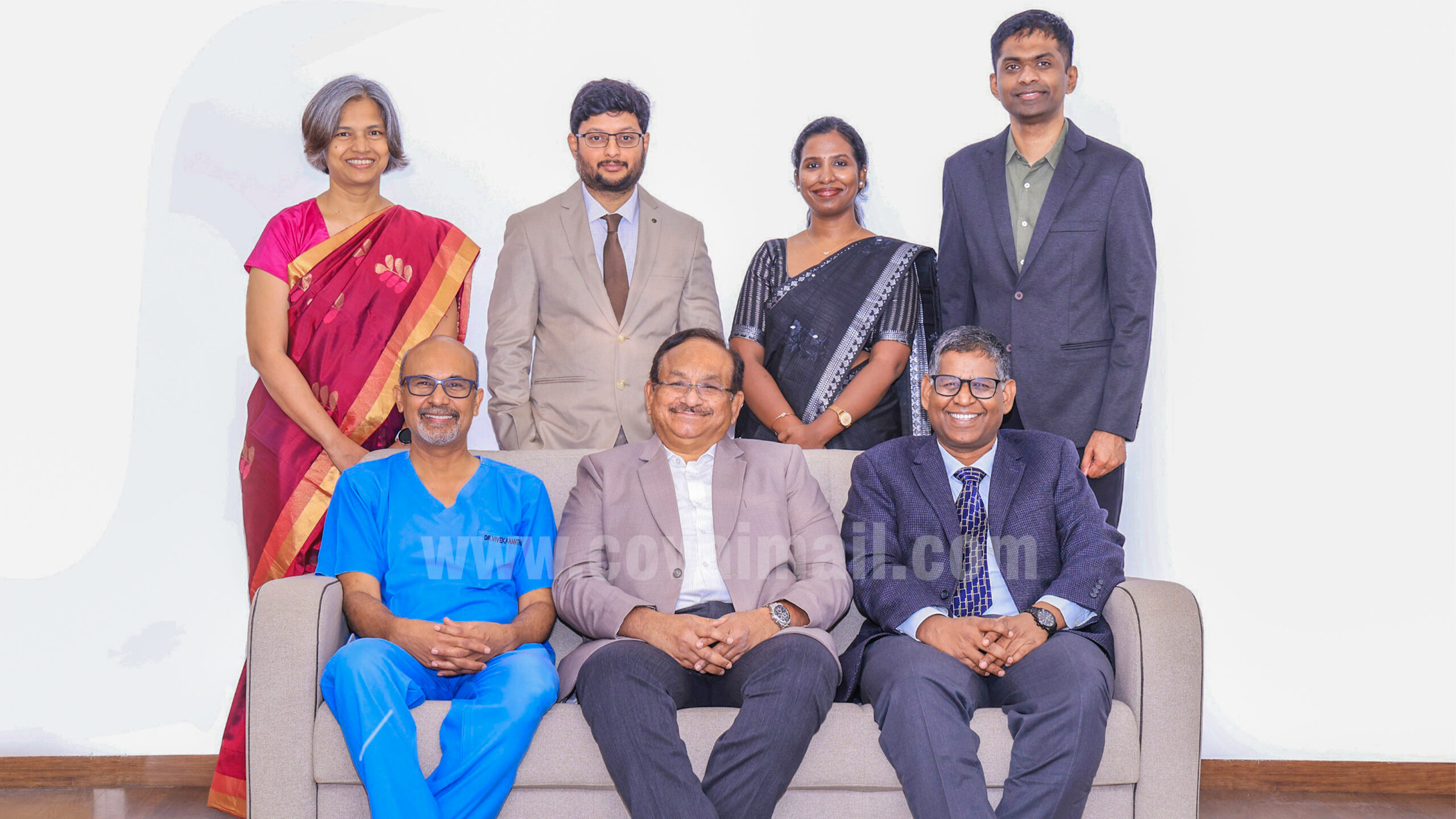

Royal Care Super Speciality Hospital, Coimbatore, recently performed a rare and highly complex deceased-donor liver transplant on a 65-year-old woman who had been living with a permanent pacemaker for complete heart block. The patient has fully recovered and has been discharged in good health.
Conducting a liver transplant on a pacemaker-dependent individual involves exceptional challenges.
Electrical equipment used during surgery, along with fluctuations in blood pressure and electrolyte levels, can potentially interfere with pacemaker function.
Ensuring cardiac stability while the body undergoes intense surgical stress requires meticulous planning and multidisciplinary coordination.
The cardiology team ensured optimal pacemaker performance throughout the procedure.
“Our first step was to study her cardiac status and evaluate the pacemaker thoroughly,” said Dr. Varun Marimuthu, Consultant Interventional Cardiologist. “We fine-tuned the pacemaker settings to ensure reliable functioning under surgical stress. Continuous intraoperative and postoperative monitoring helped maintain complete cardiac safety for the patient.”
In the operating room, the Anaesthesia team played a crucial role. “As the liver transplant anaesthesiologist, my responsibility was to protect every organ during the procedure,” said Dr. Abhinaya.
“Considering the pacemaker, we planned each step carefully, selected drugs cautiously, and continuously monitored her heartbeat, blood pressure and oxygen levels in real time, in close coordination with the cardiology and surgical teams. Advanced cardiac monitoring helped us track her heart’s functioning minute by minute.”
Post-operative management in the ICU was equally critical. “After transplant surgery, the new liver faces its true test in the ICU,” said Dr. Sivakumar, Head of the Institute of Critical Care Medicine.
“In this case, our team had to balance the demands of a new liver, a pacemaker-dependent heart and the recovery needs of an elderly patient. With advanced monitoring, strict infection control measures and rapid-response protocols, we ensured timely intervention and smooth recovery, enabling an early discharge.”
“This achievement highlights the strength of our multidisciplinary ecosystem at Royal Care,” said Dr. Ilango Sethu, Lead Liver Transplant Surgeon.
“With transplant surgery, hepatology, cardiology, anaesthesia, critical care and other support departments functioning seamlessly under one roof, we can safely perform life-saving liver transplants even in patients with complex cardiac devices at higher centres like Royal Care.”
Dr. K. Madeswaran, Chairman and Managing Director, stated that the hospital consistently performs successful multi-organ transplants—including heart, liver, pancreas and lung—with the support of dedicated medical, paramedical and administrative teams.
He added, “Royal Care is one of India’s best accredited hospitals, holding JCI, SRC, CARF and NABH national and international accreditations. We provide world-class treatment with personalised care.” He congratulated the entire team for successfully performing this rare and challenging surgery.
The patient’s family expressed heartfelt gratitude to the donor family, the hospital team and the organ donation system for giving her a renewed lease of life. Royal Care Super Speciality Hospital reaffirmed its commitment to delivering advanced, team-based liver transplant care for patients with complex medical conditions.