
A groundbreaking new technology is transforming the treatment of bradycardia, a condition in which the heart rate falls below the normal range of 60 to 100 beats per minute.
When the heart beats fewer than 60 times per minute, it may not pump enough oxygen-rich blood during regular activities or exercise. As a result, patients can experience symptoms such as dizziness, fatigue, shortness of breath, or fainting spells. When medication alone is not sufficient to manage these symptoms, a pacemaker is prescribed.
Until now, most patients with atrioventricular (AV) block or symptomatic bradycardia have been treated with traditional dual-chamber pacemakers, which require leads (wires) placed inside the heart and a surgical pocket under the skin to house the generator.
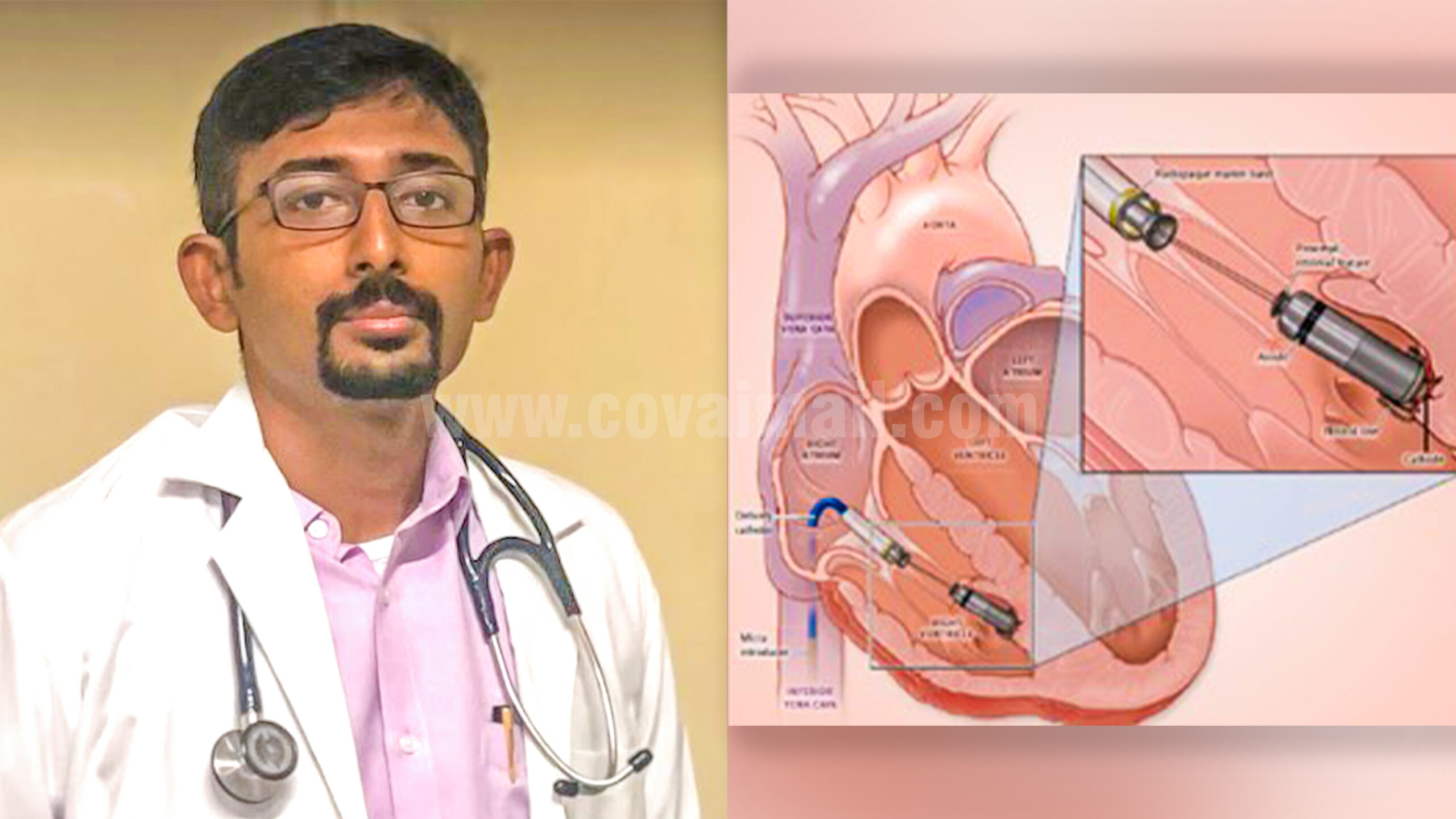
The latest advancement is a leadless pacemaker, the world’s smallest of its kind. It has received approval from the U.S. Food and Drug Administration (FDA).
Unlike traditional devices, it does not require any leads or a subcutaneous pocket. Roughly the size of a large vitamin capsule, this pacemaker is implanted entirely within the heart through a minimally invasive procedure via a small puncture in the groin. Cosmetically invisible, it eliminates the risks associated with wires and surgical incisions.
Since the leadless pacemaker is entirely contained within the heart, there is no visible bulge on the chest, and patients are not required to restrict arm movements post-surgery. Many return to their normal lifestyle as early as the next day.
Despite its miniature size, the device offers advanced pacing features and significantly simplifies treatment, improving safety and patient outcomes.
Dr. Prem Krishna, Senior Consultant Interventional Cardiologist at Vijaya Hospital, Coimbatore, commented on the innovation: “The leadless pacemaker is a major advancement in treating patients with bradycardia and AV block. It provides all the benefits of a traditional pacemaker while eliminating the risks associated with wires and surgical pockets. Patients recover faster and resume daily life without the psychological burden that often comes with visible surgical implants.”
He added, “This technology is especially helpful for younger or more active patients who are concerned about physical restrictions and appearance. Its discreet nature and low complication rate make it a breakthrough in cardiac rhythm management.”