
Migrant workers are the silent backbone of India’s growth story, said Mansukh Mandaviya, Union Minister for Labour & Employment and Minister of Youth Affairs and Sports, Government of India, in his virtual address at the CII National Roundtable on Migrant Workforce held in Coimbatore recently.
The roundtable brought together policymakers, industry leaders, academia, and civil society representatives to deliberate on strengthening systems, policies, and partnerships for migrant workers.
According to an estimate by the International Labour Organisation (ILO), there are nearly 170 million migrant workers worldwide, accounting for almost five per cent of the global labour force, highlighting the urgent need for stronger institutional and social protection frameworks.
Mandaviya elaborated on the steps taken by the Government of India to empower migrant workers, including recent labour reforms and the ‘One Nation, One Ration Card’ policy. He appreciated the roundtable for bringing together diverse stakeholders, including ministries such as the Ministry of Micro, Small and Medium Enterprises, to find collaborative solutions to the multi-dimensional challenges faced by migrant workers.
In his address, Kumar Jayant, Chairman and Managing Director of the Tamil Nadu Industrial Investment Corporation, said there is an urgent need for greater visibility of migrant workers, portability of social security, formalisation of informal work, and a national, technology-enabled framework to support migrant workers across states and sectors. He underscored the transition from conflict to confluence in industrial relations, advocating collaboration among government, industry, and trade unions.
Saji Narayanan, former National President of Bharatiya Mazdoor Sangh (BMS), said migration is largely driven by wage disparities across states. While this imbalance persists, he noted that the government’s progressive efforts through e-Shram registration, social security portability, and labour reforms are important steps towards reducing inequality and protecting migrant workers.
Anuja Bapat, Deputy Director General, Ministry of Micro, Small and Medium Enterprises (MSME), said that through a multi-dimensional policy approach, the government is steadily strengthening local livelihoods, MSMEs, and skills ecosystems to reduce distress migration, while enabling safe, dignified, and opportunity-driven mobility.
Sanjay Awasthi, Head of Office, International Organization for Migration (IOM), said it is time to align industrial aspirations with operational safety to ensure that growth does not come at the cost of worker well-being. He added that leveraging data to identify high-risk areas would enable targeted interventions, prevention, and safer workplaces.
In his address, Shankar Vanavarayar, Chairman, CII National Task Force on Rural Development & Migrant Workforce, and President, Kumaraguru Institutions, said the CII roundtable marks a critical step towards coordinated action across government, industry, and civil society to create fair, resilient, and future-ready systems for migrant workers.
Discussions at the roundtable centred on skills–migration linkages and industry migration mapping, social security portability and digital labour governance, worker housing, health, and living-dignity infrastructure.
The participants underscored the need for a collaborative approach to address the challenges faced by the migrant workforce. The deliberations are expected to help shape future policy discussions, institutional strategies, and collaborative initiatives.
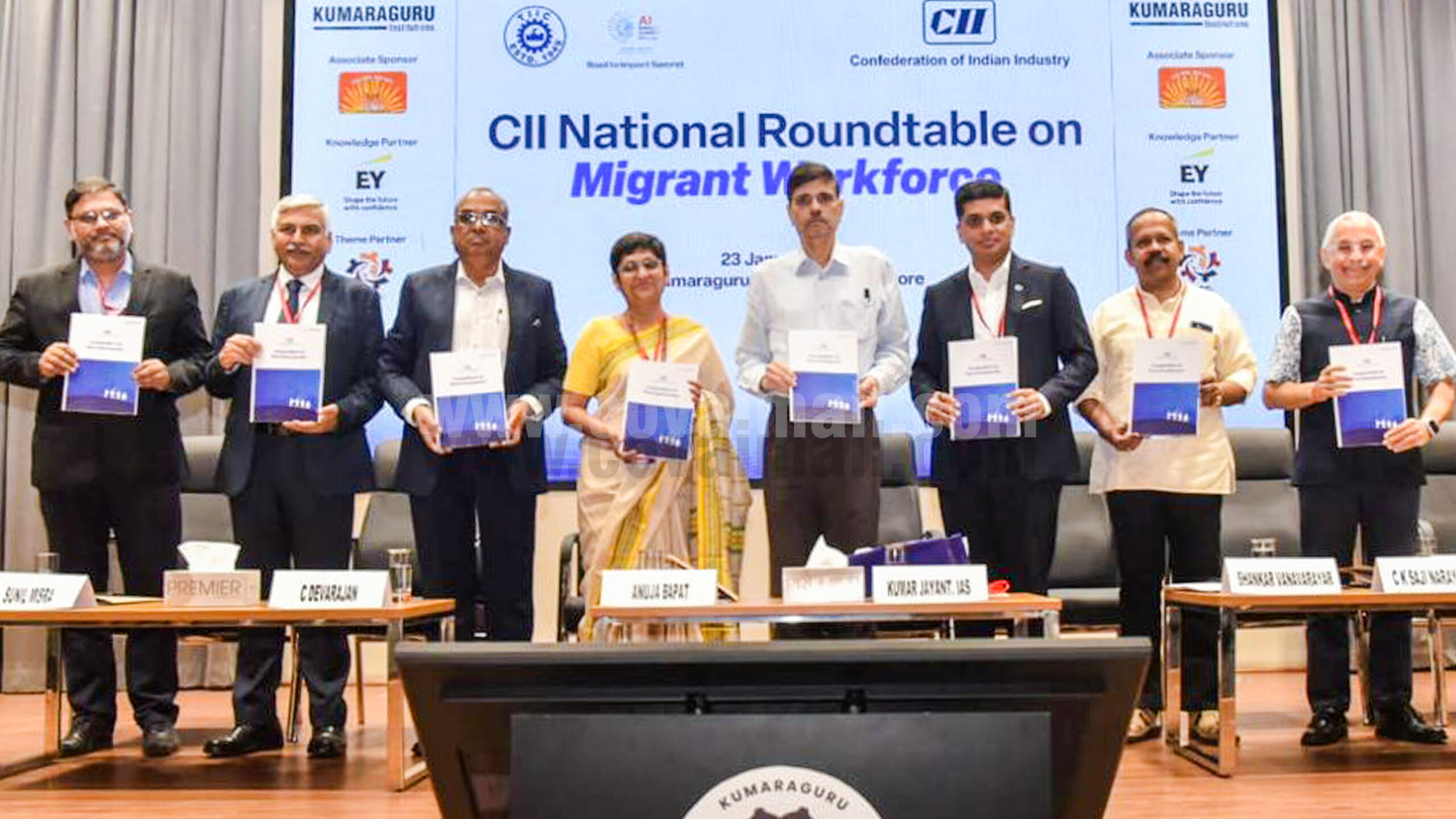
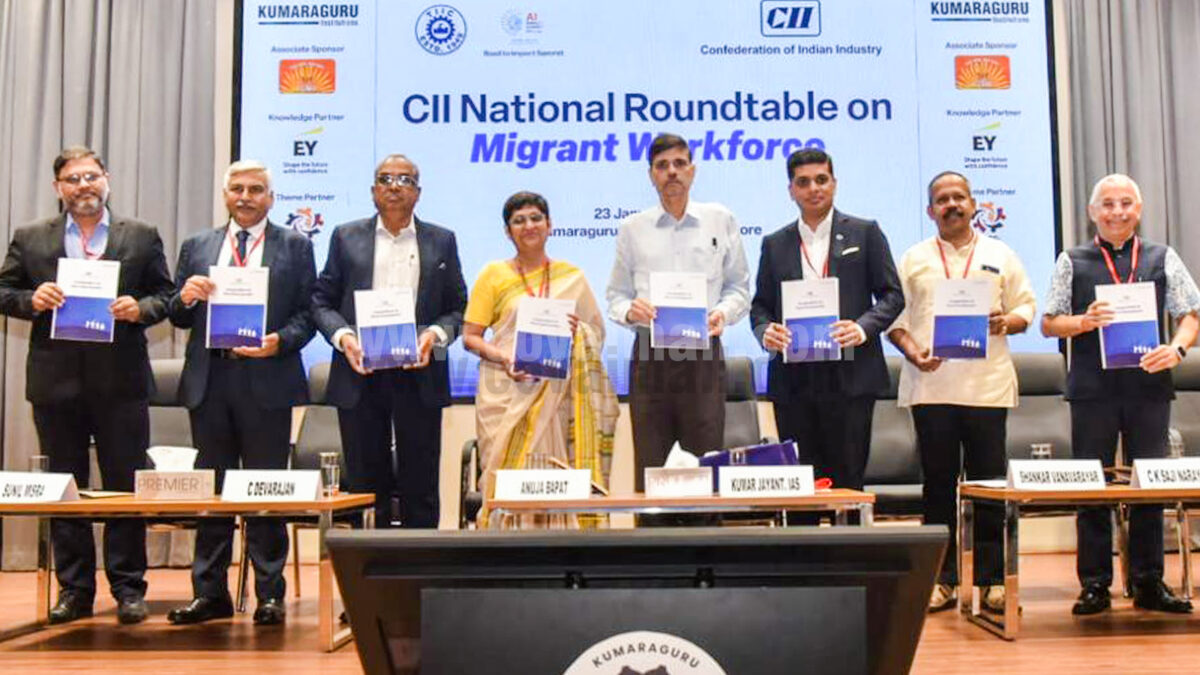
As part of the programme, a compendium on industry best practices in rural development was released, capturing case studies from on-ground experiences. The compendium aims to serve as a knowledge resource for policymakers, industry leaders, and practitioners working to build a more inclusive, fair, and resilient ecosystem.