
GEM Cancer Centre at GEM Hospital has achieved a major milestone in the treatment of advanced abdominal cancers using cytoreductive surgery (CRS) combined with hyperthermic intraperitoneal chemotherapy (HIPEC).
For the first time in India, the hospital has successfully performed laparoscopic complete parietal peritonectomy for advanced ovarian cancer in five patients, marking a significant advancement in minimally invasive cancer treatment.
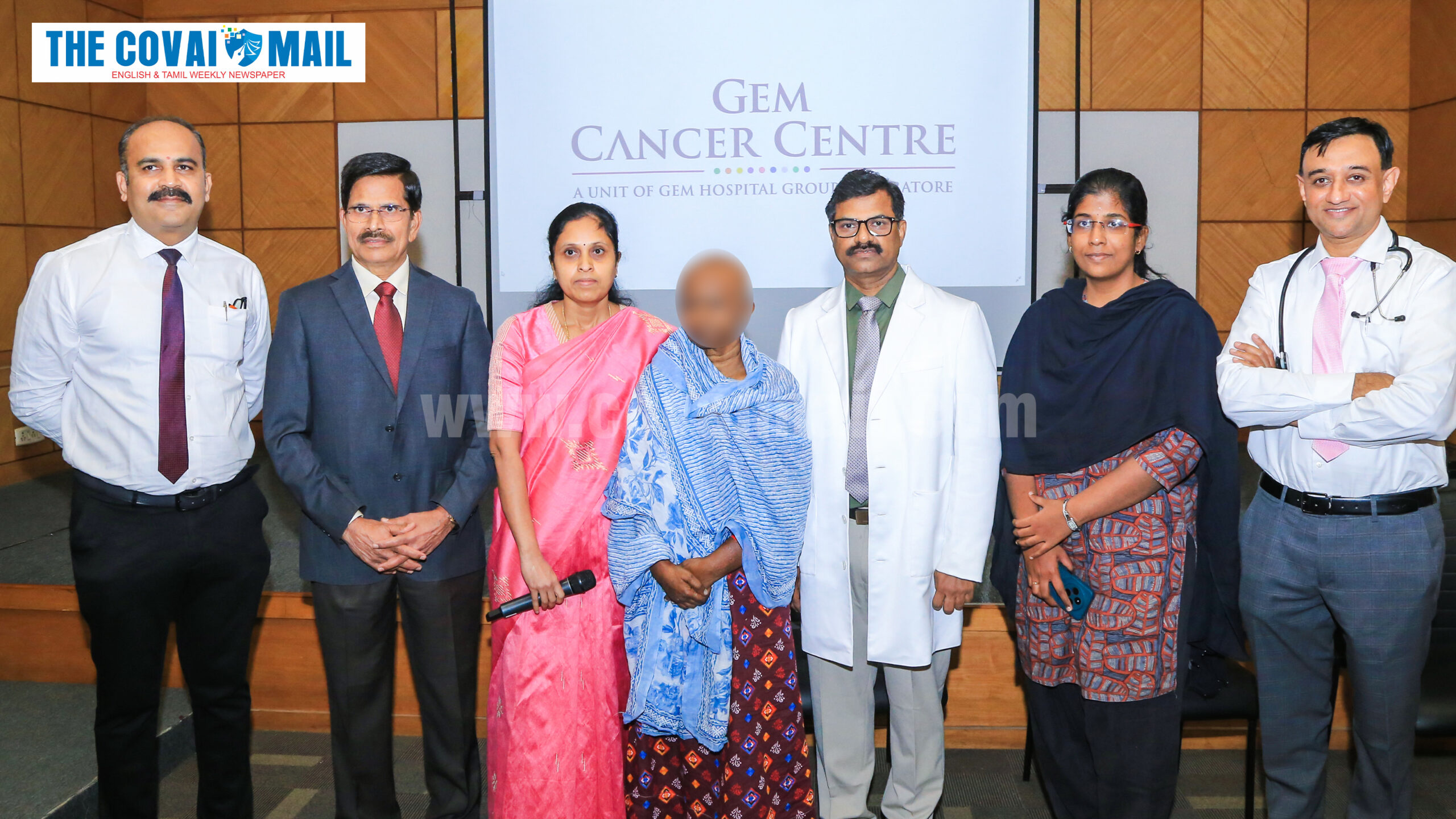
A press meeting in this regard was held on December 29, 2025, at the hospital, during which Dr. C. Palanivelu, Founder and Chairman of GEM Hospital, addressed the media.
Treatment approach and surgical procedure
The patients first received neoadjuvant chemotherapy to control systemic disease. This was followed by laparoscopic cytoreductive surgery, including radical hysterectomy, ovarian excision, and complete removal of the peritoneal lining of the abdomen.
In two of the five patients, laparoscopic HIPEC intraperitoneal chemotherapy was performed in addition to total peritonectomy.
The surgeries were carried out by a specialized multidisciplinary team led by Dr. C. Palanivelu, along with gynecologic oncologists Dr. Kavitha and Dr. Sai Darshini. HIPEC intraperitoneal chemotherapy was administered by Dr. Bharath Rangarajan after completion of the peritonectomy.
Multidisciplinary cancer care at GEM
Peritoneal carcinomatosis arising from gastrointestinal cancers such as colorectal and gastric cancers is also treated at GEM Cancer Centre by a dedicated specialist team. Surgical oncologists Dr. Shiv Kumar and Dr. Arul Murugan handle gastrointestinal cancers, Dr. Parthasarathy treats esophagogastric cancers, and Dr. Rajapandian specializes in colorectal cancers. Radiotherapy services are provided by Dr. Madhu Sairam.
Patients treated for peritoneal carcinomatosis using minimally invasive laparoscopic or robotic techniques have shown faster recovery, encouraging outcomes, and improved quality of life on follow-up.
Benefits of minimally invasive peritonectomy
This advancement in treatment for advanced ovarian cancer offers new hope to women by providing effective cancer control with faster recovery and improved quality of life. Early awareness and timely medical consultation can significantly improve treatment outcomes. In selected cases, five-year survival rates exceed 90 percent.
While ovarian cancer generally has a poorer prognosis compared to other gynecologic cancers, outcomes improve significantly with early detection, optimal surgery, and modern chemotherapy and targeted therapies.
Using small keyhole incisions and high-definition magnification, surgeons can safely remove cancer from the abdominal lining with greater precision. This approach results in less pain, reduced blood loss, shorter hospital stays, and faster recovery, while still achieving effective cancer clearance.

What is peritoneal carcinomatosis?
Peritoneal carcinomatosis is a serious condition associated with advanced abdominal cancers such as colorectal, gastric, and ovarian cancers. It carries a high symptom burden and poor prognosis.
While systemic chemotherapy has traditionally been used for symptom relief, CRS combined with HIPEC has emerged as an effective strategy to improve symptom control, quality of life, and survival. Studies have shown symptom improvement ranging from 26.5 to 100 percent, with durable disease control in up to 90 percent of cases.
Chemotherapy is effective for cancers that spread through the bloodstream, but is less effective for peritoneal cancers due to poor blood supply. Surgical removal of the peritoneum, known as peritonectomy, along with tumor debulking, has been shown to improve outcomes.
Advancements in surgical technology
Earlier, cytoreductive surgery was performed through large incisions, leading to longer recovery times and higher complication rates, with five-year survival reaching up to 31 percent. Today, advances in laparoscopic and robotic technology allow this surgery to be performed in a minimally invasive manner.
High-definition imaging and the use of indocyanine green (ICG) fluorescence help surgeons identify cancer tissue more accurately. Preserving the immune system and minimizing blood transfusions further reduce recurrence rates, resulting in better quality of life and superior outcomes compared to conventional surgery.

GEM Cancer Institute
GEM Cancer Institute in Coimbatore is a super-specialty cancer centre at the forefront of advanced cancer treatment in India. For the first time in the country, the institute has successfully performed laparoscopic complete parietal peritonectomy for advanced ovarian cancer in five patients.
Patients underwent neoadjuvant chemotherapy to shrink the disease, followed by laparoscopic cytoreductive surgery with complete peritonectomy by a dedicated multidisciplinary team. In selected cases, intraperitoneal chemotherapy was also administered.
At GEM, patient care is delivered through close collaboration between medical oncologists, surgical oncologists, gastrointestinal surgeons, and gynecologic oncology specialists. Patients treated with this minimally invasive approach have demonstrated good recovery, encouraging outcomes, and improved quality of life on follow-up.