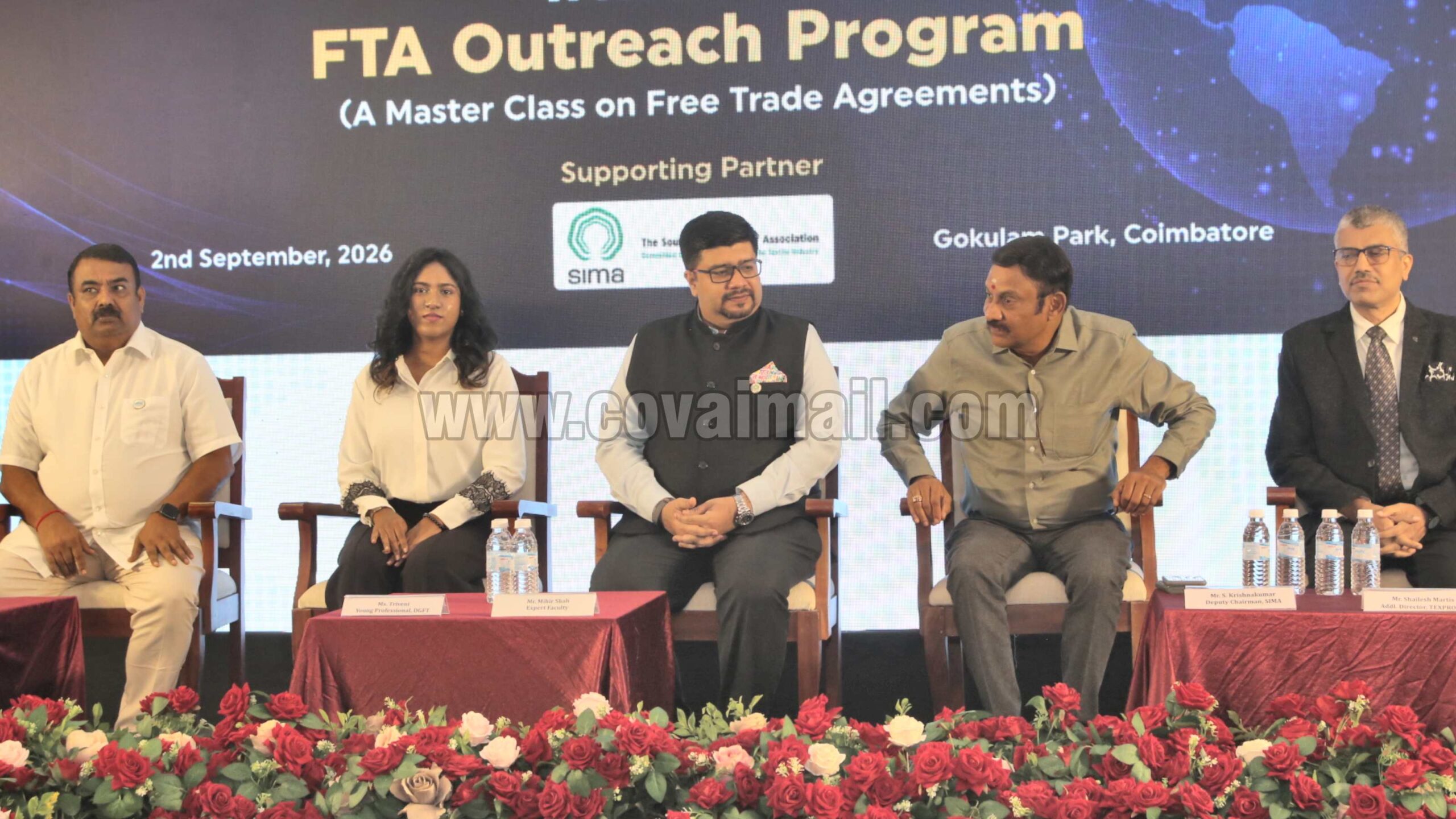

The Cotton Textiles Export Promotion Council (TEXPROCIL) and Powerloom Development & Export Promotion Council (PDEXCIL) organized an awareness session in association with Southern India Mills Association (SIMA) about the benefits of Free Trade Agreements (FTA) signed by India with other countries for Industry Stakeholders including exporters on Wednesday.
Speaking to The Covai Mail, Shailesh Martis, Additional Director with TEXPROCIL shared that this event is organized to give stakeholders a clear picture about the benefits FTA has and how to utilize them. This is the second such FTA Outreach Program organized by TEXPROCIL in India and the first in Tamil Nadu.
He said that the ongoing conflict involving Iran and the United States continues to constrain Indian exports by driving up freight costs and tightening container availability across key West Asian trade routes. He said that participants of this program will get to know about the alternative markets and the export-potential available.
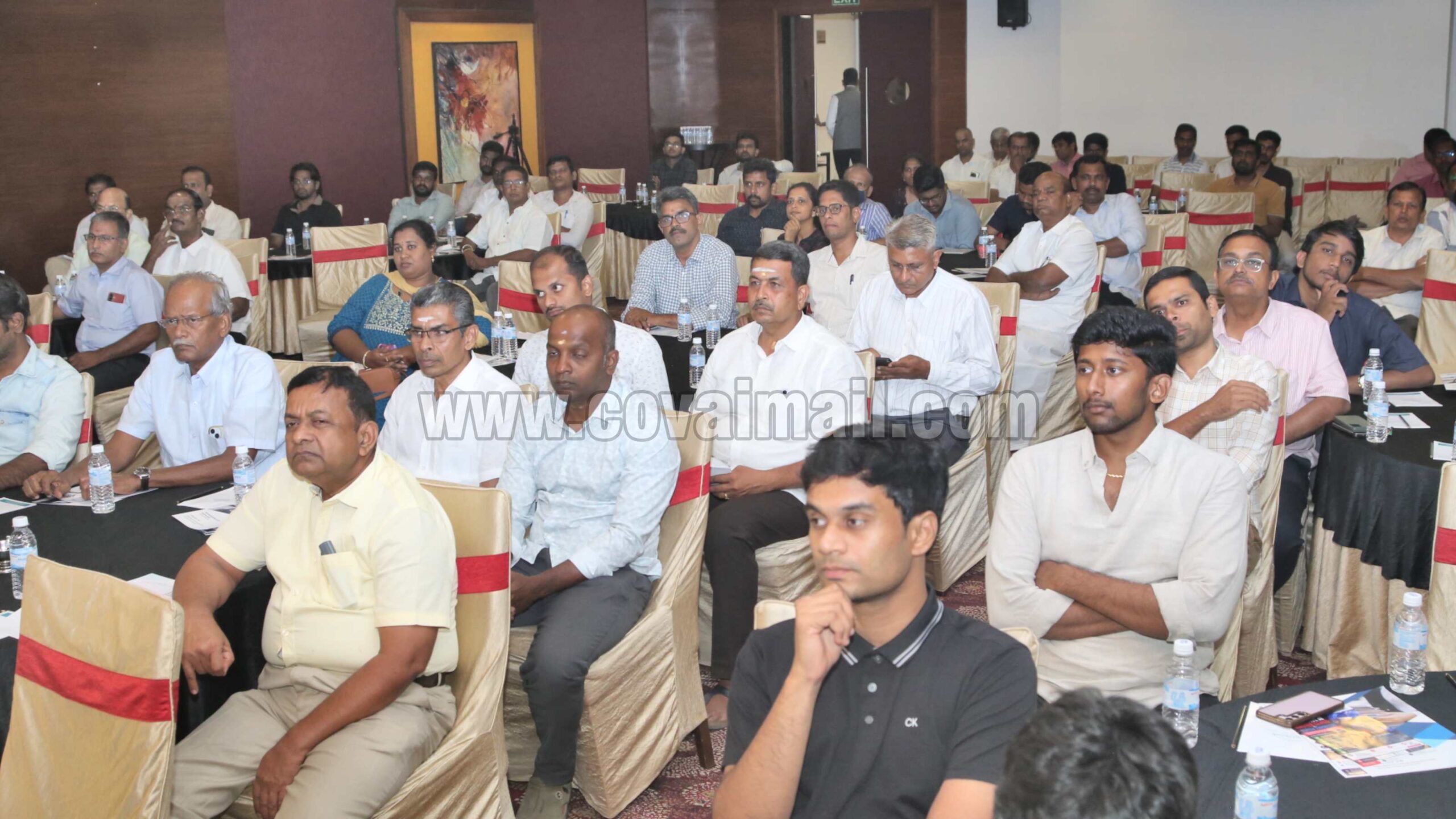
During the session, Triveni, executive from Directorate General of Foreign Trade (DGFT), addressed exporters about the untapped potential of India’s recent Free Trade Agreements (FTAs) specifically for the textile and apparel sector.
She shared that while World Trade Organization Most Favored Nation rules require equal tariff treatment without an FTA, India’s recently signed trade pacts with partners such as the UAE, Australia, EFTA nations, the UK, Oman, and New Zealand have effectively eliminated import tariffs ranging from 4% to 11%. This complete duty removal provides Indian exporters with a crucial competitive edge over regional rivals through 100% duty-free access.
Tamil Nadu is uniquely positioned to capitalize on these tariff reductions due to its specialized industrial hubs, including Coimbatore for woven cotton, Tiruppur for knitwear, Karur for home textiles and Erode for power looms.

Despite these advantages, many exporters fail to utilize FTAs due to compliance confusion. Triveni clarified that accessing these benefits merely requires obtaining a Certificate of Origin – a simple, single-window process through the e-Connect platform designed to prove the goods were made in India and prevent third-party country routing.
To turn these agreements into actual export growth, exporters were encouraged to expand high-demand goods like terry towels, kitchen linen, baby garments, and cotton t-shirts while tapping into massive global product markets, such as the several billions-worth jersey and trouser market, where India currently holds only single-digit market shares.