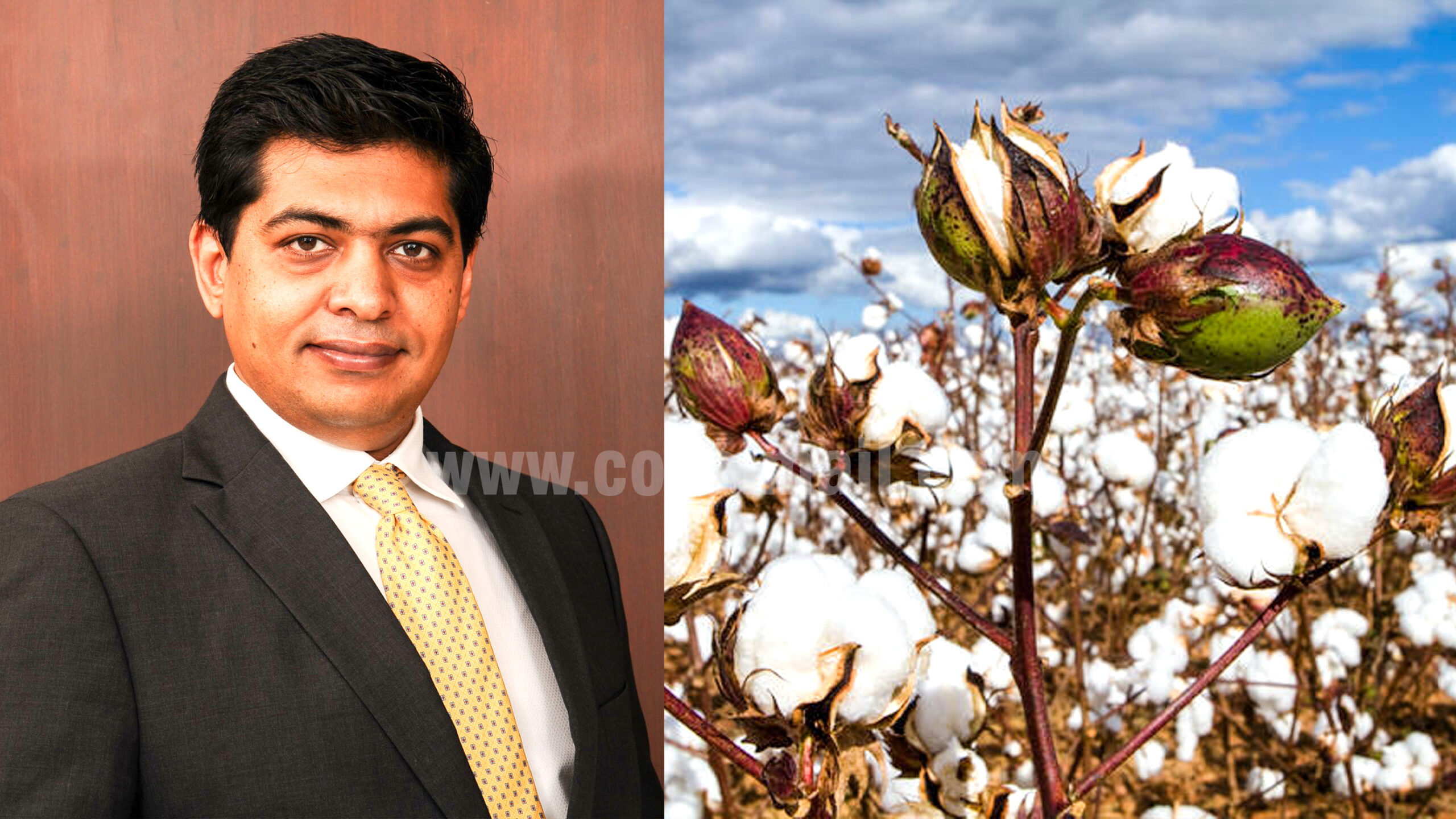

The recent announcement by the Central Government to exempt the existing 11% import duty on all varieties of cotton, effective from August 19, 2025, has been warmly welcomed across the Indian textile sector.
In this regard, Sundararaman, Chairman of SIMA, expressed gratitude to Prime Minister Narendra Modi, Union Finance Minister Nirmala Sitharaman, Union Agriculture Minister Shivraj Singh Chouhan, Union Commerce and Industry Minister Piyush Goyal, and Union Textiles Minister Giriraj Singh for addressing the long-pending demand of the textile sector.
He emphasised that this exemption is crucial for ensuring a level playing field for domestic manufacturers and enhancing global competitiveness.
The Indian textile industry, predominantly cotton-based, has faced persistent challenges over the past few years, largely due to the 11% import duty imposed in February 2021. This included a 5% Basic Customs Duty (BCD), a 5% Agriculture Infrastructure Development Cess (AIDC), and a 10% Social Welfare Surcharge. The levy significantly impacted the cotton value chain, which directly employs over 35 million people and contributes nearly 80% of the nation’s textile exports.
Although the government temporarily lifted the import duty between April and October 2022, this relief was short-lived. The industry has since repeatedly urged the government to consider a seasonal exemption, particularly from April 1 to September 30, to help bridge the demand-supply gap during the off-season. The latest move finally addresses this concern.
India’s cotton production, which once stood at 350 lakh bales against a requirement of 335 lakh bales, has now fallen to 294 lakh bales, the lowest in the last 15 years, while the current requirement has increased to 318 lakh bales, including non-mill use.
Particularly concerning has been the shortfall in Extra-Long Staple (ELS) cotton, with domestic production at only 5 lakh bales compared to the 20 lakh bales required annually. Responding to industry representations, the government had already exempted ELS cotton from import duty from February 20, 2024.
Sundararaman noted that while large exporters could access duty-free imports through the Advance Authorisation Scheme, the MSME-dominated and fragmented nature of the industry relies heavily on imported cotton to fulfil long-term domestic and international contracts.
He underlined that removing import duties during the off-season until 2030 is critical, especially as the government’s Mission for Cotton Productivity, with an outlay of ₹5,900 crore, will take 5–7 years to achieve self-sufficiency.
He further added that the duty exemption, along with the recent achievement of the India–UK Free Trade Agreement (FTA), will open new avenues for exports to the UK and other international markets.
The move is expected to significantly boost India’s textile exports, aligning with the government’s vision to scale up from USD 37 billion to USD 100 billion by 2030.