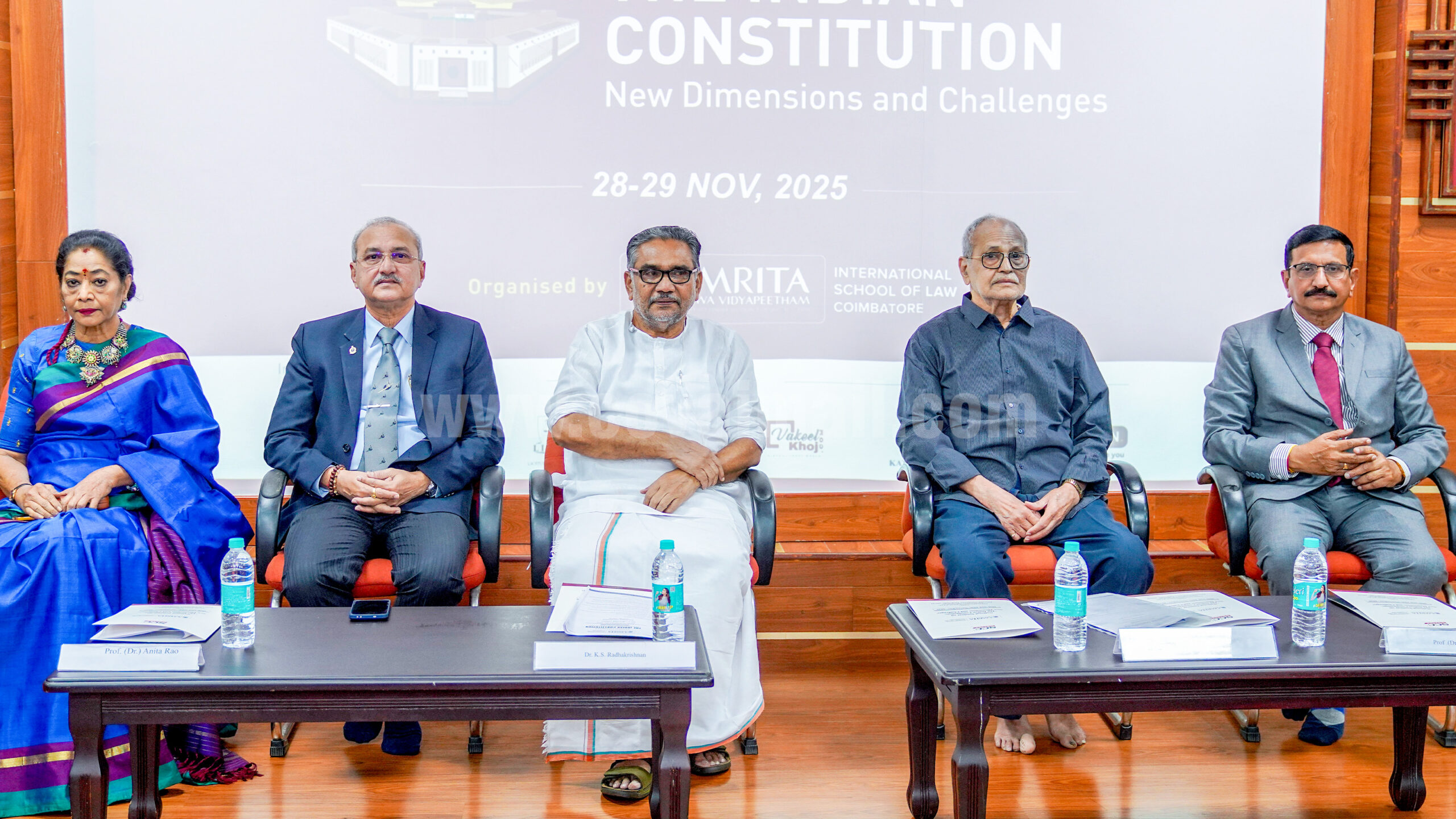

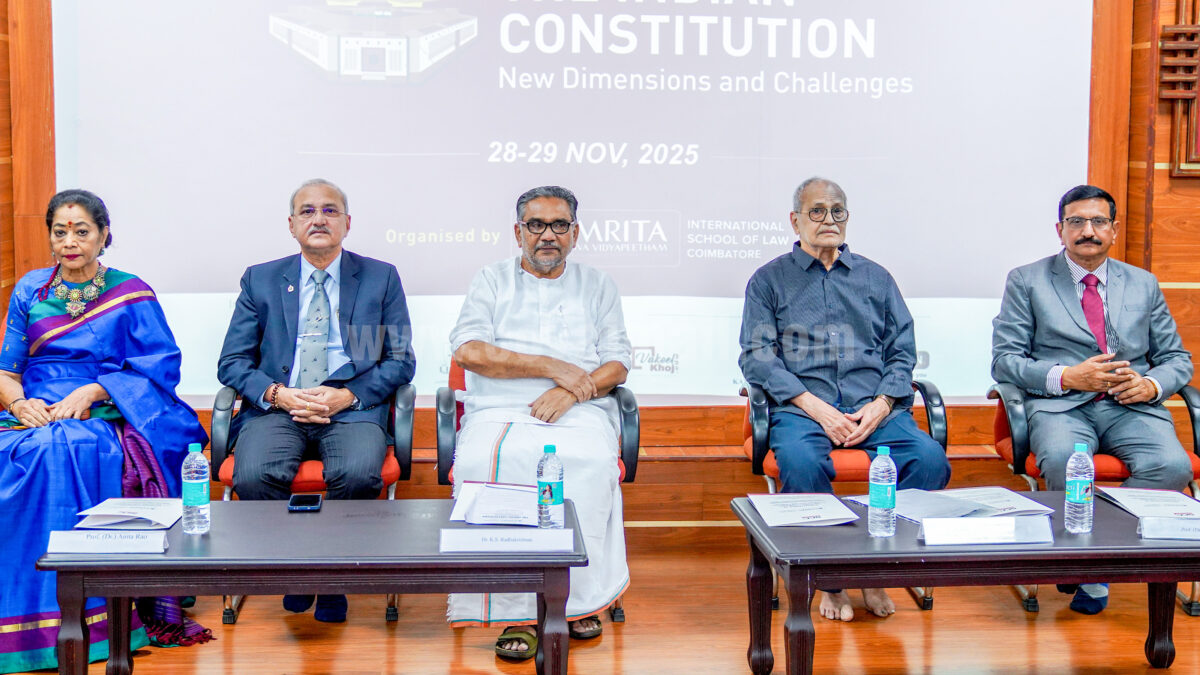
Amrita International School of Law recently marked the 75th Constitution Day with a four-day series of lectures, workshops and a national seminar on “The Indian Constitution: New Dimensions and Challenges,” held under the theme “Azadi ka Samvidhan: Tradition Inspiring Transformation.”
In his inaugural address, Sreedharan Pillai, Former Governor of Goa, reflected on India’s constitutional evolution, noting that the Constitution “was accepted by the Constituent Assembly with 84 members signing it even before independence, underscoring its indigenous foundation.” He emphasised that “people are supreme,” highlighting that democratic legitimacy ultimately rests on the collective will of the citizens.
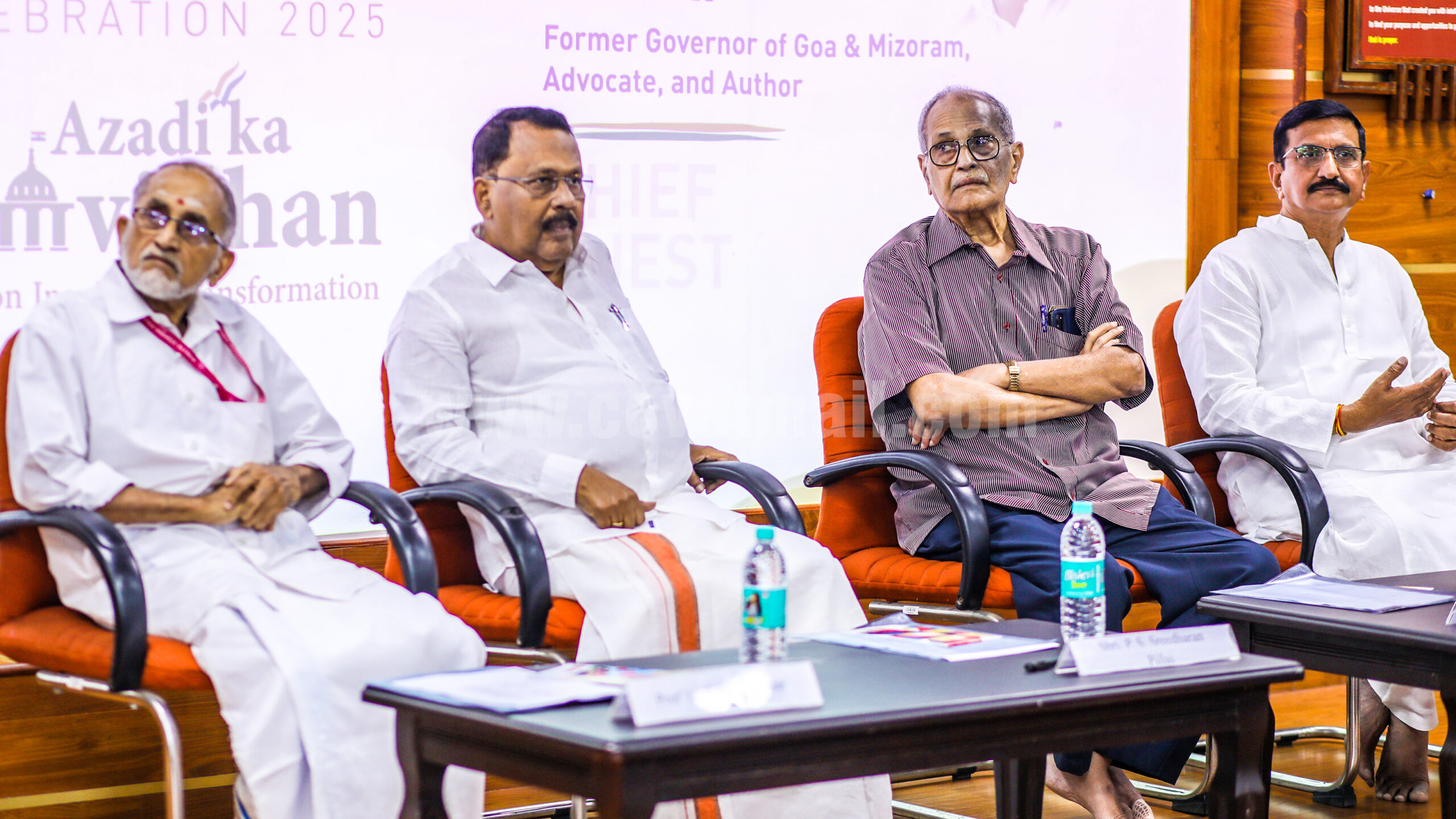
Guests of Honour Lakshminath and Krishnakumar spoke on constitutional morality, sovereignty and the responsibilities of democratic institutions.
A Constitutional History Workshop conducted under the PACT project by Vineeth Krishna of CLPR introduced students to archival sources and the pluralistic roots of India’s constitutional process.
The National Seminar brought together scholars including Anita Rao, Marcus Romano, Bindu Variath, Aravindan Anandan, Sindhu Thulaseedharan, Surajkumar Palbansh, Krusch and Kalpana Rani Jayas. They discussed themes such as transformative constitutionalism, federal governance and contemporary legal challenges.
Adding a jurisprudential perspective, Jayasanker, Advocate at the High Court of Kerala, stressed the importance of contextual interpretation, stating that “context is more important than text,” and encouraged participants to view the Constitution as a living and evolving document.
The event also featured the unveiling of the Amrita Symbol of Justice and the launch of the Amrita Centre for Constitutional and Jurisprudential Research (ACJR), established to support research and public discourse in constitutional studies.
The celebrations were graced by the presence of Venkat Rangan, Vice Chancellor of the institution, whose guidance added significance to the occasion.
Across four technical sessions, participants examined foundational doctrines, emerging jurisprudence and the continuing relevance of constitutional philosophy. The event concluded with expressions of gratitude to the speakers and contributors.