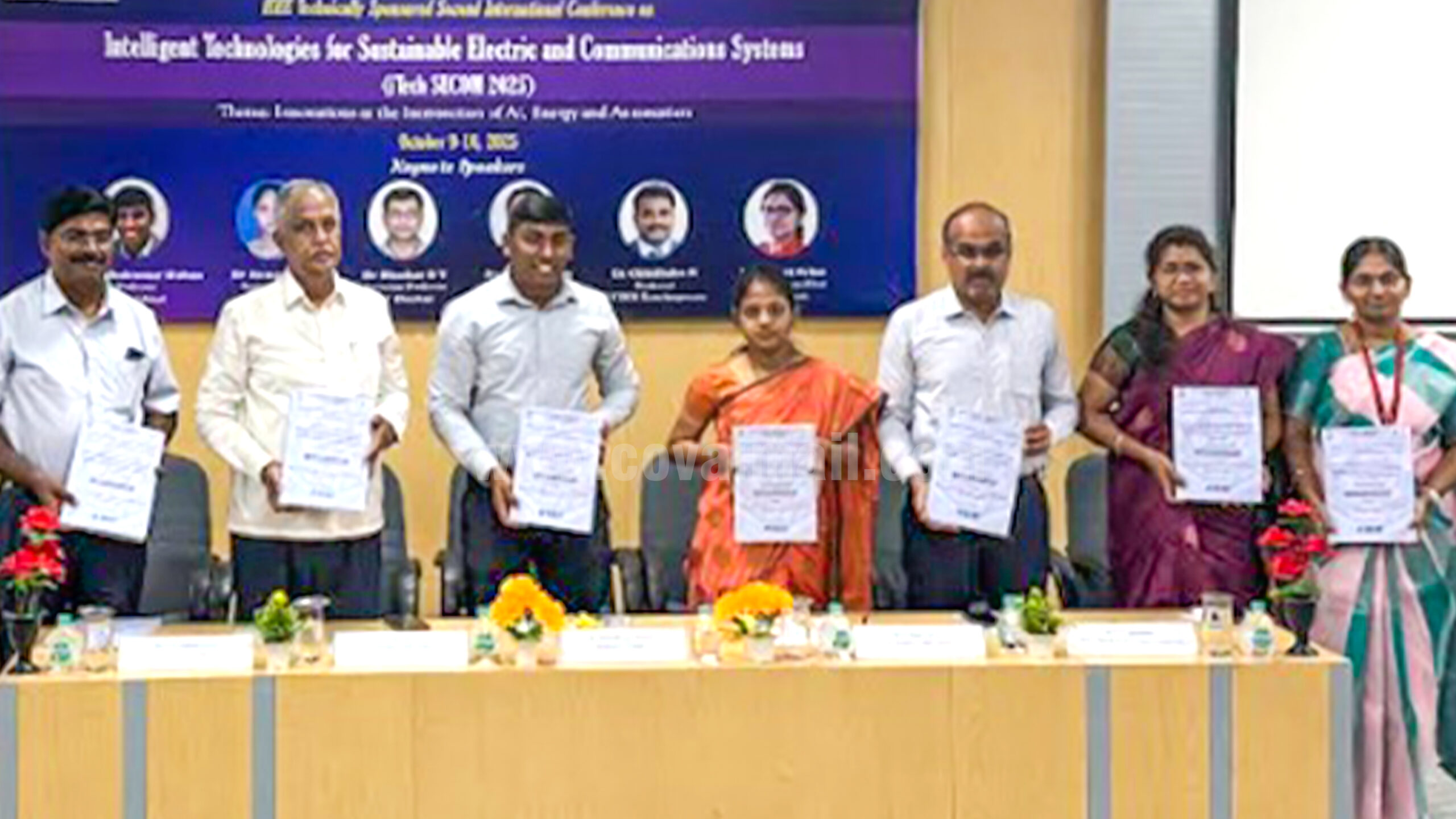

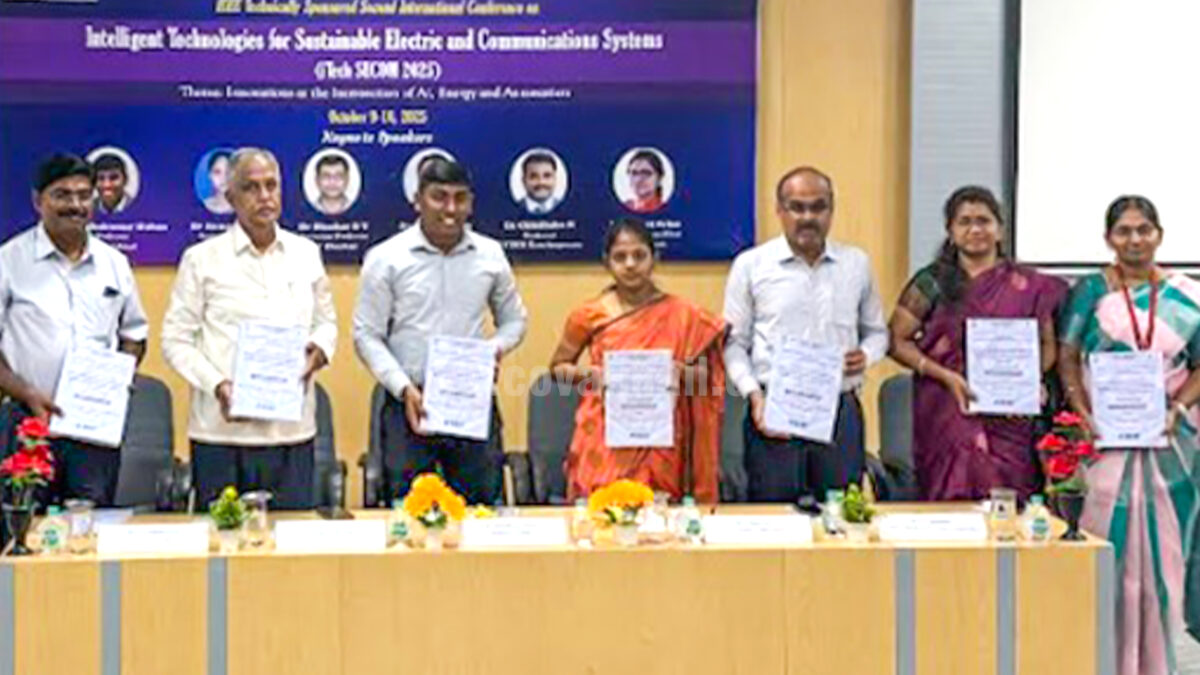
The Department of Electrical and Electronics Engineering, PSG Institute of Technology and Applied Research, hosted a Pre-Conference Expert Session on “Robotics, Automation, and Smart Energy” as part of the IEEE-sponsored ITECH SECOM 2025.
The session served as a preview of upcoming expert talks and workshops on future technologies.
Santhakumar from IIT Palakkad and Hemavathi from CSIR–CECRI led the sessions, highlighting the twin pillars shaping the future of technology—Automation for Industry 4.0 and Smart Energy Systems for Global Electrification and Decarbonization.
Santhakumar traced the industrial journey from mechanisation (Industry 1.0) to intelligent, remotely controlled systems, defining Industry 4.0.
His session emphasised the role of Robotics, AI, and Digital Twins in enabling smart manufacturing, with real-world examples such as marine robots, solar cleaning robots, and autonomous maintenance systems.
He also discussed the growing importance of Edge AI, Agentic AI, and XAI in advancing industrial control and predictive operations.
Addressing the challenges of digital transformation, Santhakumar underscored the urgent need for a skilled workforce and robust cybersecurity measures to protect data integrity in complex, interconnected systems like smart grids, microgrids, and automated substations.
Hemavathi’s session focused on Smart Battery Management Systems (BMS) as the “brain of the battery,” vital for EVs and energy storage technologies.
She elaborated on key parameters such as C-rate, State of Charge (SOC), Depth of Discharge (DOD), and detailed the importance of Battery Thermal Management Systems (BTMS) in preventing thermal runaway and maintaining operational safety between 15°C–35°C.
Her insights linked BMS innovation directly to the Global Energy Transition, emphasising that safe, high-performance energy storage forms the foundation of sustainable electrification.
The sessions illuminated that Automation in Manufacturing and Smart Energy Systems are converging through intelligent control technologies.
The experts concluded that the success of this transition depends on continued R&D, cross-disciplinary innovation, and the development of a digitally skilled workforce ready to power the next era of industrial transformation.