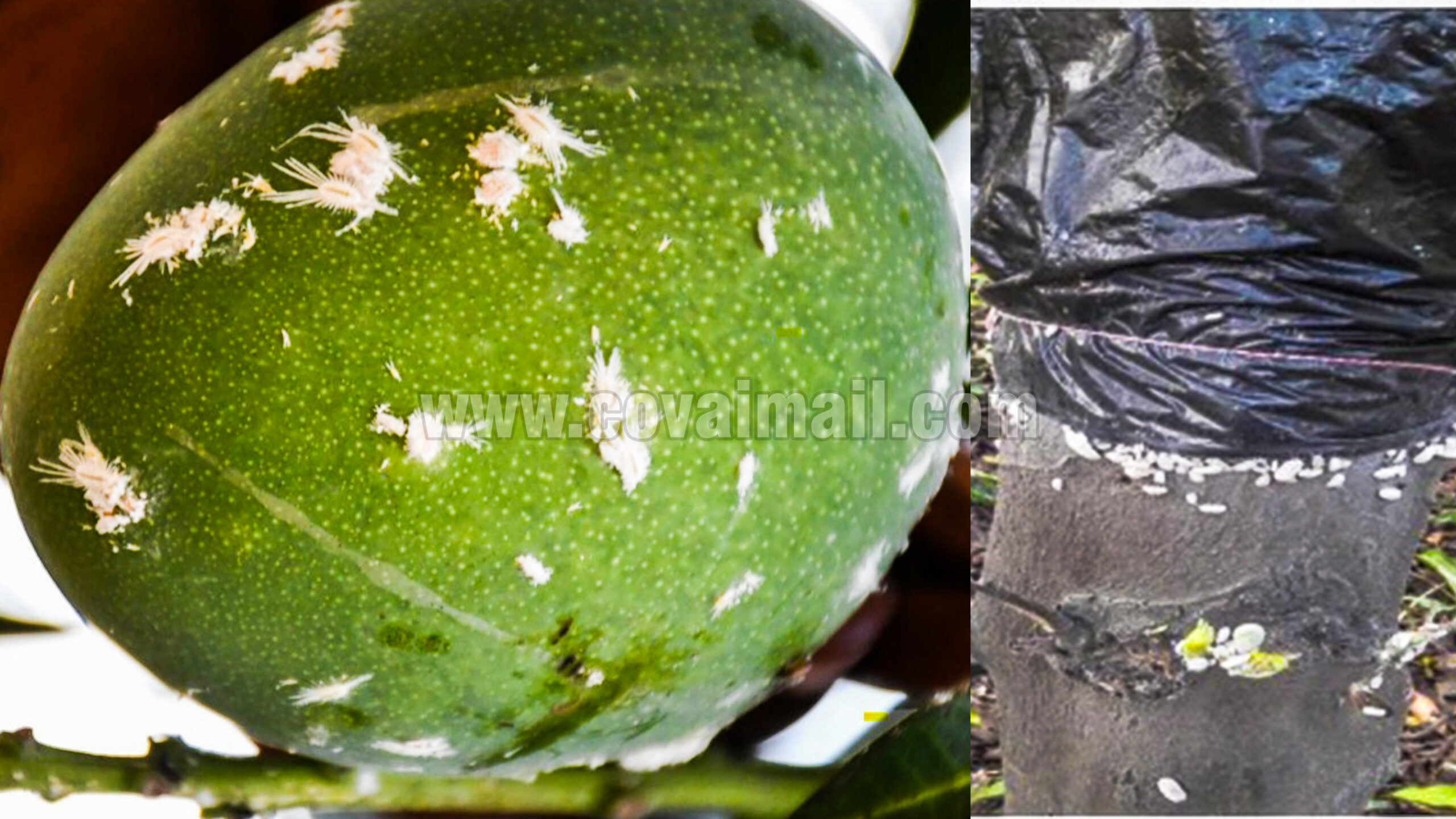

Tamil Nadu Agricultural University (TNAU) conducted an awareness event among farmers on the management of mango mealybug after the recent surveys conducted in mango orchards of the Pollachi region in Coimbatore, which have revealed a rising incidence of mango mealybug infestation.
The pest poses a serious threat to mango cultivation by affecting tree growth, flowering, and fruit setting, leading to potential yield losses if not managed in time.
Mango mealybug
Mango mealybug is a sap-sucking insect pest. These insects suck sap from leaves, tender shoots, flower stalks, and developing fruits, thereby affecting the normal growth of the crop.
Symptoms
Due to infestation, symptoms such as yellowing and drying of leaves, dropping of flowers and fruits are commonly observed, resulting in reduced yield. In addition, the honeydew secreted by the mealybugs promotes the growth of sooty mould fungus, which reduces the photosynthetic activity of the leaves.
Consequently, fruit quality and market value are adversely affected.
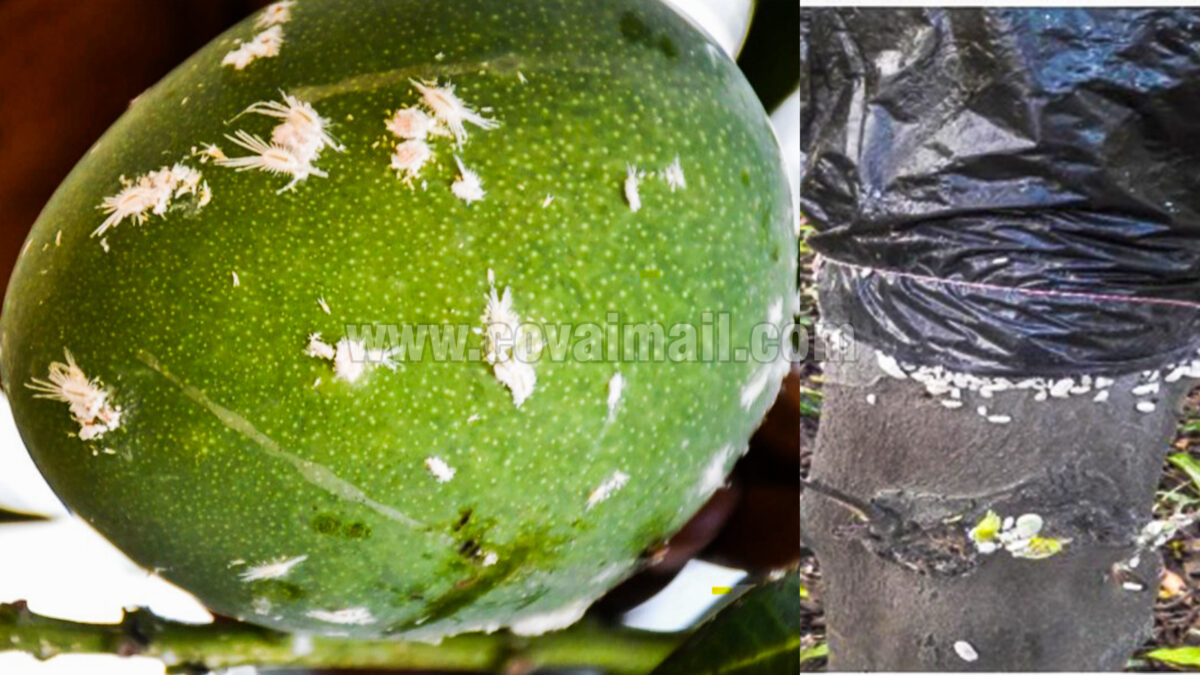
In Tamil Nadu, mealybug activity increases from January onwards with the rise in temperature. Eggs laid in the soil during winter hatch during February and March, after which the young nymphs climb up the trees and spread. The nymphs move upward along the trunk and infest tender plant parts.
Infestation is more severe during the flowering stage (December to May).
Management Practices
To manage the pest, farmers are advised to adopt integrated management practices. During the flowering season, a 400-gauge polythene sheet may be wrapped around the tree trunk at a height of 1 to 1.5 metres without gaps, and sticky grease or adhesive oil should be applied on the upper surface to prevent nymphs from climbing the tree. The sticky material should be reapplied at 15-day intervals.
Deep ploughing around the tree basin during May and June exposes and destroys eggs present in the soil. Removal of weeds such as Clerodendrum, Parthenium and other grasses during June-July is also recommended.
The natural predator Cryptolaemus montrouzieri may be released at the rate of 10 beetles per tree for biological control.
At the early stage of infestation, spraying Dimethoate 30 EC at 2 ml per litre or Spirotetramat 11.1% + Imidacloprid 11.01% SC at 0.75 ml per litre is recommended, directing the spray towards the trunk and lower branches using a high-volume sprayer.
Since mealybugs have a waxy coating, the use of a sticker or wetting agent in the spray solution is essential for effective control.