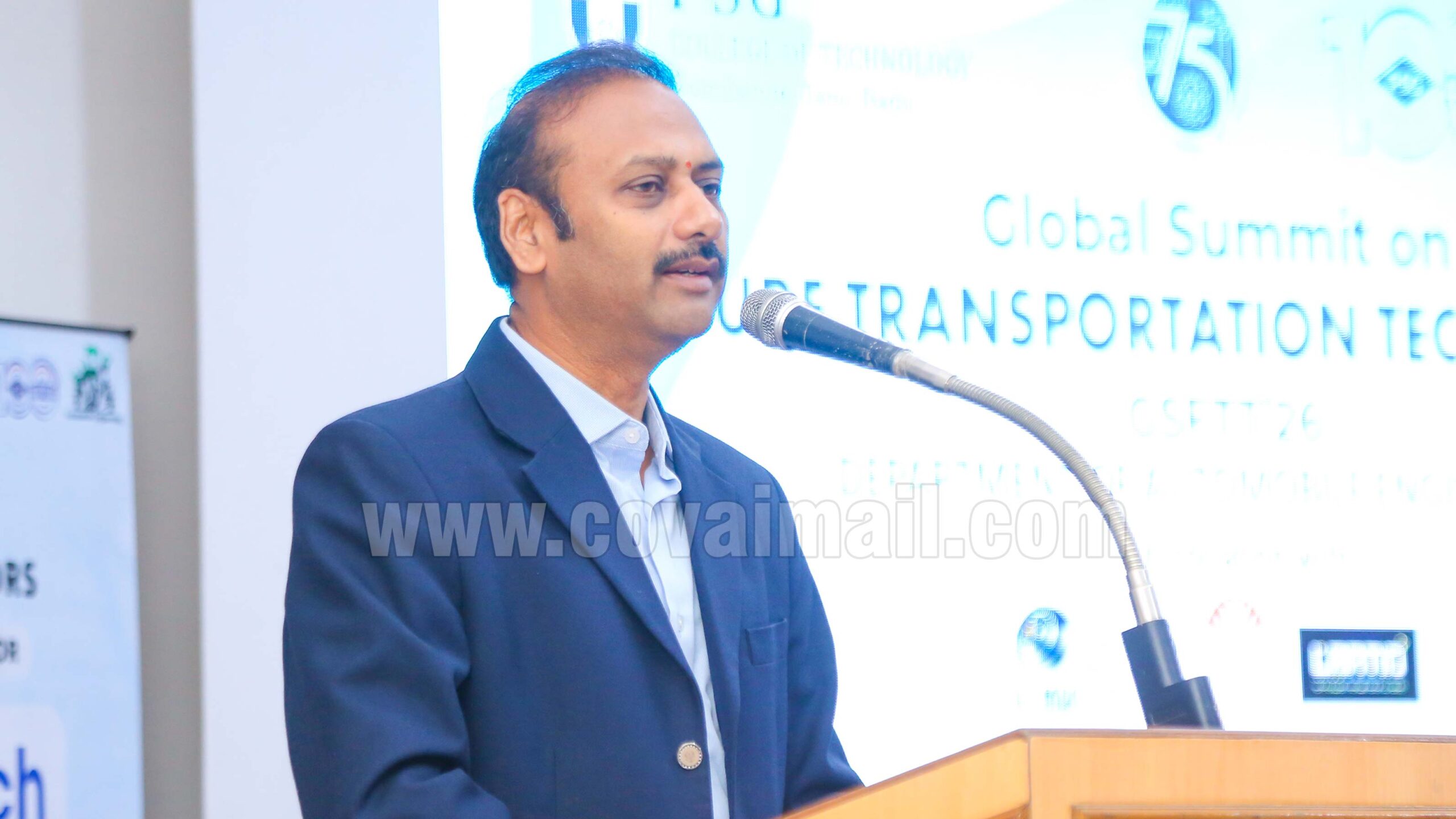

PSG College of Technology inaugurated the Global Summit on Future Transportation Technologies (GSFTT ’26) at the college today.
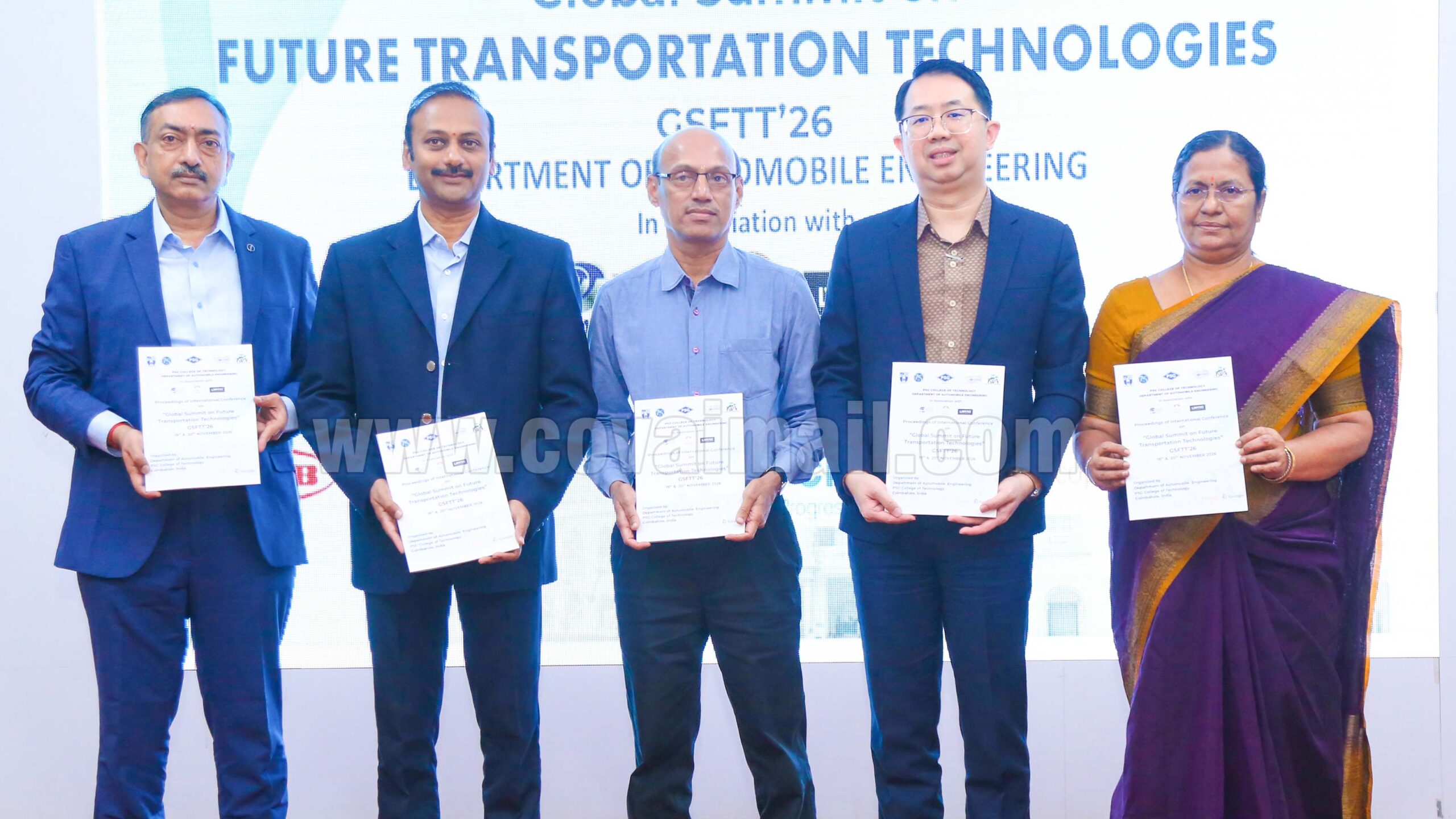
The chief guest, Dhanasekaran Radhakrishnan, Global Head – Product Engineering, Engineering and R&D Services, HCLTech, inaugurated the summit by releasing the conference souvenir.
The Guests of Honour, Tan Wei Hong, Associate Professor, Department of Mechanical Engineering, Universiti Malaysia Perlis, Malaysia, and Subbiah Paramasivan, Vice President – R&D, L.G. Balakrishnan & Bros Limited, Coimbatore, graced the occasion and delivered their addresses.
The two-day summit is organised by the Department of Automobile Engineering in association with Universiti Malaysia Perlis, Université Cadi Ayyad, and Laboratoire de Recherche en Technologies Intelligentes et Durables.
The chief guest, Dhanasekaran Radhakrishnan from HCLTech, highlighted the importance of the two-day summit in providing participants with valuable industry insights. Addressing the participants, he said, “The lessons you would learn over two months or two semesters will be taught to you in just two hours at this summit.”
Speaking about the role of Artificial Intelligence (AI) in the automotive sector, he said that the future of mobility and automobiles would be far more intelligent than they are today. “In the future, we will be driving a supercomputer, not just a car. Cars will have more software code than commercial aircraft. They will function like flights on roads, communicating with us, guiding us and protecting us,” he said.
He observed that several countries, particularly China, were already making significant progress in automotive technology. He also spoke about the growing adoption of electric and hybrid vehicles across global markets and highlighted the need for India to accelerate its technological advancements.
He pointed out that many Indian innovations and talents were directed towards employment opportunities abroad rather than being utilised to develop solutions within the country. He stressed the importance of encouraging indigenous innovation and developing future-ready automotive technologies powered by AI.
Highlighting HCLTech’s investment in AI, he said that the company has invested 110 million dollars in AI to build a validation factory.
He said that the validation process, which currently involves 39% virtual and 61% physical validation, will shift to 85% virtual and 15% physical validation by 2030. This transformation is expected to reduce validation costs by 60%.
He noted that AI and emerging technologies would significantly transform people’s lives and the future of mobility. Concluding his address, he expressed HCL’s enthusiasm for collaborating with PSG Techn on innovations and joint projects.
He also expressed hope for a future with zero emissions and zero accidents.
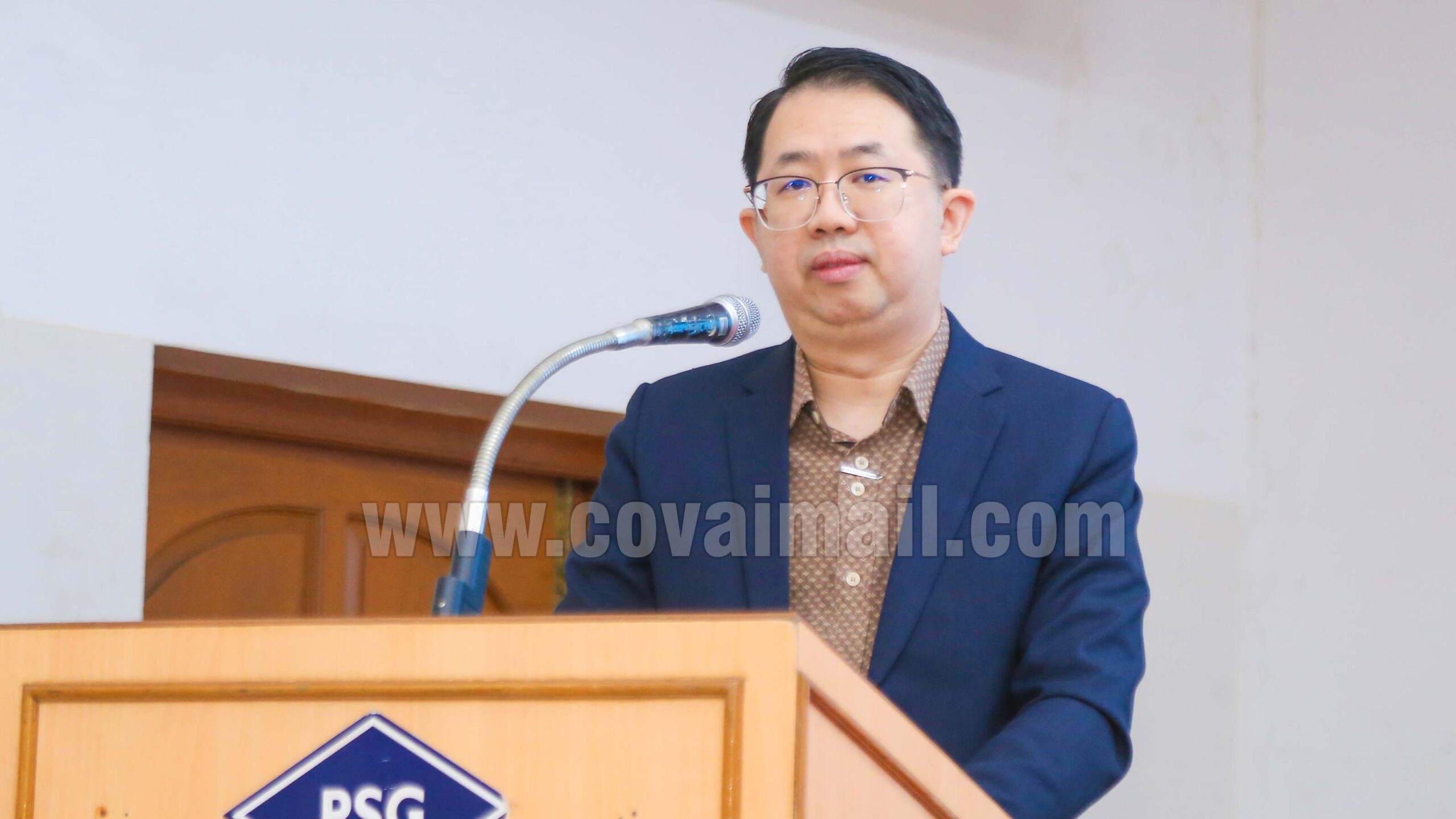
The Guest of Honour, Tan Wei Hong, in his address, appreciated PSG College of Technology for bringing together researchers from across the globe. In his address, he emphasised that future transportation technologies must be sustainable and benefit everyone.
He highlighted the role of innovation in addressing global challenges in the transportation sector. He further noted that the summit would provide a platform for global research, knowledge sharing and building professional relationships.
He encouraged the participants to engage in meaningful discussions and exchange ideas throughout the two-day summit. Expressing his happiness over the collaboration with PSG College of Technology, he also expressed his desire to strengthen academic and research partnerships between PSG and Universiti Malaysia Perlis, Malaysia.
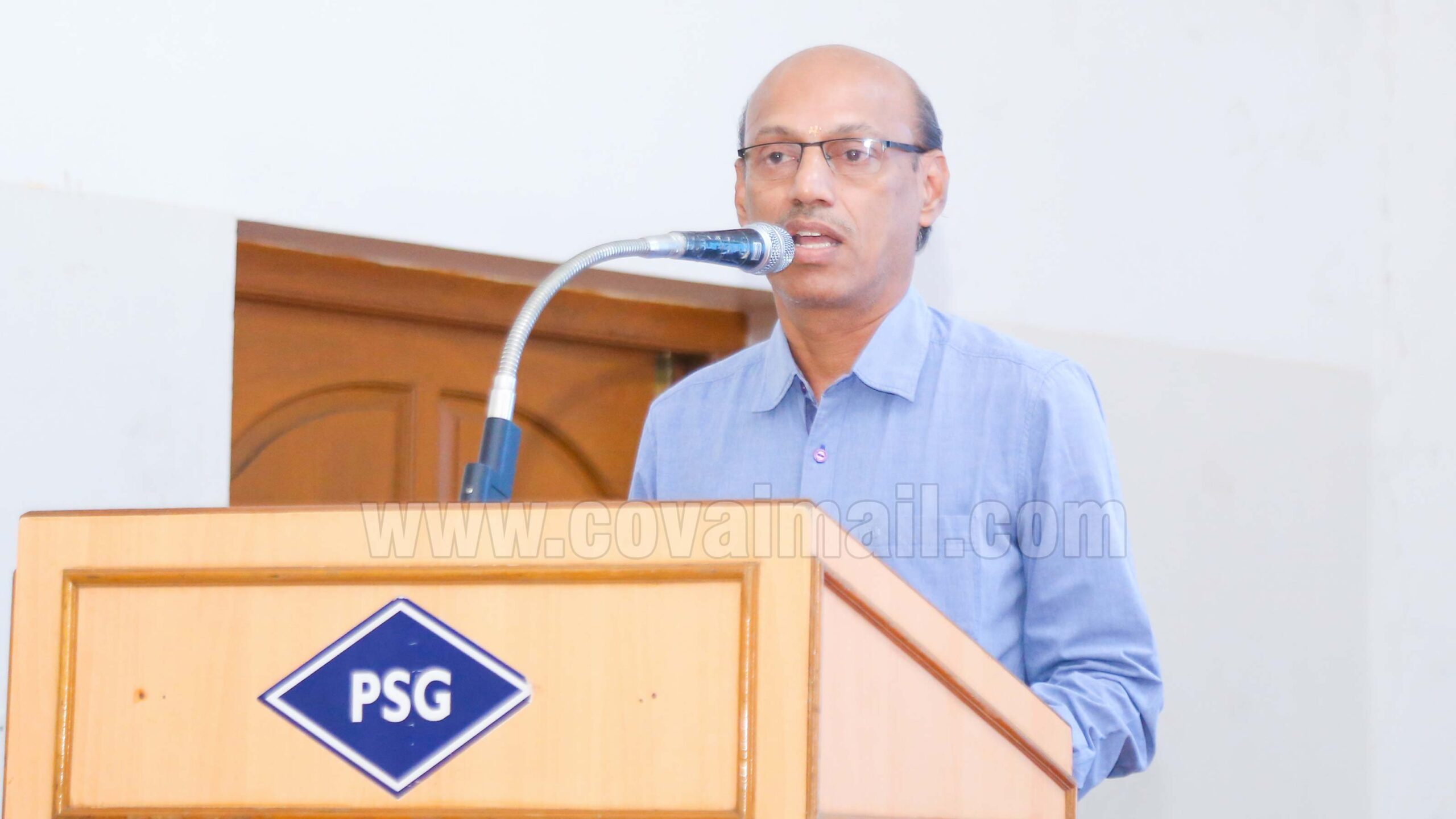
The Guest of Honour, Subbiah Paramasivan, said that the transportation sector has evolved with AI and alternative fuels. “At LGB, we, as automotive component manufacturers, see this transformation not as a challenge but as an opportunity,” he said.
Referring to the advent of electric vehicles (EVs), he said that LGB had faced several challenges, conducted numerous experiments and treated every challenge as an opportunity, eventually leading to the development of EV technologies.
He also highlighted the penetration of electric vehicles in India, stating that EVs accounted for around 8% of passenger vehicle (cars) production and approximately 6 to 7% of two-wheeler production.
“I strongly believe that future mobility cannot be developed by industry alone. Industry brings challenges, academia contributes research and knowledge, and young engineers bring a questioning attitude. When these three come together, innovation becomes more meaningful,” he said.
Addressing the students, he encouraged them to cultivate curiosity, develop the habit of questioning and never lose their ability to think critically. He concluded by emphasising that industrial challenges create research opportunities, which ultimately lead to meaningful innovations.
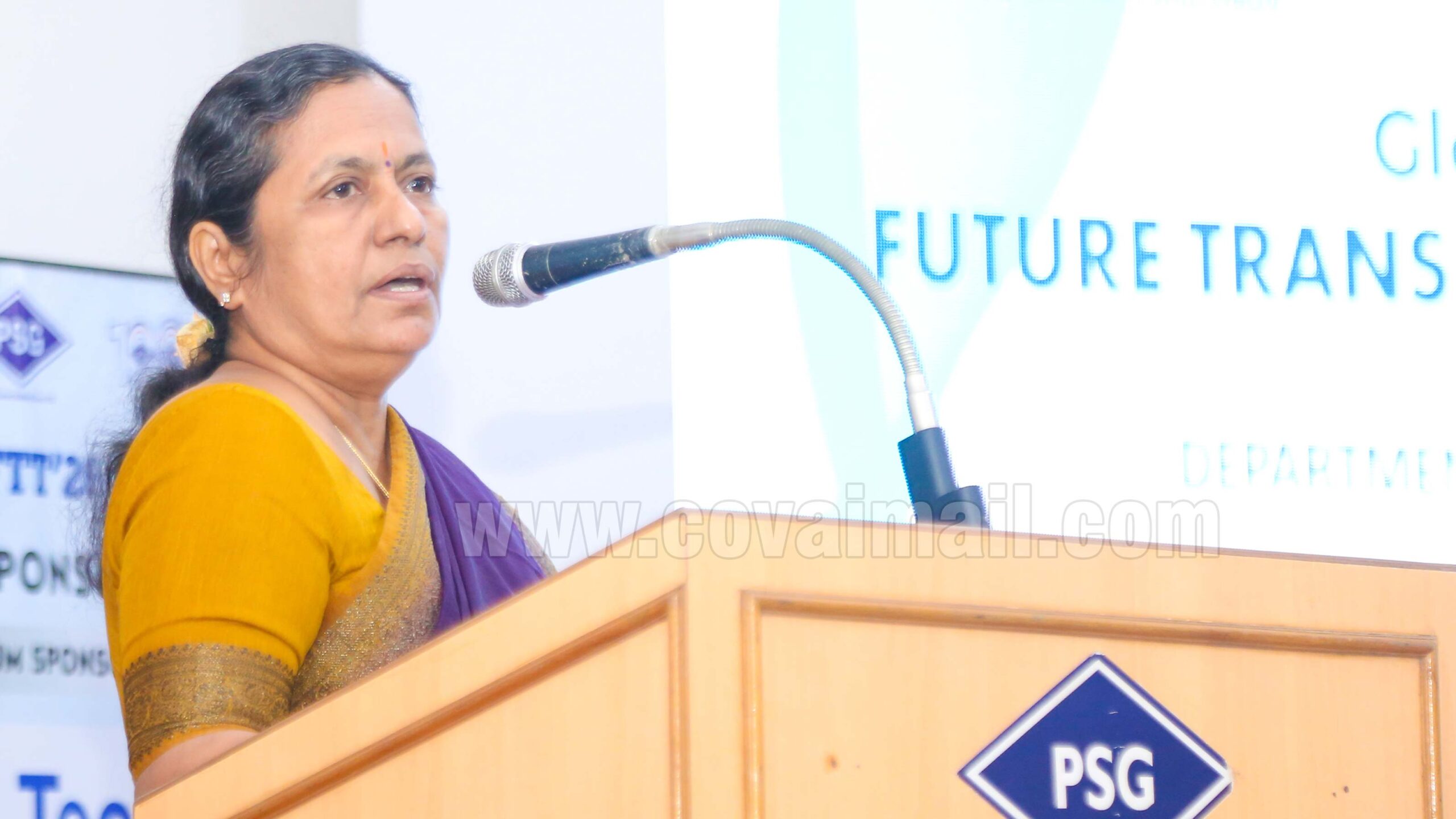
Thilagavathi, Principal of the college, delivered the presidential address. She urged the participants to develop sustainable solutions to the challenges facing the transportation sector through collaboration between academia and industry.
She emphasised three key priorities for the future of transportation technology. First, innovation must be sustainable. Second, future technologies should be inclusive, accessible and affordable, ensuring that they benefit even underprivileged communities. Third, she highlighted the need for borderless collaboration to foster knowledge sharing and drive technological advancements across countries and industries.
Neelakrishnan, Head of the Department, delivered the welcome address. In his address, he said that the conference focuses on sustainable transportation and the application of Artificial Intelligence (AI) to reduce carbon emissions. He also informed that the two-day summit will feature seven plenary sessions, with speakers from leading industries and companies, including HCLTech and Bosch.
He further stated that 37 paper presentations had been shortlisted following a rigorous evaluation process.
HCL invests 110 million dollars in AI -Dhanasekaran Radhakrishnan, Global Head – Product Engineering, Engineering and R&D Services, HCLTech, at PSG Tech’s GSFTT ’26