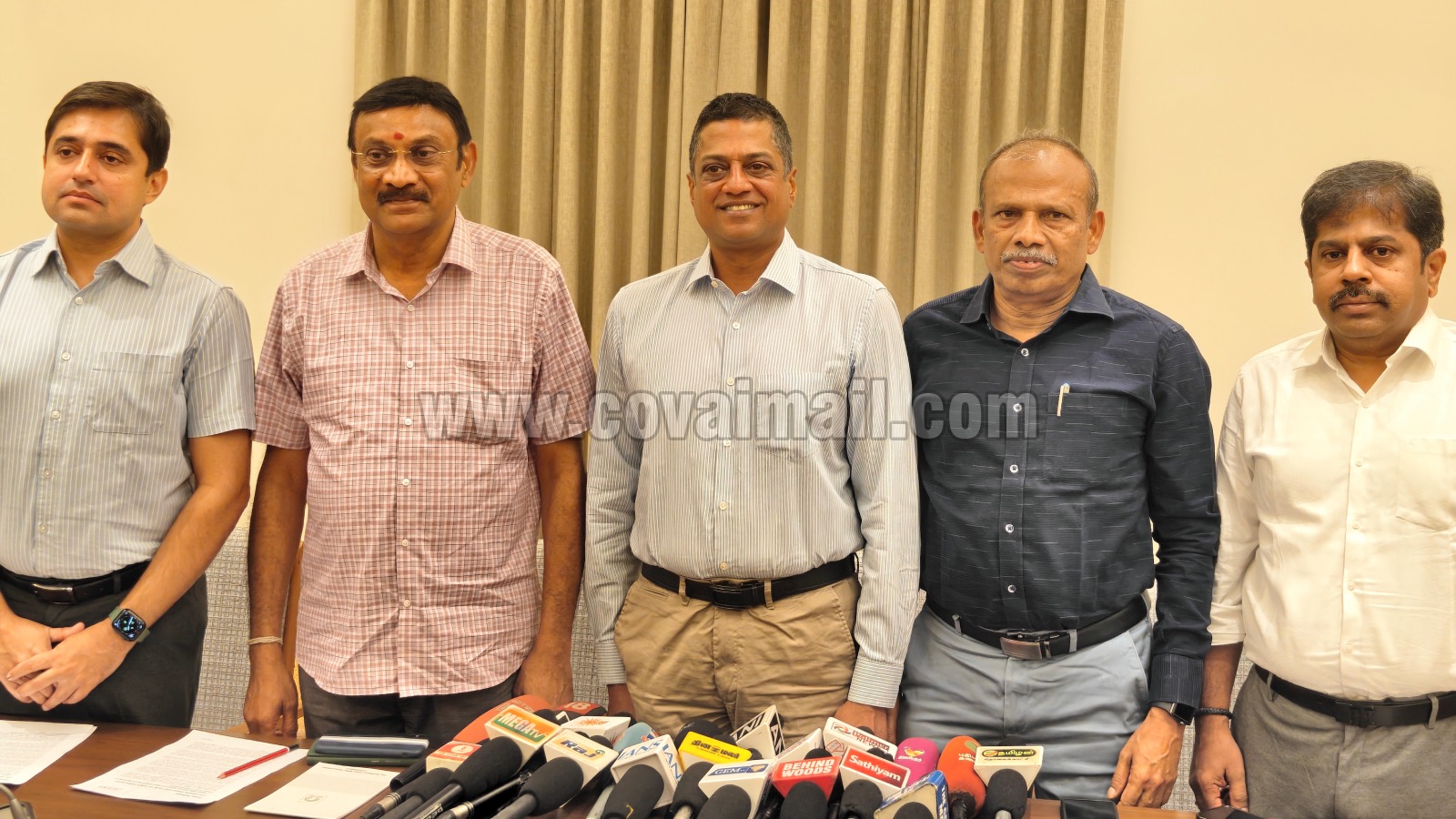

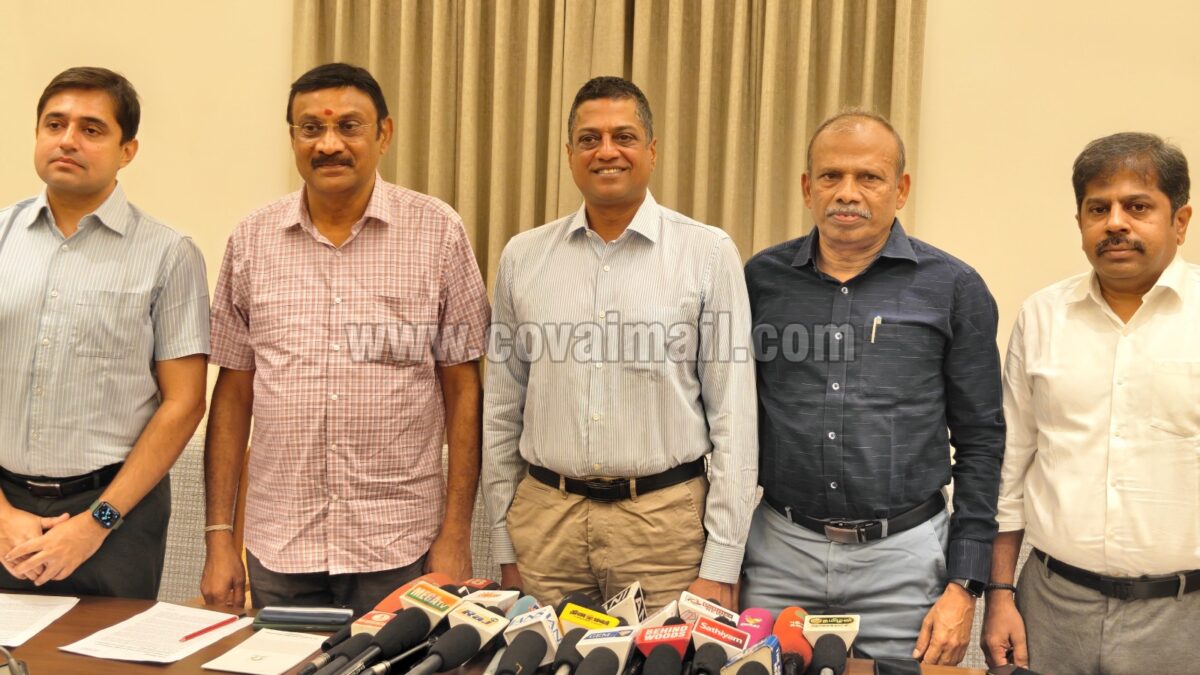
Southern India Mills Association (SIMA) along with the Confederation of Indian Textile Industry (CITI) convened a press meet on Thursday to briefly share the latest analysis on Indian Cotton Sector by a internationally reputed consultancy firm.
Titled Economic Analysis of Cotton Supply, Pricing and Trade Policy in India, it is made by Gherzi – a Switzerland-based textile management consultancy firm.
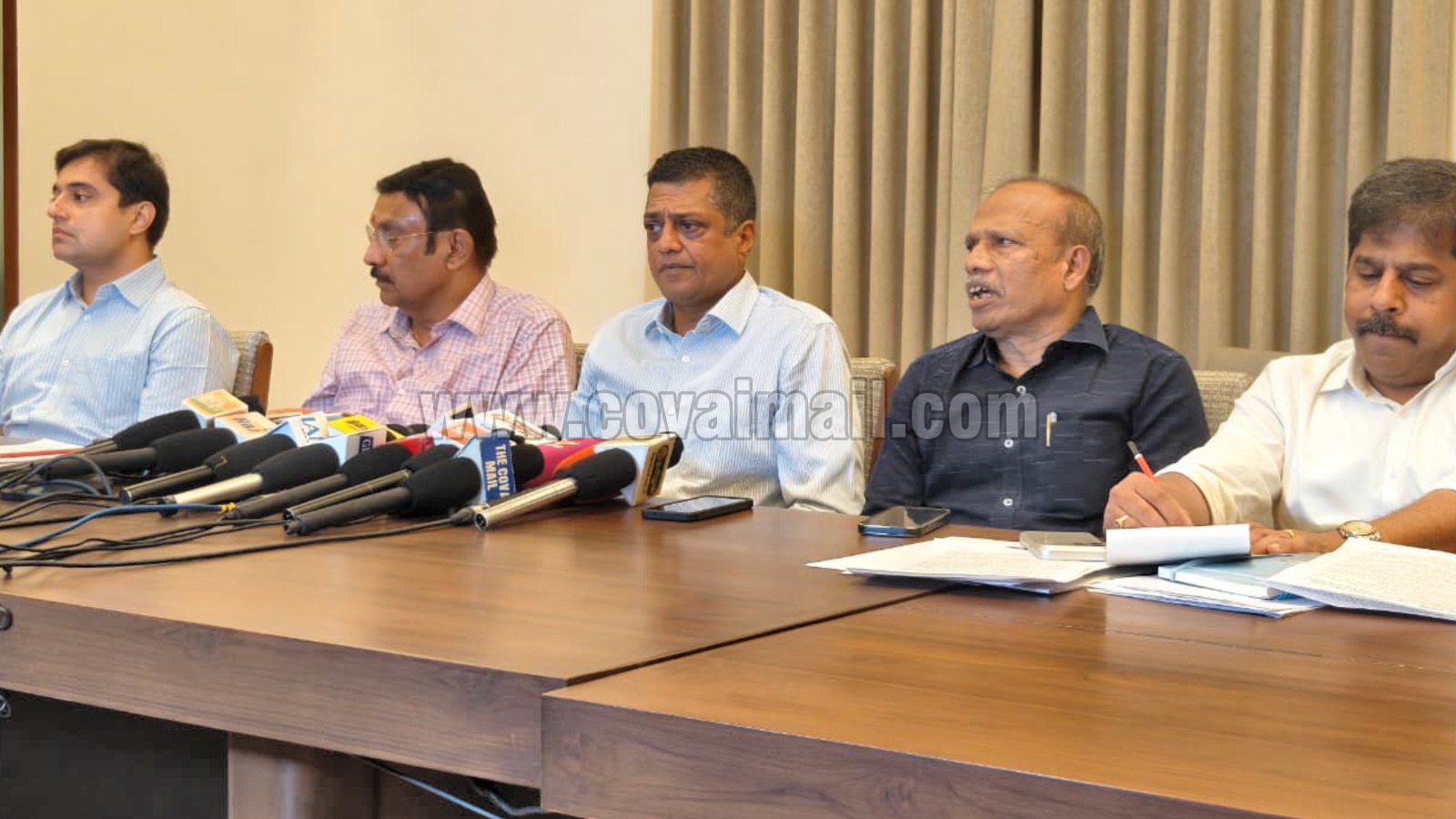
CITI’s Chairman Ashwin Chandran who met the press and media, conveyed that the study includes insights on the demand and supply situation of cotton in India, cost of cotton production per hectare and its comparison with textile-rival nations (Bangladesh, Sri Lanka, Pakistan, and Vietnam), Indian textile industry’s competitiveness with rivals, the price disparity of cotton etc.
He was joined by SIMA’s Deputy Chairman Krishna Kumar, Secretary General Selvaraj; Indian Cotton Federation’s Secretary Nishanth Asher and Kumar Duraisamy, Joint Secretary, Tiruppur Exporters Association.
Suggestions from Gherzi
Ashwin shared that the analysis by Gherzi included what the Indian Textile Industry should do in 3 timelines – Short Term, Medium Term and Long Term to achieve India’s textile business aspirations. The analysts have suggested that India should consider slashing the 11% import duty on cotton. Due to this existing rule, Indian mills have to pay 11% import duty if it imports cotton from abroad.
India plans to significantly boost textile exports to $100 billion by 2030, but to achieve that the industry needs more cotton here. “We need a 15% year-on-year growth in our business size to achieve this target, and for this 15% growth, we will need twice as much cotton as we have today by 2030,” Selvaraj pointed out.
Ashwin added that Gherzi has suggested that a strategic cotton reserve should be created in India by the Indian government or a government body, so that the supply-demand gap could be balanced.
On the long-term side, the recently announced Textile Mission on Cotton should succeed. Indian Government has approved the Mission for Cotton Productivity with Rs.5659.22 crore outlay for self-sufficiency in cotton and competitiveness in global textile markets by 2030-31.
“While this is basically a mission to improve the productivity and quality of cotton in our country, it is a long-term process and its benefits will not be known to us tomorrow or the day after. It will take many years. The industry looks forward to the success of this Cotton Mission,” Ashwin added.
Why removal of 11% duty is important?
Selvaraj added that Cotton used to be surplus in our country but India has become a cotton deficit country for the past 3 years. The global average of cotton production per hectare is around 800 kg of cotton. But in India, we cultivate only 500 kg per hectare. We have a low yield, and due to this, the cost of production of cotton in India is high. More than 50% of our cotton farms are rain-fed.
So if the expected amount of rain fails, the output will be affected. The cotton crop production as per govt estimates for 2025-26 was around 290+ lakh bales. Late and heavy rains last year affected the quality of 40% to 50% of the cotton, making it unsuitable for export. However, due to the need, the consumption by Indian textile industries was 320+ lakh bales. There is a gap between our production and consumption.
For the industries to meet the demand and procure cotton, removal of the 11% import duty is crucial. The duty was introduced in 2021 and it was temporarily paused from April to October in 2022 and August to December in 2025. The industry is seeking a permanent removal of this tax, as no other competing nation has such a tax.
“A shortage of 1 lakh bales affects the jobs of 1 lakh people across the textile value chain, from spinning to garments. Therefore, a shortage of 30 lakh bales could impact the livelihoods of 30 lakh people,” Selvaraj cautioned. At the same time, he expressed faith in the Mission for Cotton Productivity as it aims to address this issue with innovative tech-driven solutions.