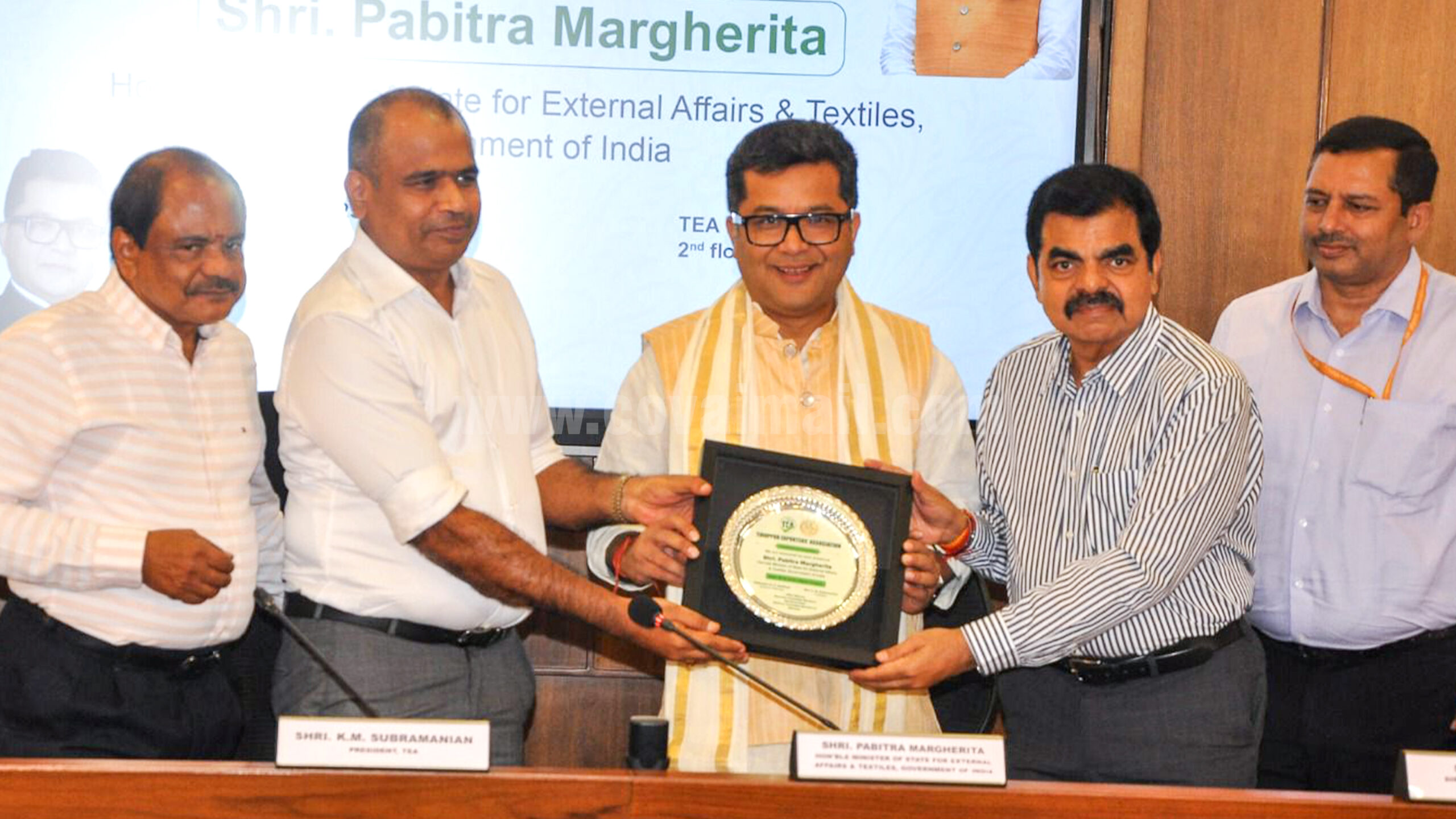

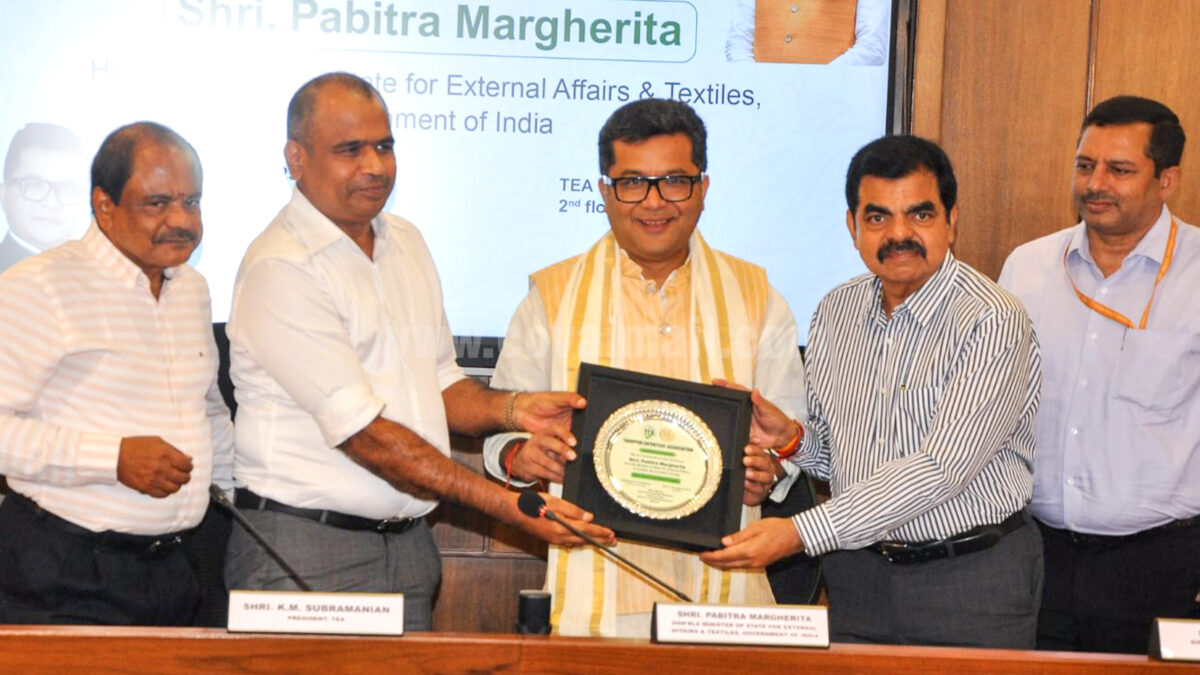
Pabitra Margherita, Minister of State for External Affairs and Textiles, Government of India, recently visited Tiruppur and held discussions with members of the Tiruppur Exporters’ Association (TEA). As part of his visit, the Minister also toured garment manufacturing units in the city.
During the interaction, Subramanian, President of TEA, highlighted the sector’s export performance. He stated, “In the financial year 2024–25, we achieved exports worth ₹45,000 crore, recording a 25% growth compared to the previous year.” He further announced that TEA has set a compound annual growth target of 15% and aims to achieve ₹1 lakh crore in exports by 2030.
He thanked the Ministries of Textiles and Commerce for signing the Free Trade Agreement (FTA) with the United Kingdom, and expressed hope for the early completion of negotiations for the Bilateral Trade Agreement (BTA) with the United States and the FTA with the European Union by the end of the year.
“These agreements will significantly boost India’s export momentum and help realise Prime Minister Narendra Modi’s vision of ₹9 lakh crore in textile exports by 2030,” he added.
Subramanian also noted the key challenges faced by the sector. “This is a labour-intensive industry with the capacity to employ over one lakh workers. We request the government’s support in establishing hostel facilities for migrant workers, through a funding model of 75% government contribution and 25% industry share,” he said.
He pointed out that since the withdrawal of the Technology Upgradation Fund (TUF) Scheme, the sector has seen a slowdown in investment in modern technologies. “To maintain our growth trajectory of 15% annually, we need to expand existing factories and invest in new units equipped with Artificial Intelligence (AI)-driven machinery. We request a minimum 50% subsidy for capital investments in these technologies,” he urged.
To support green energy adoption, he also sought a 90% subsidy for rooftop solar installations, especially for MSMEs.
Speaking on export incentives, he noted that while the industry currently benefits from the RoSCTL Scheme, support remains minimal. With the scheme scheduled to expire on March 31, 2026, he appealed for its extension for another three years and requested that the RoSCTL benefit be increased to 10% to further strengthen India’s export competitiveness.