

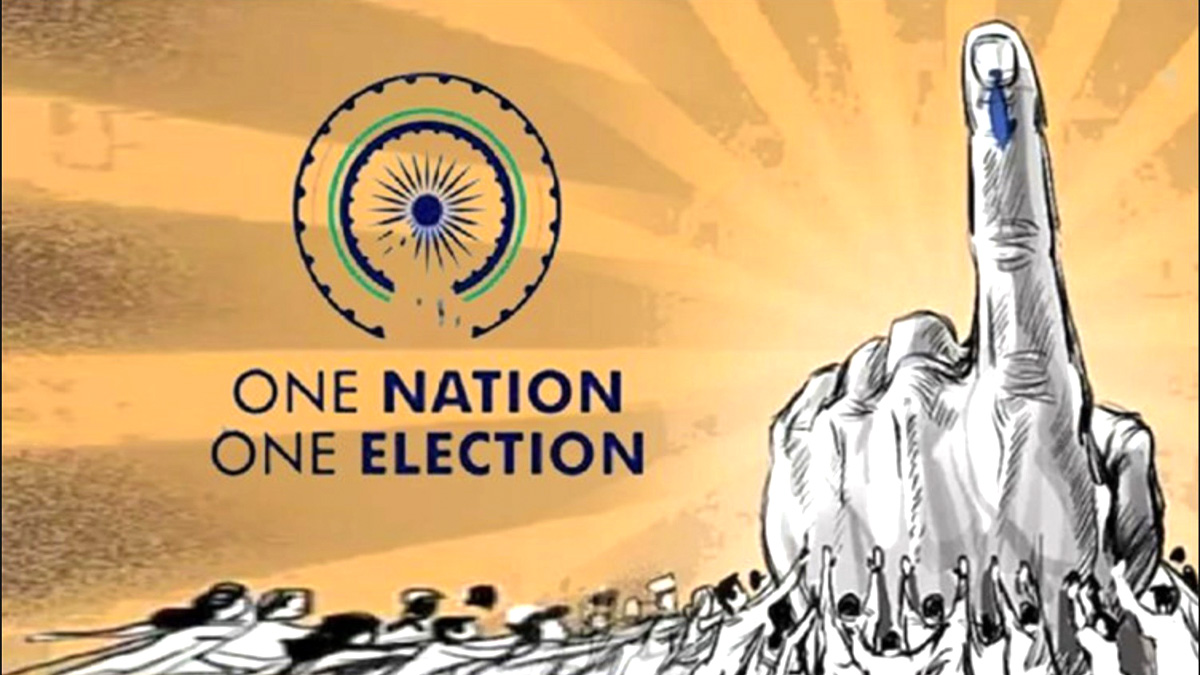
The bill proposing simultaneous election for Lok Sabha and State Assemblies has been introduced in Lok Sabha today (17th Dec). The bill aims to reduce the frequency and cost of elections, minimize governance disruptions, and enhance policy implementation.
Currently, elections in India occur at different times due to the varied terms of state assemblies and the central government, leading to frequent election cycles.
Key Advantages
- Cost Efficiency: Reduces expenses associated with frequent elections.
- Governance Stability: Allows governments to focus on policymaking without the constant pressure of elections.
- Reduced Electoral Fatigue: Minimizes the burden on voters, politicians, and the Election Commission of India.
- Resource Management: Saves resources like security forces and personnel
Challenges
- Constitutional Changes: Implementing the system requires significant amendments to the Constitution.
- Political Agreement: Achieving consensus among political parties is difficult.
- Logistical Complexity: Conducting elections simultaneously for a vast and diverse country like India poses significant challenges.
- Impact on Federalism: It may undermine the independence of state governments.
Time Line of the bill
On September 2, 2023, the Government of India formed a high-level committee led by Ram Nath Kovind, former President of India to explore the possibility of holding simultaneous elections.
On March 14, 2024, the committee submitted a detailed report to Droupadi Murmu, President of India. It suggested starting a new electoral cycle in 2029, after the upcoming general elections. To align state assembly terms with this new schedule, some terms may be extended or shortened.
On September 18, 2024, the Union Cabinet approved the ‘One Nation, One Election’ bill, signalling the government’s intent to introduce it in Parliament’s winter session.
On December 17, 2024, the One Nation One Election bill was tabled at the Lok Sabha by Arjun Ram Meghwal, Union Law Minister, and the opposition members opposed the bill.
The proposal is currently under parliamentary consideration, and its future will depend on legislative deliberations.